In this guide
- Quick comparison: placement versus root transition
- What is a money piece?
- What is a shadow root?
- What is a root melt?
- Why the three terms are not direct alternatives
- Four details that make the brief usable
- Will a bright money piece make the whole wig look blonde?
- What to inspect on the paid test order
- Frequently asked buyer questions
- Send the look, not only the trend name
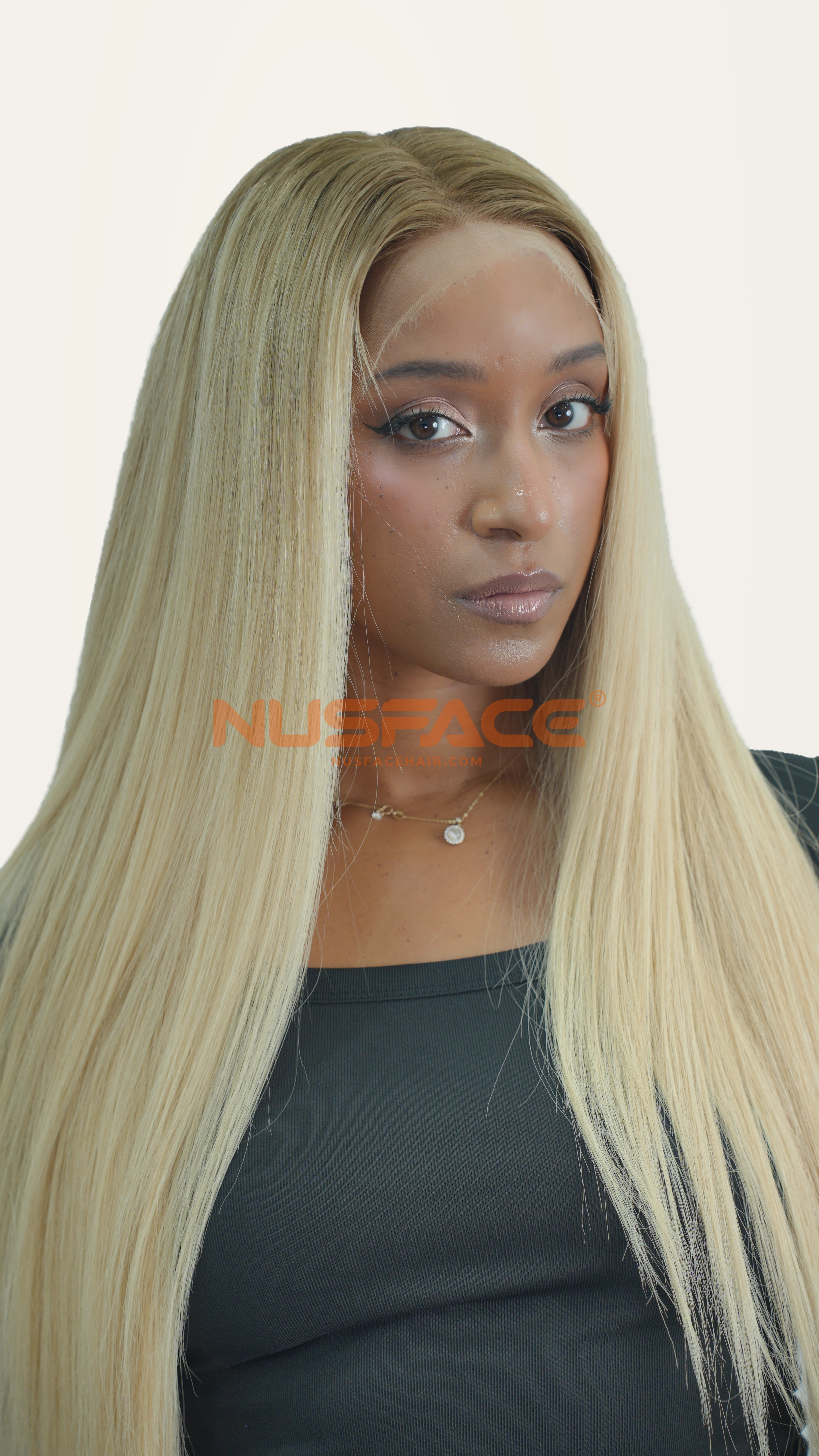
A money piece describes bright face-framing placement. A shadow root and a root melt describe ways of creating depth and transition near the root. They are not three names for the same service, and they are not always three alternatives.
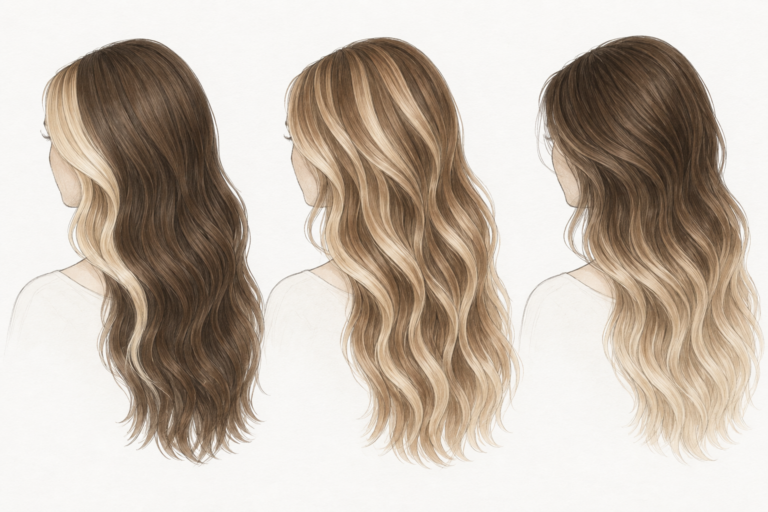
A balayage wig can combine a money piece with either a shadow root or a root melt. The useful buying decision is how bright, wide and high-contrast the front should be, then how deep and how gradual the root transition should look.
Quick comparison: placement versus root transition
| Term | Main area | What a buyer is trying to control | Useful brief details |
|---|---|---|---|
| Money piece | Hair around the face | Front brightness and contrast | width, tone, symmetry, starting height, soft or bold edge |
| Shadow root | Root area | Visible depth near the parting and hairline | root depth, root tone, coverage area, contrast with the lengths |
| Root melt | Root-to-length transition | A longer or more blended fade from the root into lighter hair | root tone, transition distance, warmth/coolness, softness of the blend |
These are working descriptions, not universal measurements. Professional color brands use similar language, but salons and colorists can draw the boundary between tap, smudge, shadow and melt differently. A reference image plus a written description is safer than the term alone.
What is a money piece?
A money piece is a brighter face-framing section placed around the front hairline. It can be soft and narrow, or broad and high-contrast. On a balayage wig, it changes what the customer sees first in a mirror, phone camera or salon consultation.
The name tells the factory where the brightness belongs, but not what it should look like. Two references both labeled money piece may differ in:
- how many front ribbons are brightened;
- whether both sides are symmetrical;
- how close the light color begins to the root;
- whether the front is one strong panel or several fine ribbons;
- whether the tone is beige, honey, ash, pearl or another direction;
- how sharply the bright front contrasts with the base.
If the face frame is the main selling point, include a clear front photo and a three-quarter angle. A back-only reference cannot define it.
What is a shadow root?
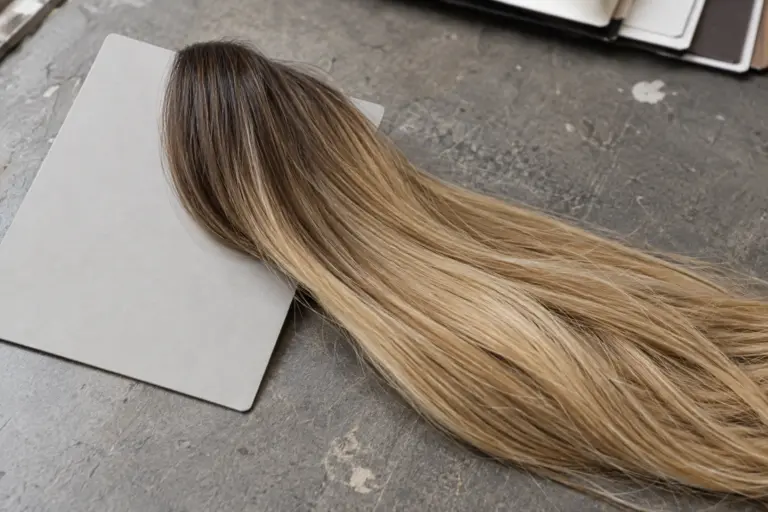
A shadow root adds or preserves darker-looking depth at the root. The goal is usually to keep the parting and top from reading as one flat light color.
On a finished wig, buyers often use the phrase for a defined darker zone near the root that supports a lived-in or rooted look. The exact depth varies. One client may expect a subtle shadow only at the parting; another may want a visibly rooted effect around the top and front.
Do not brief it as “natural shadow root” and stop there. State the desired root family, how far the depth should be visible, and whether the front money piece should begin close to the hairline or pass through the darker root.
What is a root melt?
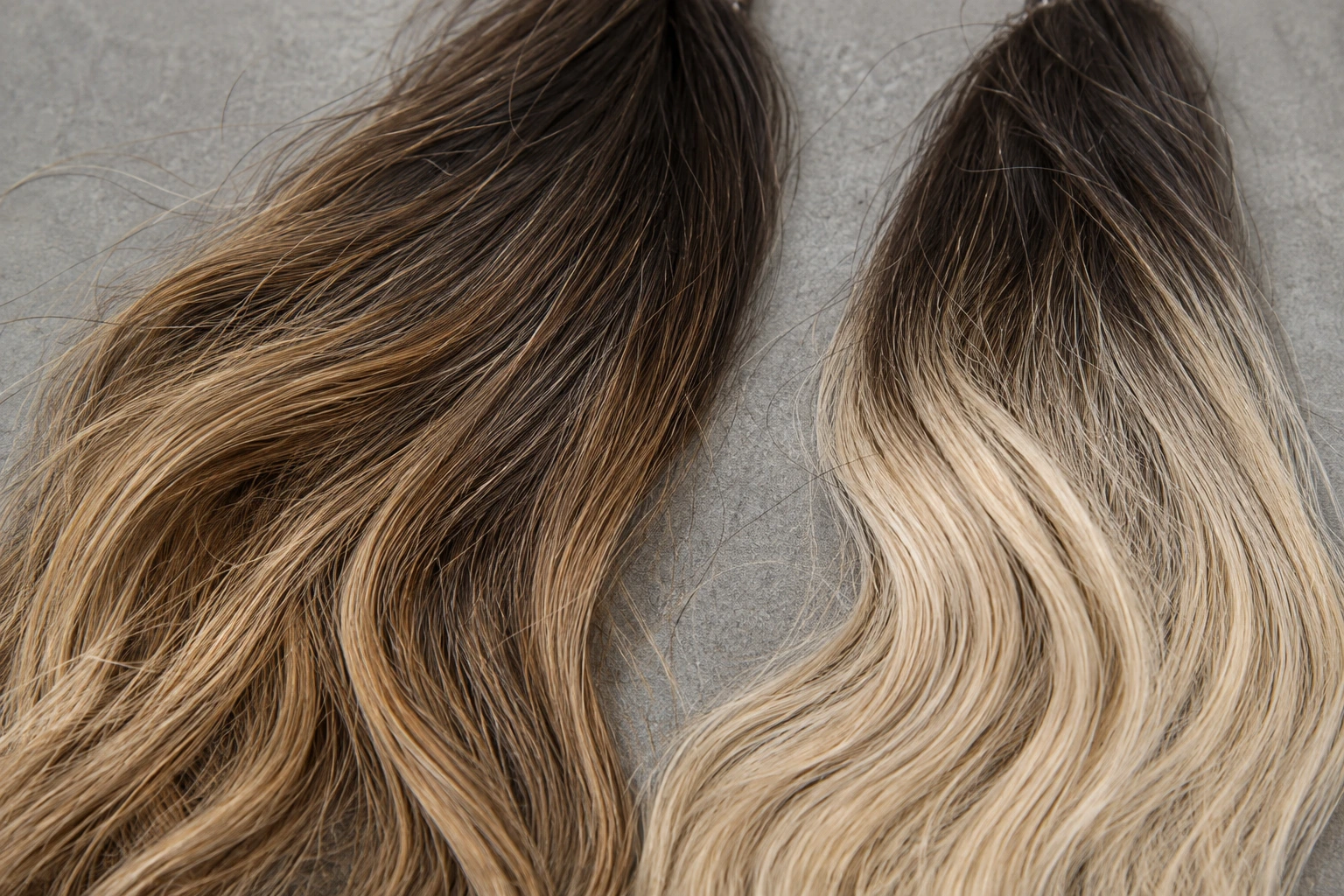
Root melt usually points to the transition: a root tone is blended into the lighter mid-lengths so the change reads as gradual rather than a hard line.
Compared with shadow root, the phrase often suggests more movement through the root-to-length blend. That is a useful distinction, but it is not a regulated technical standard. Some colorists use the terms interchangeably; others reserve melt for a longer, softer transition.
For a custom wig brief, describe the visible result:
- Where should the darkest area begin and end?
- Should the transition be short and defined or long and diffused?
- Should the face-framing pieces stay bright near the root?
- Should the root read neutral, warm or cool next to the lengths?
Those details travel more reliably from buyer to color team than a trend name on its own.
Why the three terms are not direct alternatives
Money piece answers a placement question: Where is the bright focus?
Shadow root and root melt answer root questions: How much depth is near the top, and how does it transition into the lighter color?
Because the questions are different, the features can sit on the same wig. Common combinations include:
- a soft money piece with a short shadow root;
- a bold money piece kept bright at the front, with a longer root melt elsewhere;
- a narrow face frame with deep root contrast;
- a broad face frame and a low-contrast, diffused root transition.
No combination is automatically more premium. The right one is the version the buyer can describe, approve and sell consistently.
Four details that make the brief usable
1. Money-piece width
State narrow, medium or broad, then mark the preferred section on the reference. If asymmetry is intentional, say so. Otherwise the team may reasonably assume the two sides should balance.
2. Contrast
Contrast is the visible distance between the bright front, the root and the surrounding base color. Bold and soft are useful starting words, but a second reference showing an unacceptable contrast level is even clearer.
3. Root depth
Root depth includes both tone and coverage. Specify whether the darker direction belongs only at the parting, around the full top, or through the front hairline as well.
4. Blend length
Show where the transition should finish. A short shadow and a long melt can use similar color families while producing a different overall reading.
Will a bright money piece make the whole wig look blonde?
It can make the front look much brighter while the back remains predominantly dark. This is why a front photograph and a back photograph can give different impressions of the same wig. A narrow money piece concentrates brightness at the face; a broad one makes the lighter color more dominant there.
If you like the root and back but find the front too bold, ask to narrow or soften the face frame. You do not necessarily need to change the root effect or the blonde tone throughout the wig. Send a front reference for this choice and use the reference-photo guide if you are combining details from several images.
What to inspect on the paid test order
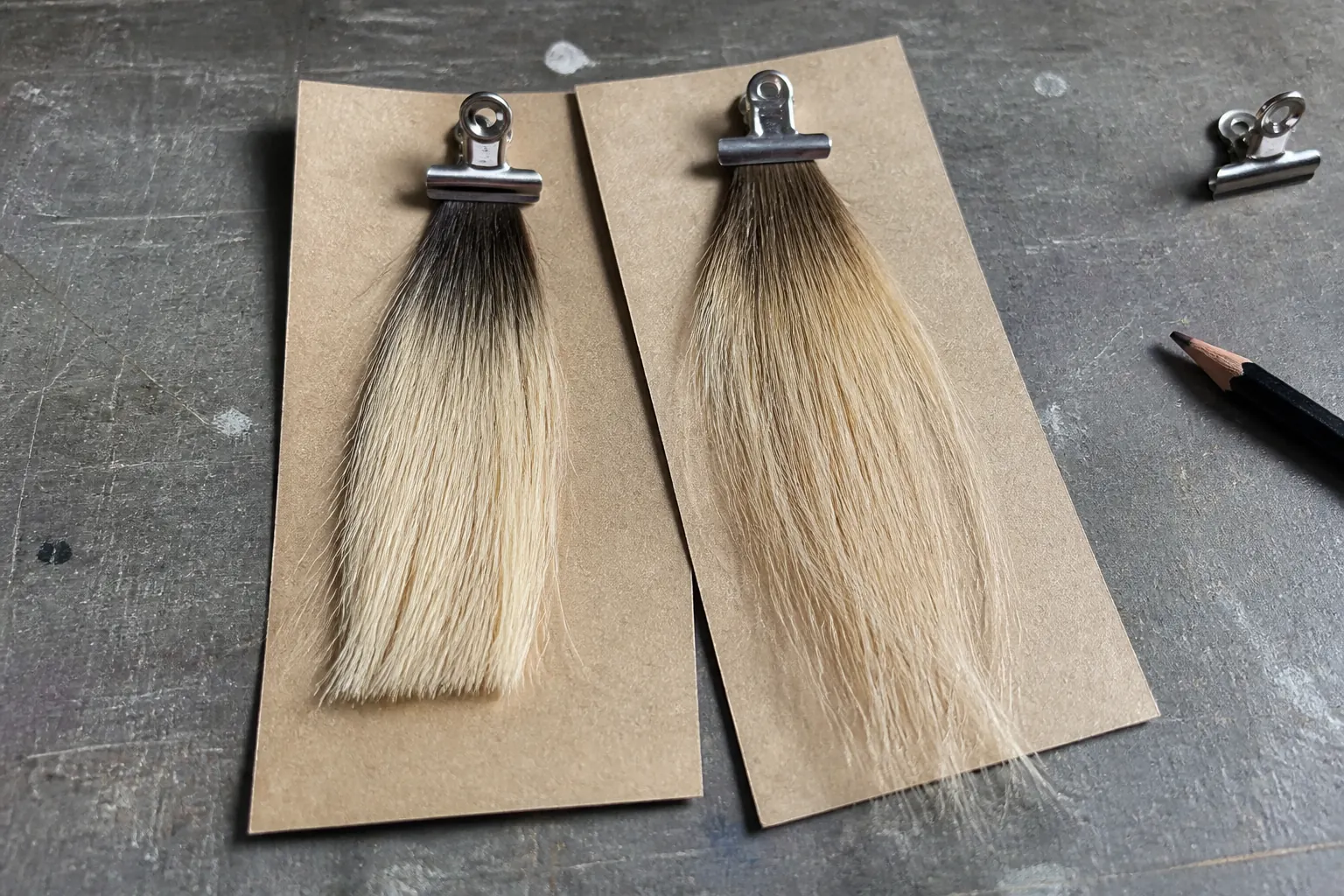
Use the approved brief beside the finished unit. Check:
- front brightness in ordinary indoor light and daylight;
- money-piece width on both sides;
- root depth at the parting and front hairline;
- whether the blend breaks into a hard band;
- connection from the face frame into the side ribbons;
- overall tone after the wig is styled normally;
- lace, knots, density and construction as separate product checks.
The hand-painted balayage wig sample scorecard gives a fuller inspection sequence. Save the accepted front, side, parting and back views for the reorder record.
Frequently asked buyer questions
Is a money piece the same as balayage?
No. Balayage describes a broader hand-painted placement approach. A money piece is the brighter face-framing focus that can be included within the overall color design.
Which looks more natural, a shadow root or a root melt?
Either can look soft or obvious. The visible result depends on the root depth, contrast and transition, not the term alone. Use a reference and describe how long the blend should be.
Can I order a money piece with a shadow root?
Yes, those features can work together. Confirm whether the bright front should begin close to the root or pass through the darker root area.
Is a root smudge the same as a root melt?
Professional usage overlaps and is not fully consistent. Treat the label as a conversation starter, then define the visible root area and blend in the brief.
Can NUSFACE discuss a wig type or component not shown in the balayage collection?
Yes. NUSFACE can also review other custom wig directions. Send the complete requirement to the business team so the custom option can be confirmed in writing.
Send the look, not only the trend name
Open Custom Service and send the primary reference, money-piece width, root depth, blend length, tone, wig type, length, lace, density, quantity and destination.
You can also use WhatsApp. The team can translate the visual direction into a written brief and confirm the custom build.
YOUR NEXT STEP
Get a quote for your color brief.
Send the reference, length, lace, density and quantity. Our team will confirm the details for your custom order.