In this guide
- Check 1: Does the root transition follow the approved direction?
- Check 2: Do the lighter ribbons have a deliberate position and width?
- Check 3: Does the tone stay coherent from mid-lengths to ends?
- Check 4: Do the parting, front and body read as one finished unit?
- Check 5: Can the result be written down for a reorder?
- What NUSFACE checks before dispatch
- Questions to ask before paying for a custom sample
- Use a finished reference, then state what must change
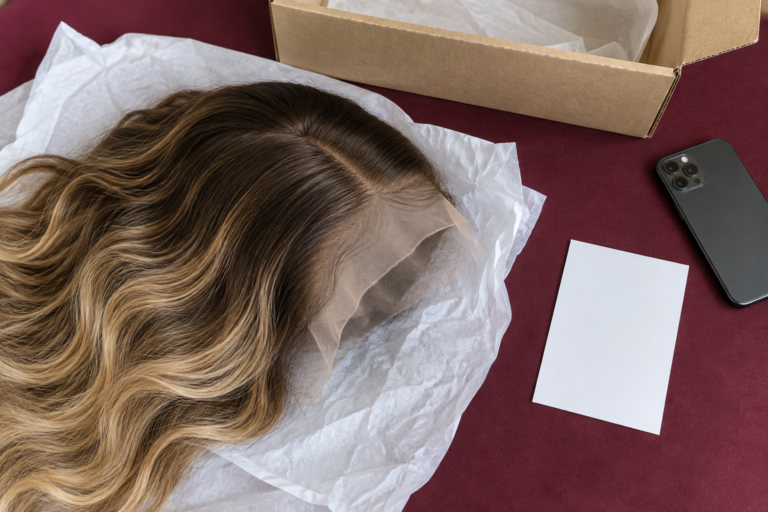
A useful balayage sample review answers two questions: does the color look right as a whole, and do the details match the reference you agreed? Start with the full front and back, then move closer to the roots, lighter sections and parting. An attractive close-up alone can miss a darker back or a front highlight placed differently from your request.
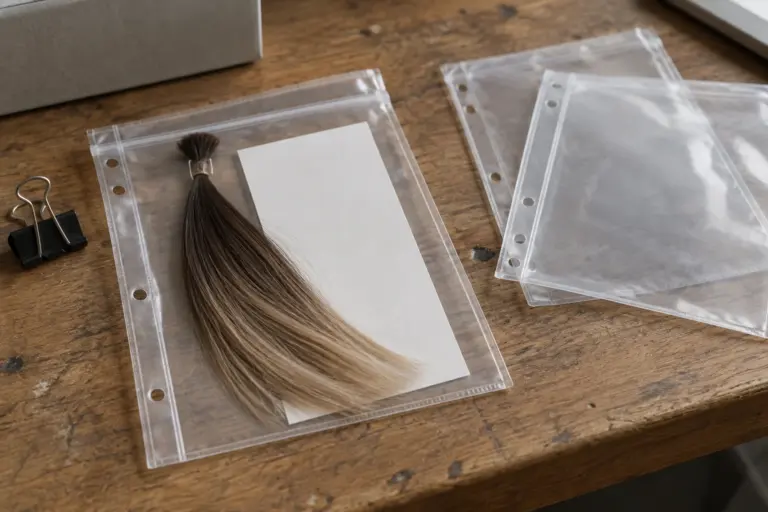
Use the checks below with front, side and back photos, a video, and the physical sample.
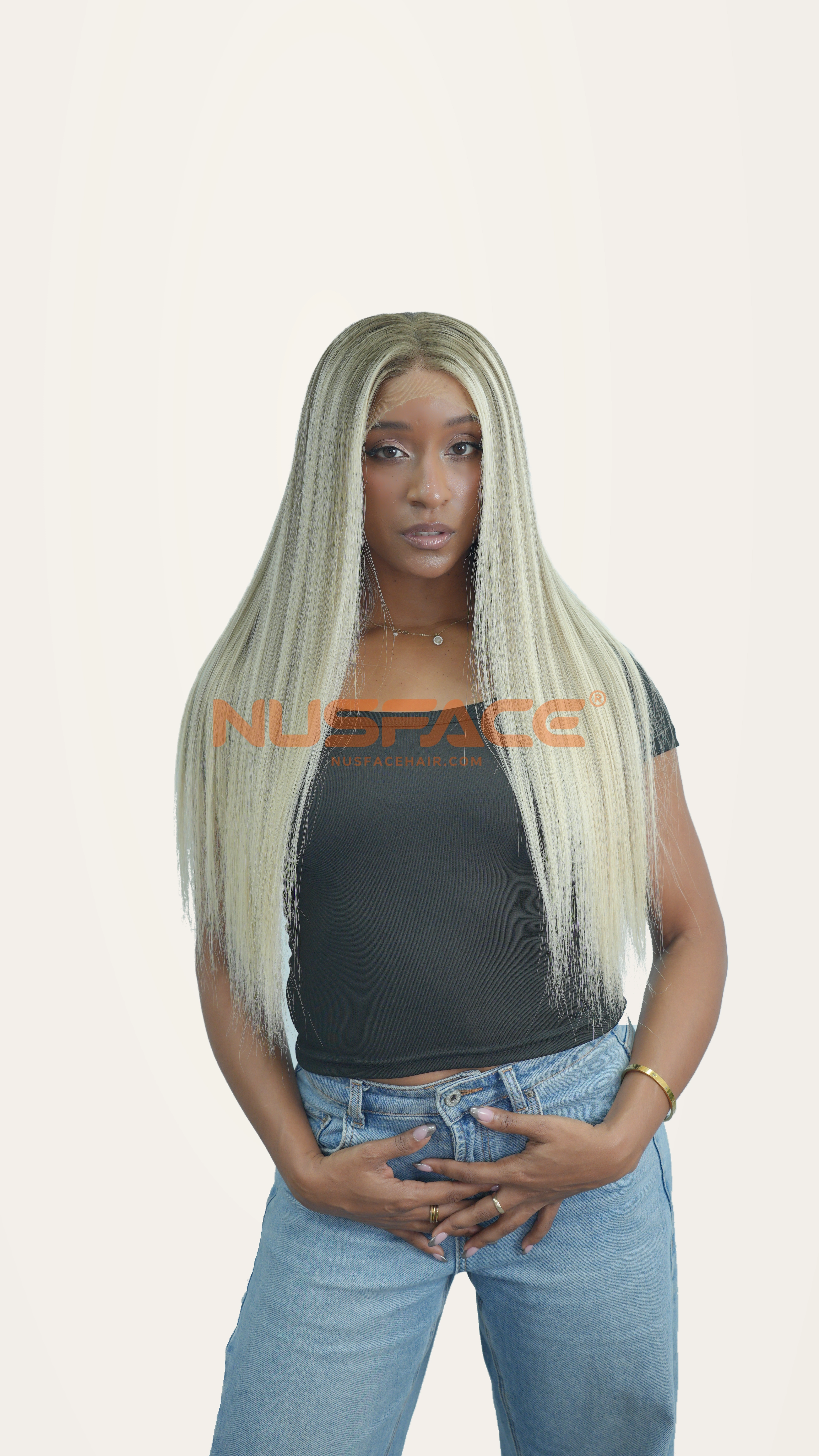
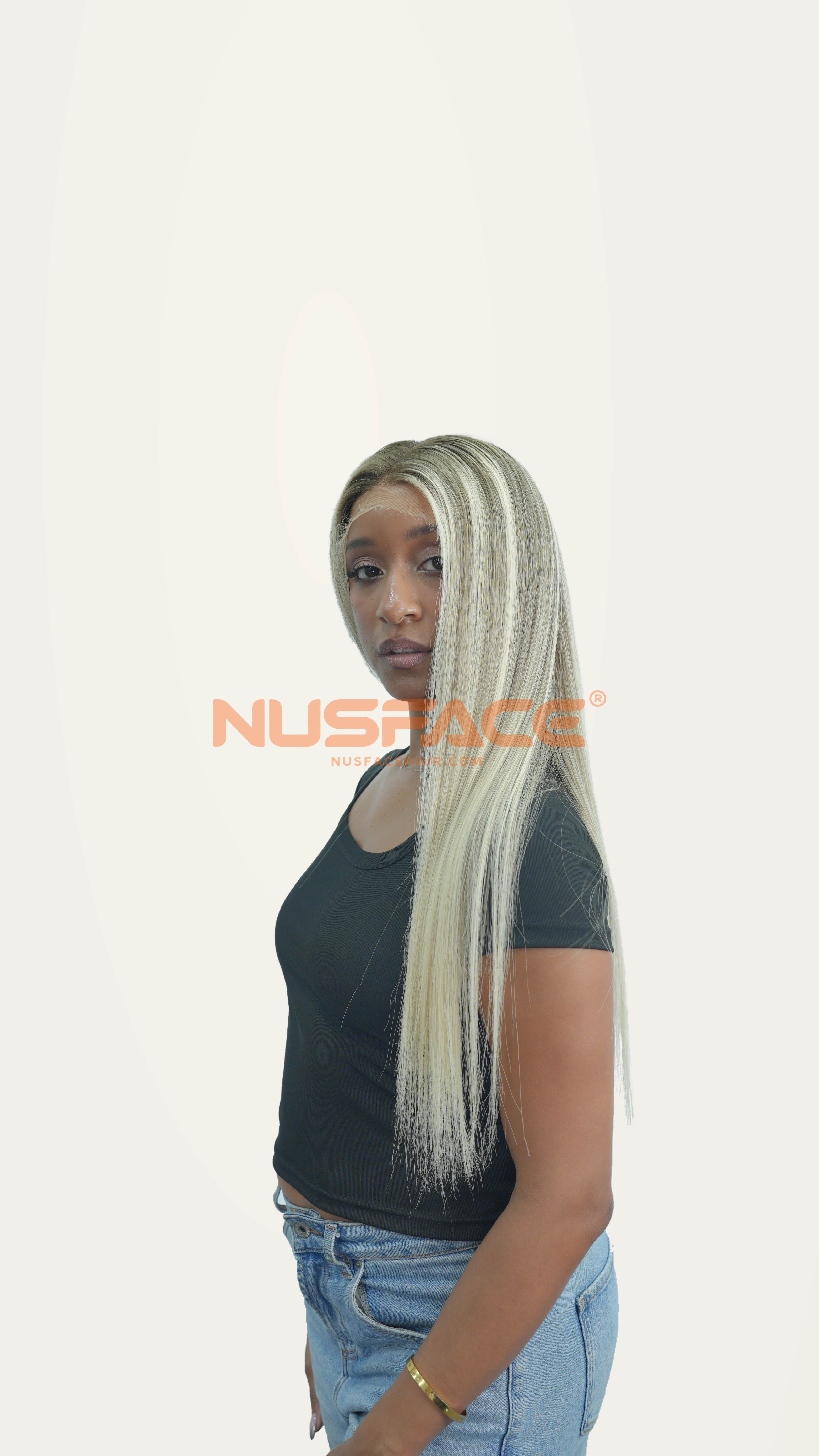
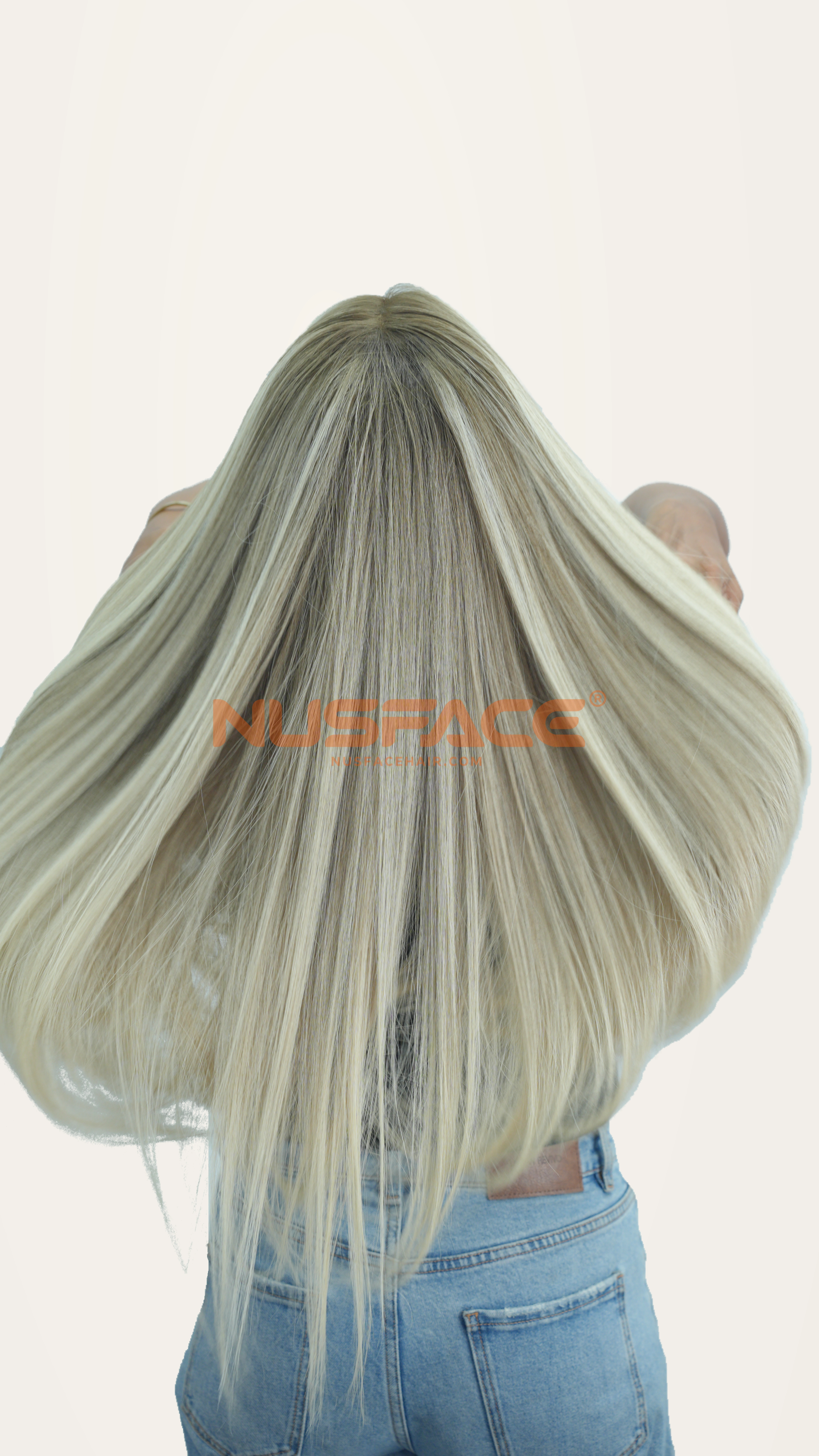
Check 1: Does the root transition follow the approved direction?
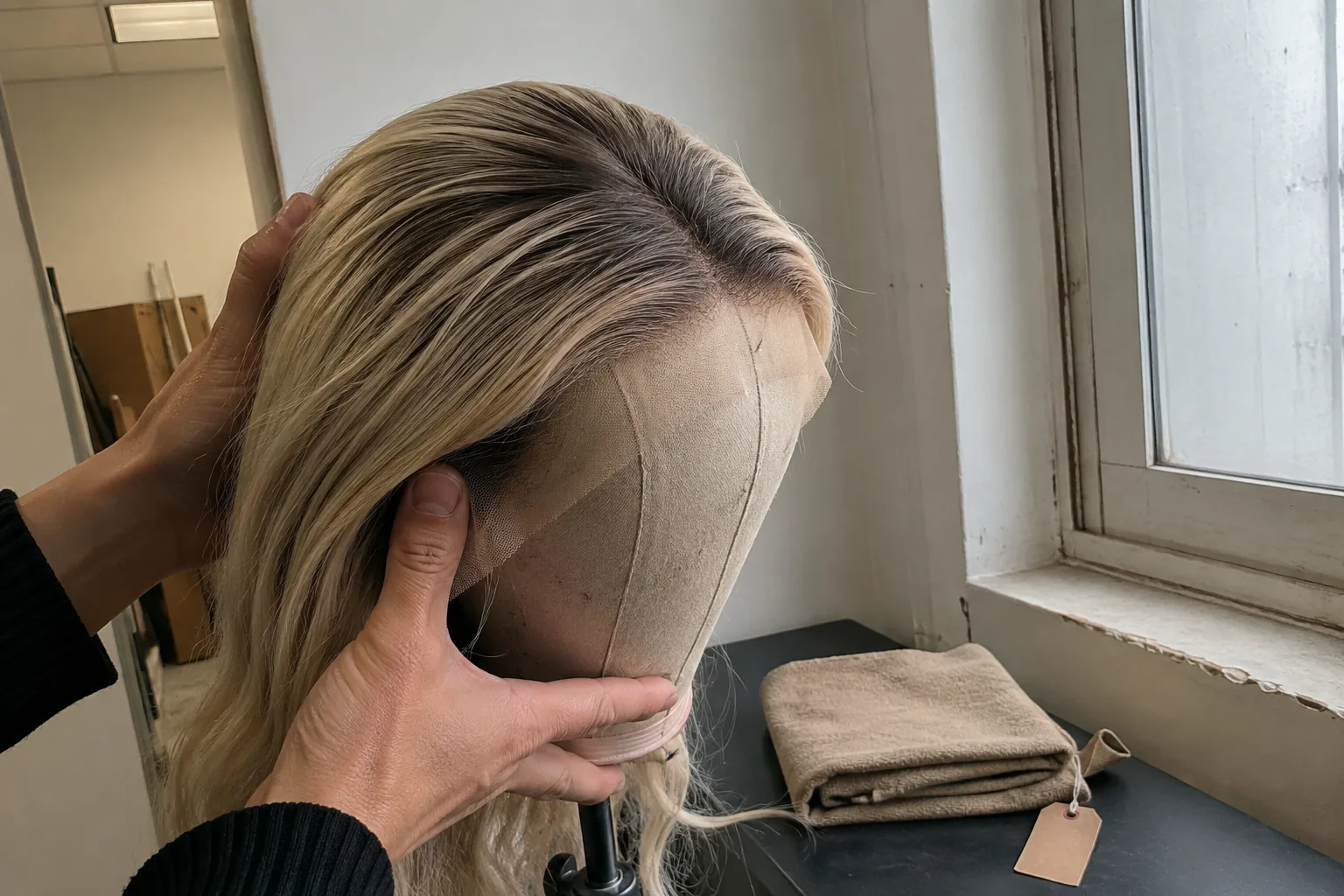
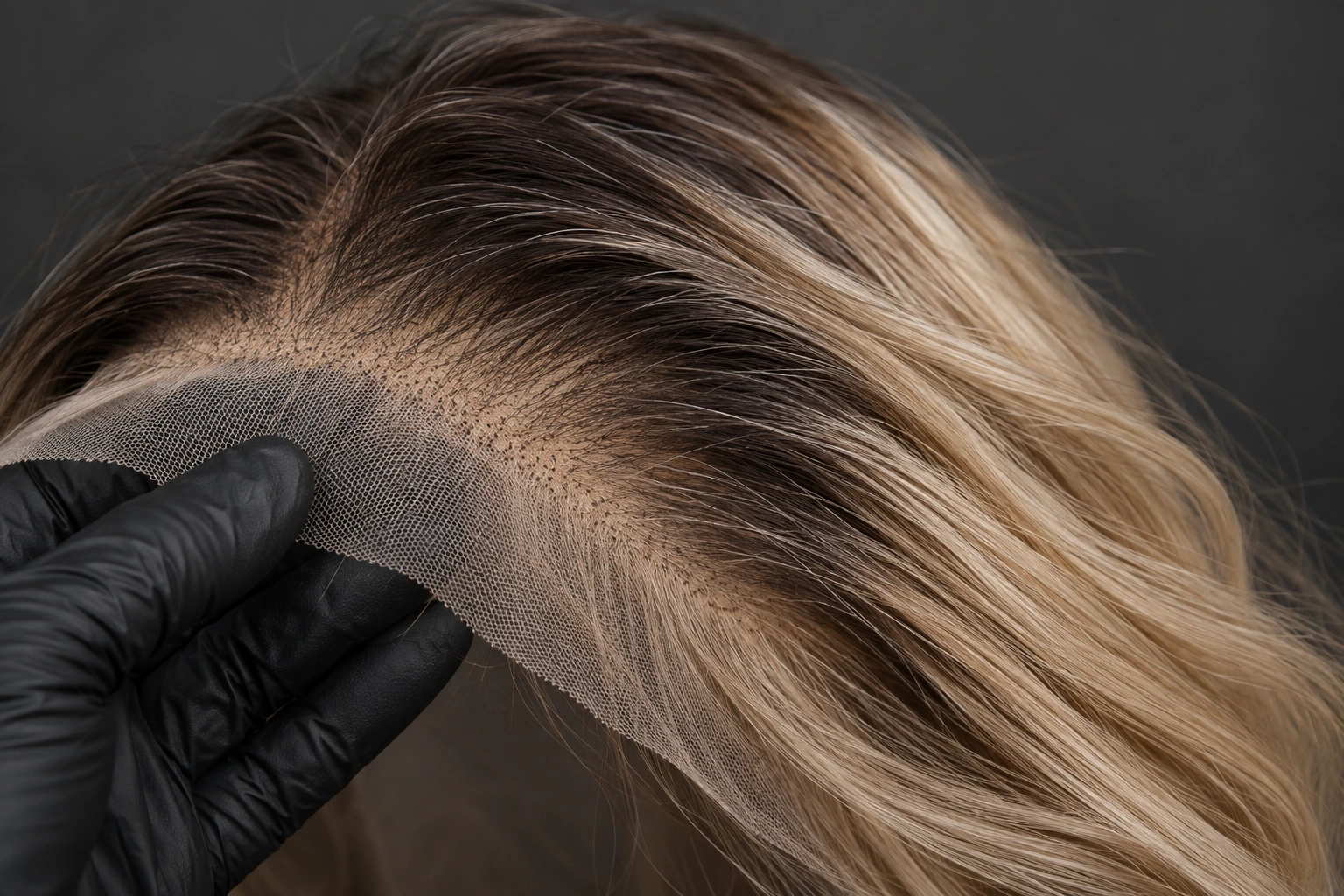
Start with the parting, then move to the full front view. Record how deep the root should be, where the lighter color begins and whether the front is intended to be brighter than the back.
Avoid judging the root from one dark studio photo. Ask for a second angle or an available video if the transition is difficult to read. Screen color is a direction, not a substitute for inspecting the physical unit.
Useful brief language:
“Keep a visible brunette shadow root through the parting. Begin the brightest face-framing pieces higher than the side ribbons, and keep the back transition softer.”
Check 2: Do the lighter ribbons have a deliberate position and width?
Look beyond the brightest front piece. Follow the lighter sections through the side and back. Ask:
- Are the ribbons concentrated around the face or distributed across the full unit?
- Are they fine, broad or mixed?
- Do they begin at varied heights, or form one obvious horizontal line?
- Is the contrast consistent with the reference the factory approved?
There is no single correct spacing. The point is to make the placement explicit enough that the buyer and factory are discussing the same result.
Check 3: Does the tone stay coherent from mid-lengths to ends?
Warm honey, caramel, beige and cool ash are directions, not universal color codes. Check the full unit under ordinary light and compare the front, side and back before approving the tone.
A close-up may show attractive strands while the full view reads too warm, too cool or visually heavy in one area. The reverse can also happen: a full view looks balanced, but the parting reveals a transition that does not follow the brief. Use both distances.
NUSFACE checks the finished color as part of its seven-step quality inspection. Ask the team to show the finished tone under consistent light before dispatch.
Check 4: Do the parting, front and body read as one finished unit?
Color and construction are separate approval decisions, but they meet at the front and parting. Confirm:
- the requested 5×5, 13×4 or 13×6 lace option;
- the preferred parting direction;
- the root depth visible around that parting;
- whether the front brightness connects naturally with the main color map;
- the selected length and 180% density reference.
This is also where generic promotional graphics can mislead a buyer. If a page combines one lace close-up with a different finished wig, ask which details belong to the unit being quoted.
Check 5: Can the result be written down for a reorder?
“Same as last time” is weak reorder language unless both sides know which sample, images and specifications it refers to.
Keep a compact approval record, using the approved-sample record for reorders to identify the photos and specifications both sides will use:
| Approval item | What to record |
|---|---|
| Finished reference | Page, file name or approved sample identifier |
| Root | Depth and transition direction |
| Ribbons | Front brightness, width, spacing and back distribution |
| Tone | Agreed warm/cool direction and approved viewing photos |
| Construction | Length, 5×5, 13×4 or 13×6 lace, 180% density and parting |
| Order | Quantity, packaging, destination and shipping contact |
One anonymized NUSFACE customer path shows why this matters. A buyer tested one finished unit, confirmed that the coloring was right, then asked about a further quantity and a catalog. The first unit did not eliminate the need for a written reorder brief; it gave both sides a physical reference to describe.
What NUSFACE checks before dispatch
NUSFACE uses a seven-step quality inspection. Before dispatch, we check the following details:
- hair source;
- lace and knots;
- color consistency;
- packaging.
The homepage shows the complete seven-step sequence. Use that sequence to ask which checks have been completed for your sample. If a buyer needs to see the facility or discuss the inspection path, the sales team can arrange an available live video viewing time through WhatsApp.
Questions to ask before paying for a custom sample
Use these questions in the inquiry itself, not as an afterthought:
- Which reference image and written color direction will be attached to the order?
- Which length, lace and density are included in the quote?
- Is the price product-only or does it include shipping to the destination?
- When is the unit expected to be ready for dispatch, and what is the estimated transit time after dispatch?
- Which photos or video angles are available before shipment?
- What should be referenced if the buyer wants the next order to follow the approved sample?
Clear product and delivery details make the sample easier to judge: you know what you ordered, what the price includes and which reference will guide a later order.
Use a finished reference, then state what must change
Start with the finished balayage color references. Choose the closest direction, then send the details you want to keep or change through Custom Service.
For a faster discussion, message the sales team on WhatsApp with the reference, length, lace, density, quantity and destination.
YOUR NEXT STEP
Get a quote for your color brief.
Send the reference, length, lace, density and quantity. Our team will confirm the details for your custom order.