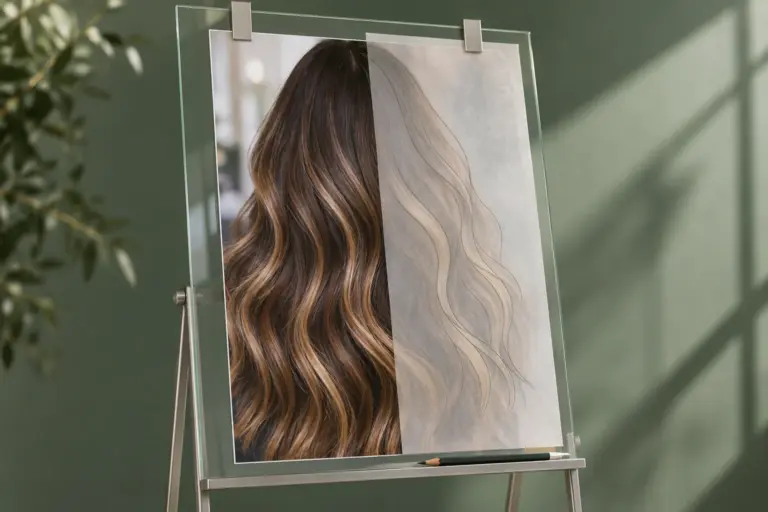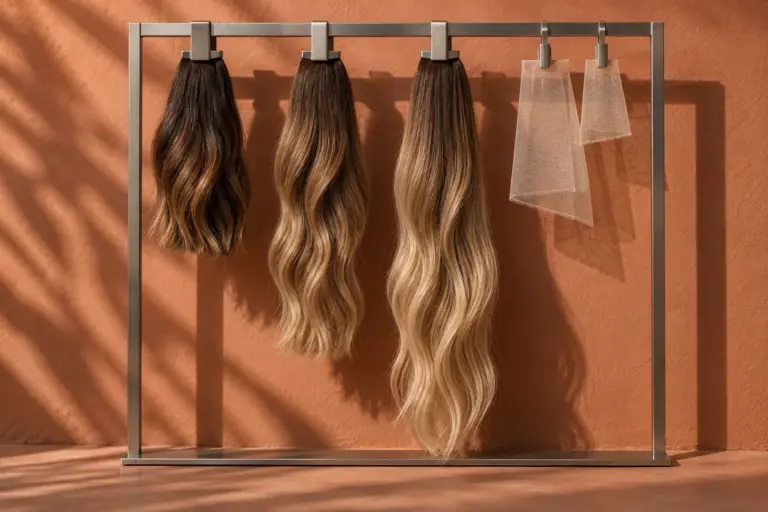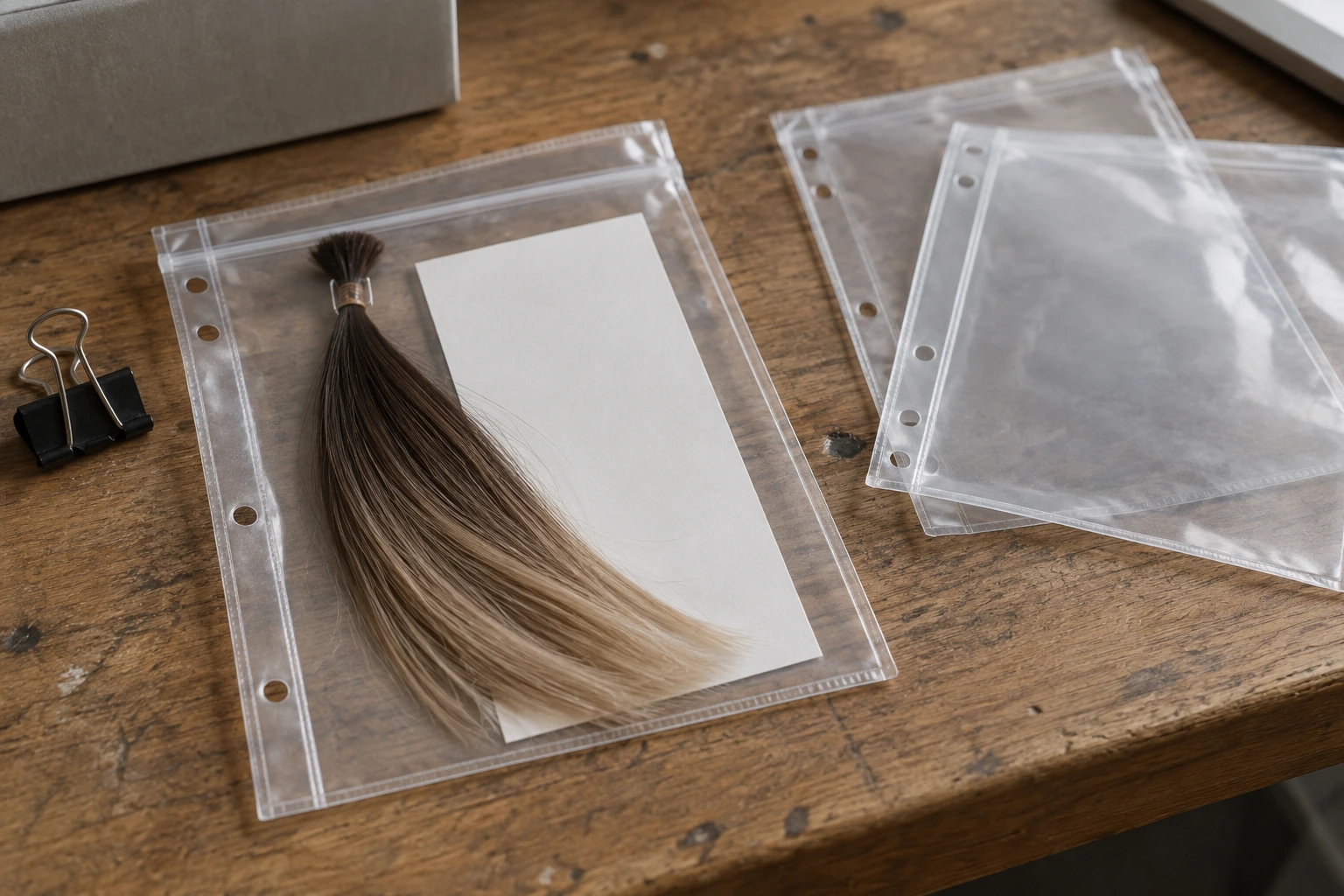
For a repeat balayage order, the approved sample is the most useful starting point. Keep its final specifications and approval photographs together so the next order can be compared with the result you actually accepted. A previous order number helps locate the job, but may not explain later decisions about the root, face frame or end tone.
This guide is for wig retailers, salon owners and private-label buyers who have approved their first sample and are preparing another order. If you are still choosing the first color direction, start with our reference-photo color brief.
Keep the final approval separate from the next request
Superseded references
Earlier inspiration and correction-round photos: keep labelled, outside the current approval set.
Approved reference
Final photographs, specification and approval date: the comparison point.
Next request
Keep, change and unresolved points: confirm the new scope before proceeding.
A later photo of a worn, washed or restyled unit should not silently replace the original approval photograph.
Save the version you actually accepted
A sample can pass through several discussions before approval: shorten the darker root, soften a bright front section, keep more depth through the back. Save the photographs of the accepted result alongside the final written specifications. Label earlier photographs as superseded so they cannot be mistaken for the production reference.
Include any difference you accepted from the original request. If you agreed to a warmer end tone, that decision belongs in the reorder record. Otherwise the original inspiration photo and the approved sample may point the supplier toward different finishes.
Keep the physical wig if it is available, and note whether it has since been worn, washed, toned or restyled. Photograph it when approval is given. A later photograph should be labelled with its date and condition; it should not silently replace the original approval image.
Ask what reference the supplier can retain for a future order, and for how long. Confirm that arrangement in writing before relying on it for your next purchase.
Keep front and back evidence in the same record
 View larger image
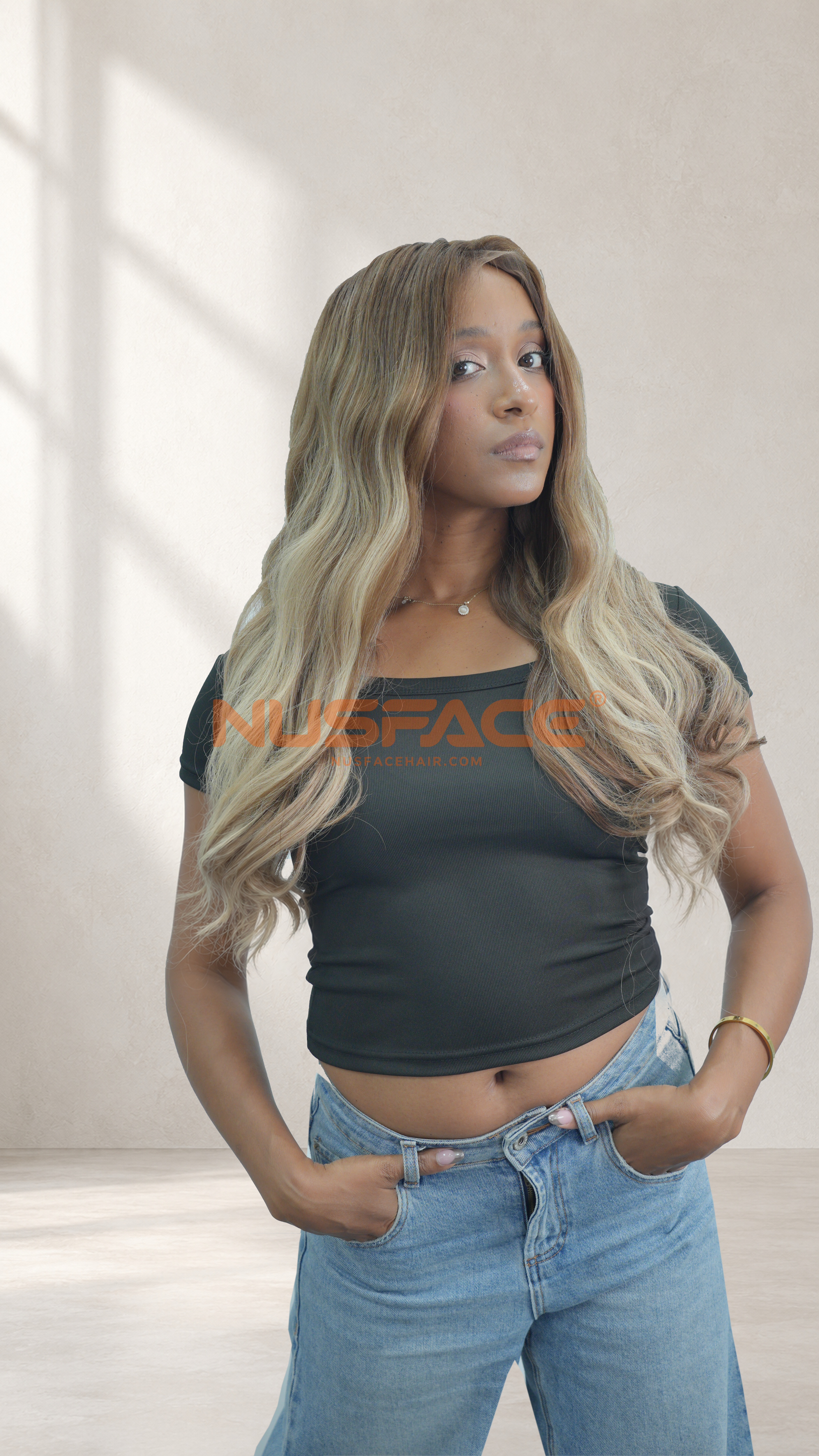
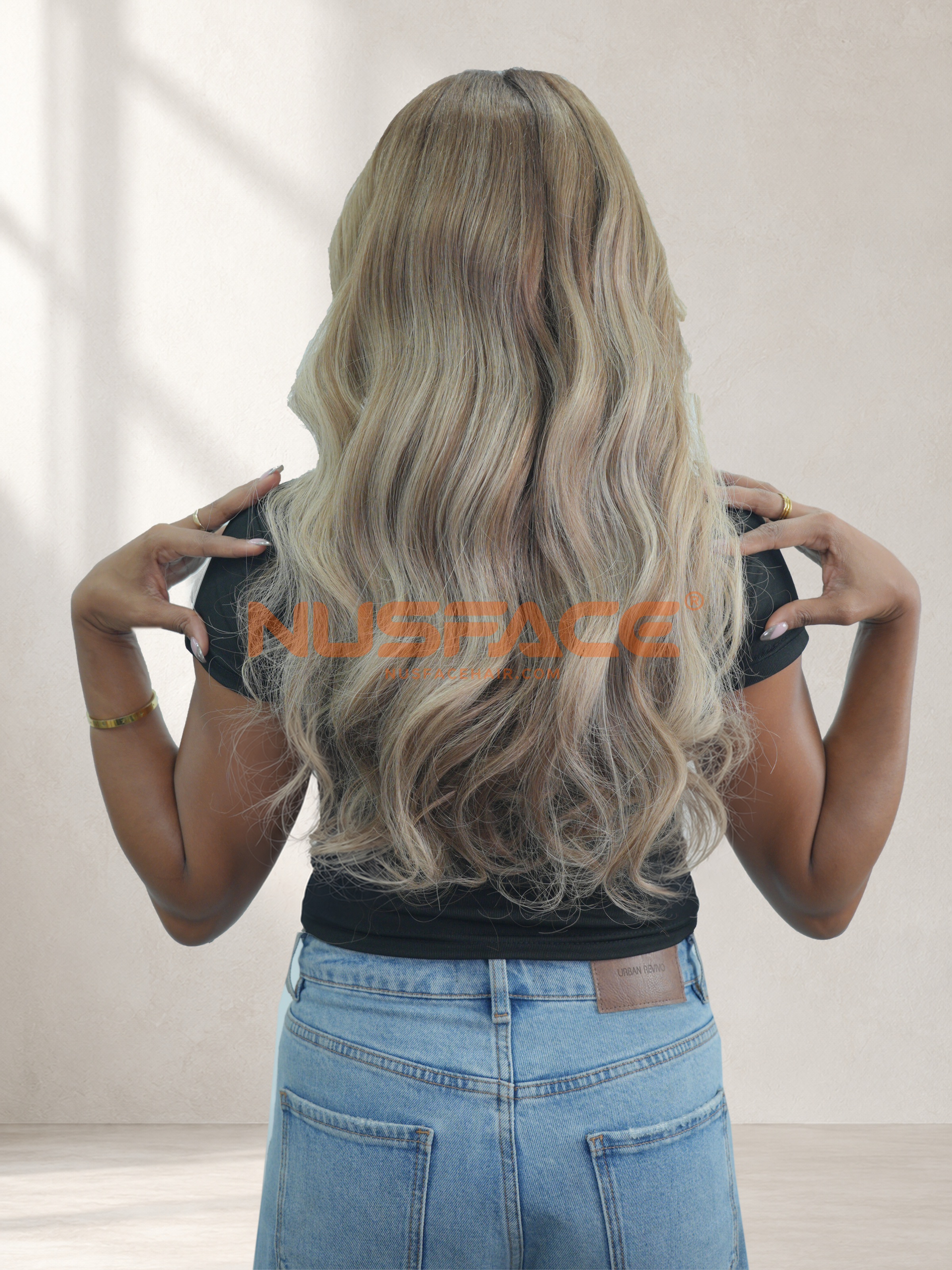
The front of this NUSFACE wavy balayage finished reference shows lighter pieces beside the face with darker depth near the parting. Those visible features explain only part of the finish. The back view shows how lighter strands and darker areas continue through the lengths.
 View larger image
Both photos show the same finished color reference, rather than two production batches. Saving only the front would leave the color arrangement through the back undocumented.
For your own approved unit, keep the front, back, sides and parting views together. Preserve the full lengths and ends in at least one view. Record which features matter most to the order, such as the darker root’s reach, the width of the face frame or how much depth remains through the back. You do not need to rewrite the first brief; you need to identify the result that passed review.
Separate repeat orders from revised orders
“The same color, but longer” contains a change. A different length, texture, parting or lace choice deserves a written check of how the approved placement should carry across. Ask whether the supplier needs a revised reference or another sample to confirm the result.
Use two short lists: keep and change. This makes it possible to confirm a revision without reopening every accepted detail.
For example, if you are requesting a longer unit, you could write: “Keep the approved root tone and face-frame width. Change the length to 26 inches. Please confirm where the lighter transition will begin on that length before proceeding.”
| New request | What to confirm before proceeding |
|---|---|
| More units with the same specifications | Identify the approved reference and ask the supplier to reconfirm the order scope and comparison method. |
| A different length | Confirm the intended transition position and the amount of lighter color through the ends. |
| Straight styling changed to waves, or vice versa | Confirm the requested texture and the styling used for approval photographs. |
| A narrower or brighter face frame | Mark the changed section and ask what updated approval is needed. |
| Different lace or parting requirements | Reconfirm construction and the appearance required around the parting and hairline. |
Do not assign a new sample requirement automatically to every change. Let the supplier review the request, then agree what must be approved before that order proceeds.
Agree how the reorder will be compared
Agree how the new pieces will be compared with the approved sample. Consistent light, orientation and styling make it easier to distinguish a real color or placement difference from a difference in presentation.
Place the approved wig and the new unit under the same light, with similar parting and styling. A wavy photo beside a straight one, or a bright image beside a dim one, makes placement and tone harder to compare. Side-by-side views give both buyer and supplier a clearer starting point.
Photos help identify a question. A physical review may still be needed to settle a sensitive tone decision. Ordinary daylight and phone photographs are not a calibrated color test.
Describe acceptance in observable terms. Which root tone and depth, face-frame width, contrast through the back and end tone must carry over? What small placement variation, if any, is acceptable to both sides? Ask the supplier to answer these points against the approved reference. Hand-painted variation does not settle whether a particular difference meets the order.
If a photograph looks wrong, identify the unit and area first: “The back appears lighter through the middle than the approved reference. Please show both under the same lighting before we confirm.” That gives the supplier a specific comparison to make.
Keep a short reorder record
The following fields can live in an email, a document or a message saved with the sample photos. Use your own order identifiers.
- Approved version: sample/order ID ________; approval date ________; final photo filenames ________. Earlier files marked superseded: ________.
- Approved construction: hair description, length, texture, lace, density and any agreed cap or parting details.
- Keep: accepted root, face frame, back and end-tone details ________; accepted differences from the first brief ________.
- Change: requested revision ________ (write “none” if unchanged); new request date/version ________.
- New order: quantity, packaging, destination and requested dispatch date.
- Comparison: who holds the physical reference, available approval views and agreed review conditions.
- Open points: question ________; supplier answer or required view/sample ________; status pending / resolved ________.
- Confirmation: accepted scope/quote version ________; timing ________; approval date ________.
Give this new request its own date/version. Do not overwrite the previous approval. If the physical sample has been sold or altered, record that condition and identify which original photographs and specifications remain available. Close each open point with the supplier’s written answer before treating it as approved.
Reconfirm the commercial details
A previous purchase provides context for a quote. It does not establish the current price, shipping scope or dispatch date for a different quantity or specification. Ask for those details with the new order.
NUSFACE can review the approved color against the length, lace, texture and quantity you want to reorder. The displayed styles are references for custom work; a change of specification should be confirmed with the new quote. MOQ is 1 piece.
Custom orders are usually prepared for dispatch in 3–7 days after the brief and payment are confirmed. That is dispatch preparation, separate from transport. Confirm the timing for the new order, particularly if the color, construction or order scope changes.
NUSFACE’s seven-step quality inspection includes Tone Map and Color Check. Agree with the business team which records, retained references and comparison arrangements will be used for your reorder. For the broader physical review, use our balayage wig sample checks.
Send the approved reference with your next request
Contact the NUSFACE business team on WhatsApp with the approved reference, specifications, requested changes, quantity and destination. The team can review the scope and confirm the brief, quote and timing. You can also use Custom Service; send reference images through WhatsApp or email at service@nusface.com.