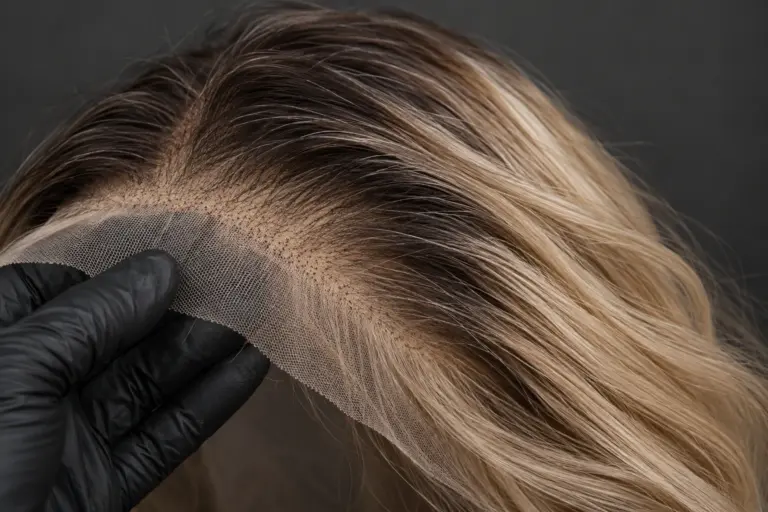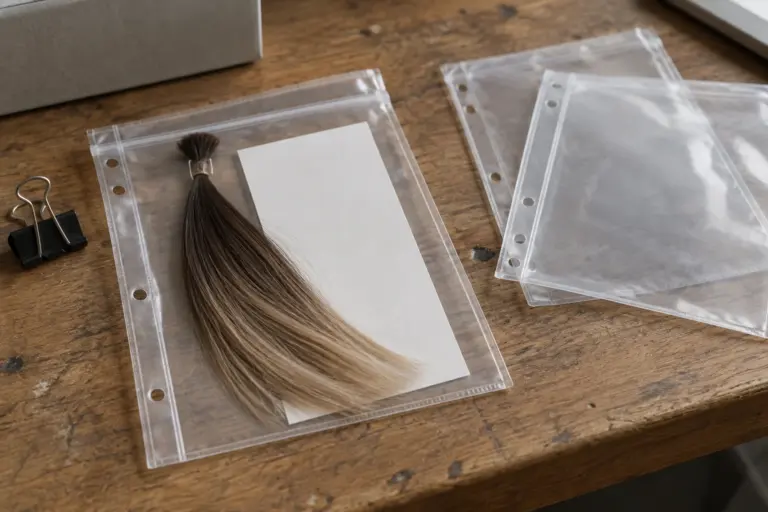
A custom balayage wig needs the chosen color and the chosen construction to arrive together. NUSFACE checks the work through seven stages: Hair Grade, Base Build, Tone Map, Hand Paint, Color Check, Lace & Knots, and Final Pack. A root and highlight plan carries the color request into production; the construction and final packing checks cover details a finished beauty photograph cannot show.
For example, a lighter face frame can be paired with a darker back, but it still needs to fall in the intended parting. That is why color placement and the cap choice need to be considered together. The stages below explain where those details enter the review.
In this article
First, identify what the sample must demonstrate
Choose the main color reference and state which details you want to keep. If another image is included only for the root or face frame, label that purpose. Then confirm the construction being quoted: hair material, length, lace, density and intended parting.
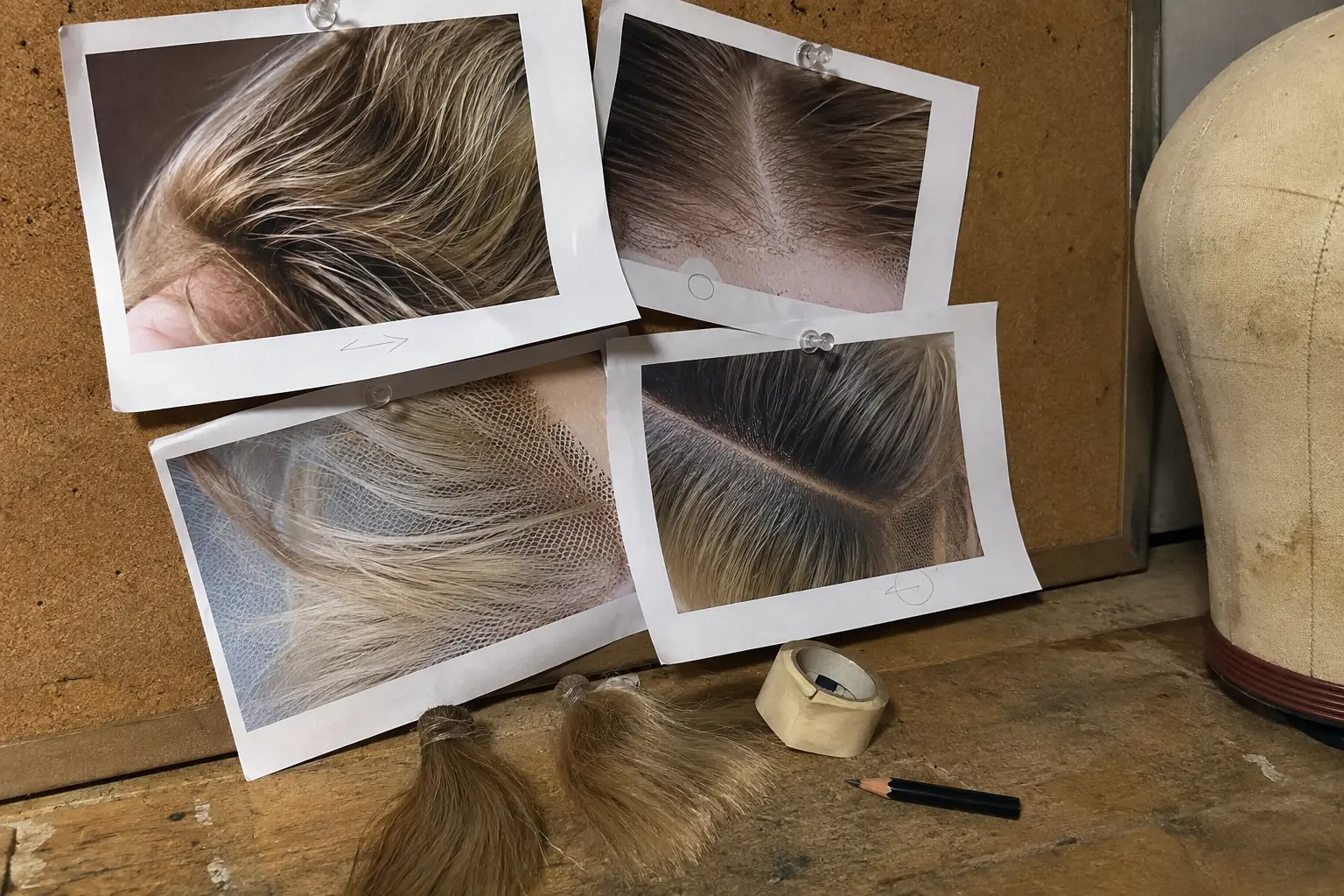
The reference-photo briefing guide provides the full template. For this quality review, keep three questions beside the sample: Does it follow the agreed construction? Does the color follow the chosen placement and tone? Is this the unit and version being approved?
The seven checkpoints and the buyer’s corresponding questions
1. Hair Grade: confirm the material claim
NUSFACE’s published material description is Superior Raw Hair. Confirm that the quotation uses the agreed material description. If your business requires additional information about origin or processing history, ask for that information explicitly; the name alone does not establish it.
A photograph can show the finished appearance, but it cannot establish microscopic cuticle claims or a complete processing history. The raw, virgin and Remy guide separates those claims from what a buyer can observe in a sample.
2. Base Build: separate construction from color
Confirm the ordered length, lace configuration, density and parting. A color reference is not an instruction to copy every unseen construction detail from that photograph.
If you want a similar color on a different lace configuration, check the front and parting again on the proposed sample. Use the closure versus frontal guide to decide which coverage you need before approving the build.
3. Tone Map: identify the areas that matter
Tone Map concerns where depth, brighter pieces and the final tonal direction should appear. Compare the root, face frame, sides, back and ends with the marked reference.
For example, a request to keep a dark root and soften the front should identify both areas. “Same blonde” leaves open whether the buyer means the tone, the amount of lighter hair or the position of the light sections. Marking those areas makes the request easier to compare with the finished piece.
4. Hand Paint: follow the intended placement
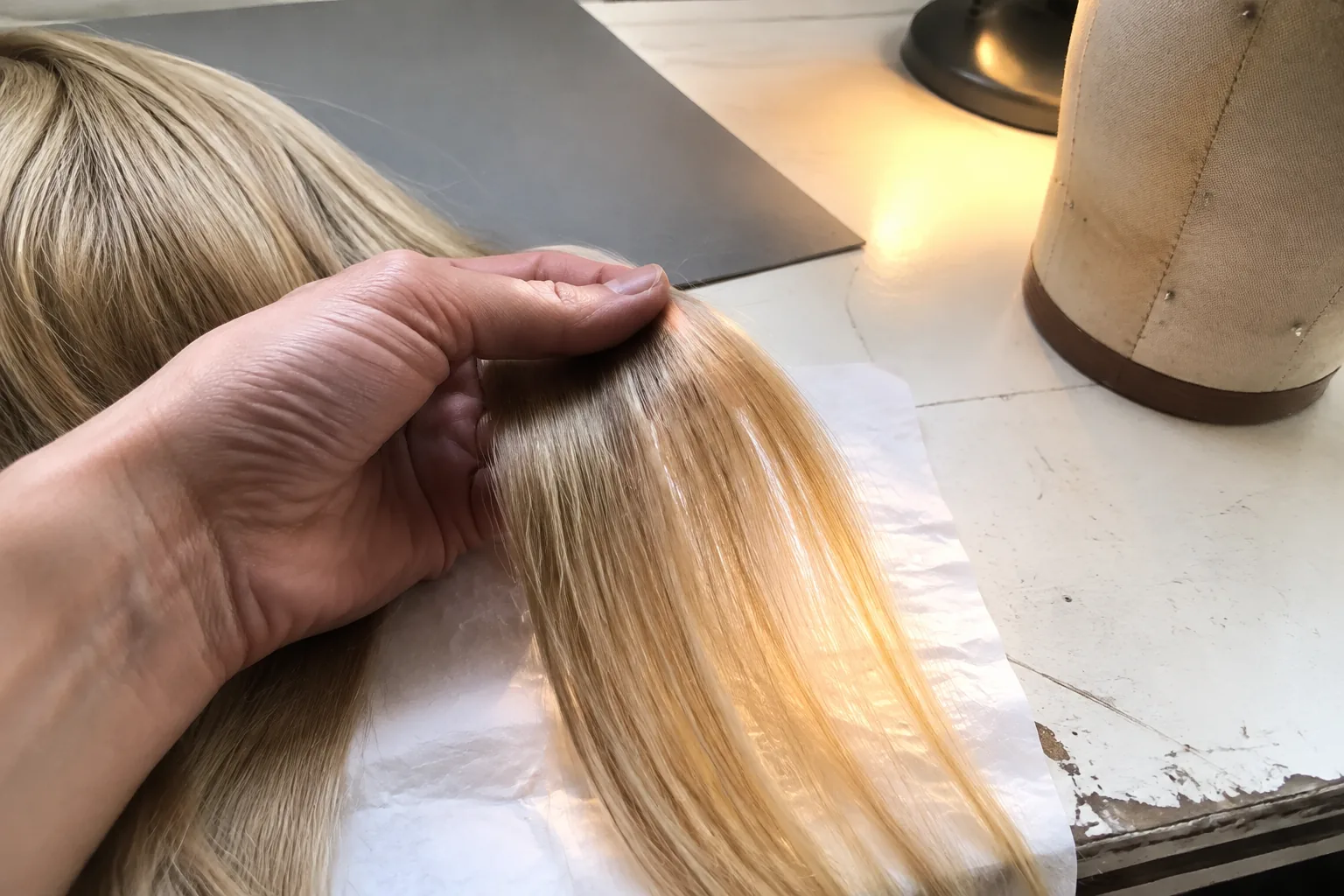
The approved placement guides color work through selected sections. When reviewing the result, follow the lighter sections from the front through the sides and back. Check where they begin and how their width and contrast relate to the reference.
Look at the piece in the intended parting as well as from the back. A front view can show the face frame clearly while leaving the placement through the rest of the hair out of view.
5. Color Check: review the whole piece and the details
A full view helps show the balance of darker and lighter areas. Closer views help show the root transition, lighter sections and ends. Compare the same unit in clearly identified lighting rather than treating unrelated images as one color standard.
If a section looks different, mark the location and describe the difference: for example, a longer dark area at one side or more visible warmth at the ends. Confirm the viewing conditions before requesting a correction. A physical approved sample gives a larger order a stronger reference than a phone screenshot alone.
6. Lace & Knots: return to the front and parting
Check the selected lace option and parting against the order. Review how the visible root and front brightness meet that construction. A finished front photograph should belong to the unit being discussed, rather than a different example with similar coloring.
The sample inspection guide covers the broader checks. If the requested fit, cut or styling is part of the order, include it in the review too. NUSFACE has personnel who can handle these requests; agree the scope and price with the business team.
7. Final Pack: match the piece to the order
Confirm the unit or approved reference, quantity, packaging request and destination. Keep the final quotation and approval note together so the order does not rely on an earlier screenshot or an unconfirmed message.
Preparation for dispatch and carrier transit are separate. The current usual preparation period is 3–7 days after the color brief and payment are confirmed; use the actual quotation for the order’s timing and shipping terms.
Record what is approved and what still needs a decision
An approval note should distinguish accepted details from requested changes. An illustrative note could read: “Keep the root depth and back placement shown in reference A. Before approval, confirm the quoted lace configuration and show the front in the agreed parting.” That is more specific than “Looks good” or “Make it better.”
If the sample will guide a later order, retain the agreed images, specification and final change record. The reorder guide explains what to carry forward and why a changed length or construction needs a fresh decision.
Ask about the checks for your custom request
Use the finished color references as starting points, or bring your own design. The team confirms the color, construction and commercial scope for the particular request through Custom Service.
To discuss an order-specific check or request an available video factory viewing time, contact NUSFACE on WhatsApp. Include the specification or sample you want to discuss so the team can arrange a relevant viewing.