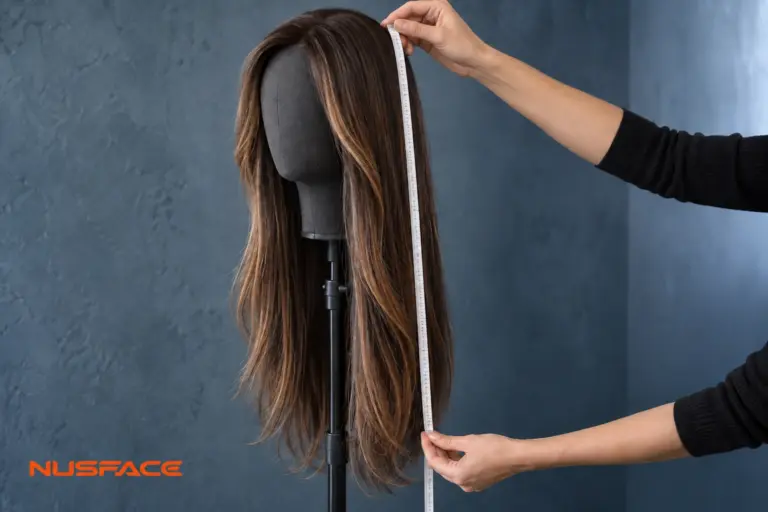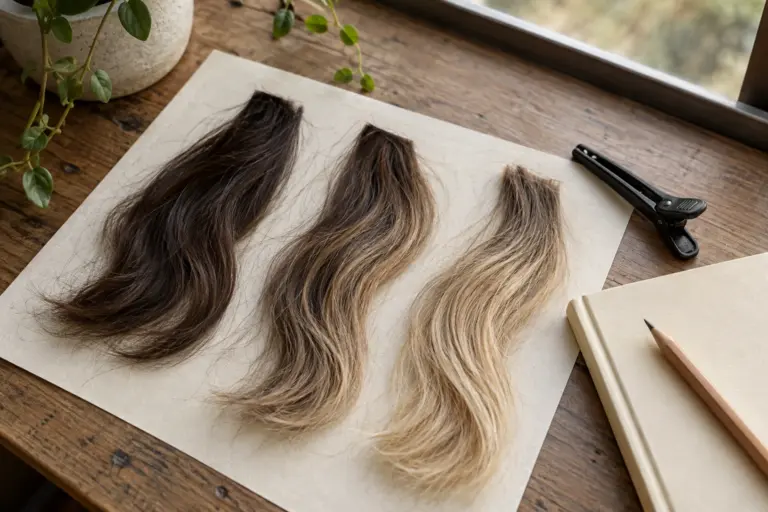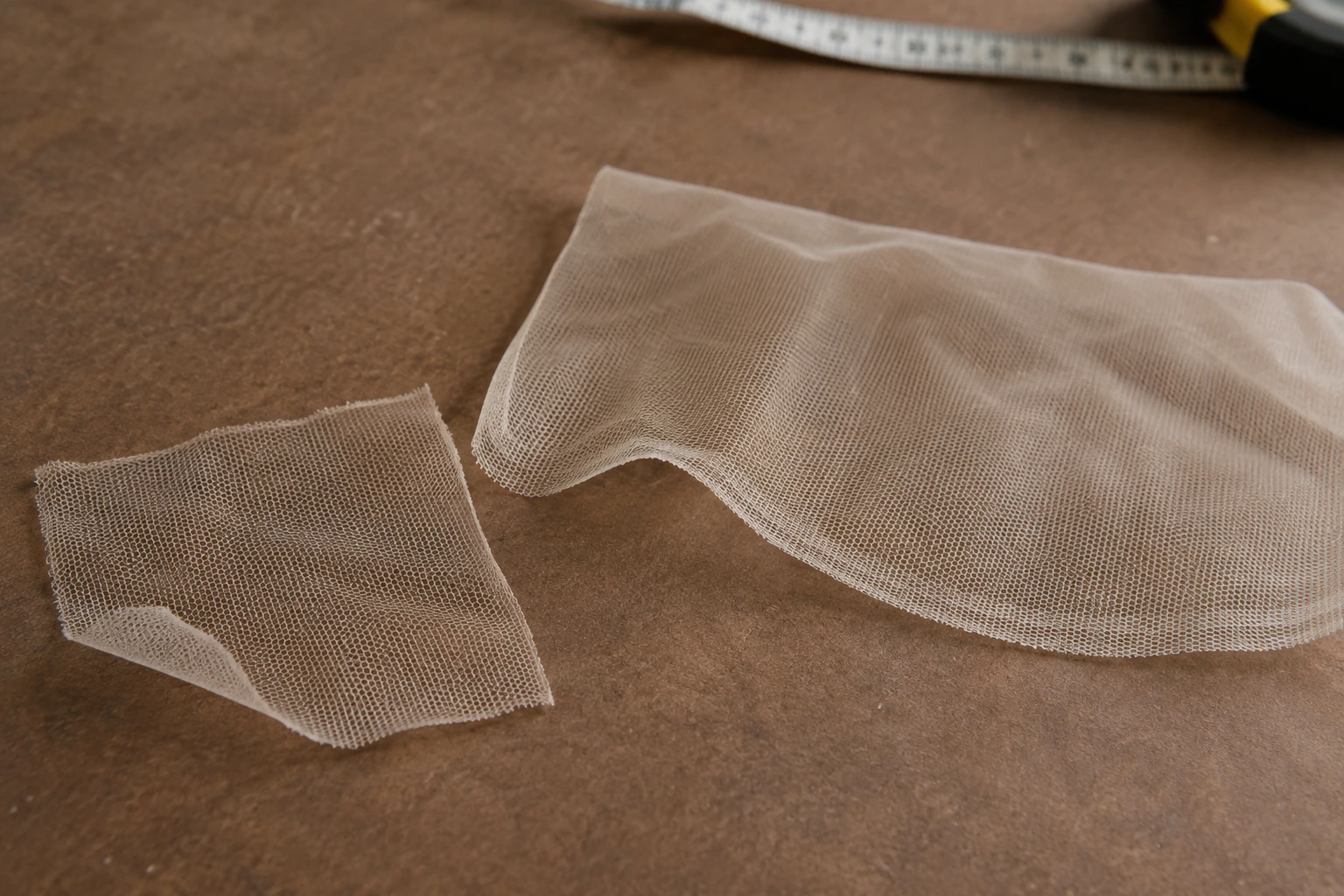
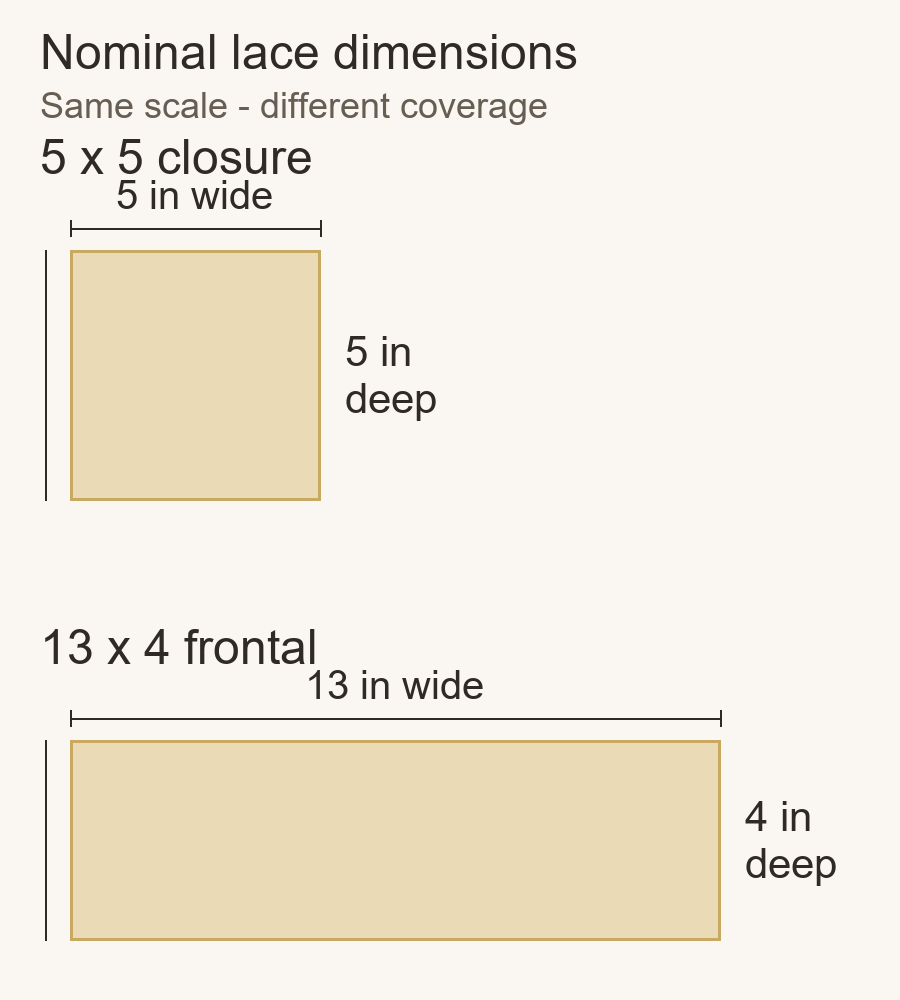
A 5×5 closure concentrates the lace around the top-front area. A 13×4 frontal extends it across more of the front hairline. For a balayage wig, choose between them by checking the parting and exposed hairline your customer wants, then review the color in that same style.
The numbers describe nominal lace dimensions in inches. They do not tell you the cap size, lace quality or whether the wig can be worn without adhesive. For a salon or wig business ordering a sample, those details belong on separate lines of the brief.
What changes between 5×5 and 13×4?
A 5×5 closure usually has a lace area approximately five inches wide and five inches deep, positioned around the front and top of the head. A 13×4 frontal describes approximately thirteen inches across the front and four inches toward the back. The difference is mainly where the lace coverage sits.
Notice that the wider option is not the deeper one in this size comparison. Also, a size label does not show the full outline of the lace. Ask to see the actual cap interior; do not assume that every point along a frontal has the same usable depth.
Use the dimensions to narrow the choice, then inspect the cap interior and the intended parting position on the sample. The quoted width and depth should describe the lace area you are actually buying.
| Buying question | 5×5 closure | 13×4 frontal |
|---|---|---|
| Where is the lace concentrated? | Around the top-front area. | Across a broader front hairline. |
| What parting should I confirm? | The requested line must stay within the available lace area. | Confirm the line and usable depth at the requested position. |
| What should the sample show? | The parting, front edge and how the hair falls around the sides. | The parting plus the front and side hairline areas you intend to expose. |
| Does this identify the whole cap? | No. Confirm fit and construction separately. | No. Confirm fit and construction separately. |
Choose the parting before approving the color
A closure is not automatically restricted to a fixed center part. A side part may be possible within its lace boundaries. The useful question is how far to the side your customer wants the part and whether that position is supported by the specific cap.
Send a marked front or top reference showing the desired line. Write “left side as worn” or “right side as worn” to prevent a mirrored photograph from reversing the instruction. If the customer plans to change the part, include both positions for the supplier to assess.
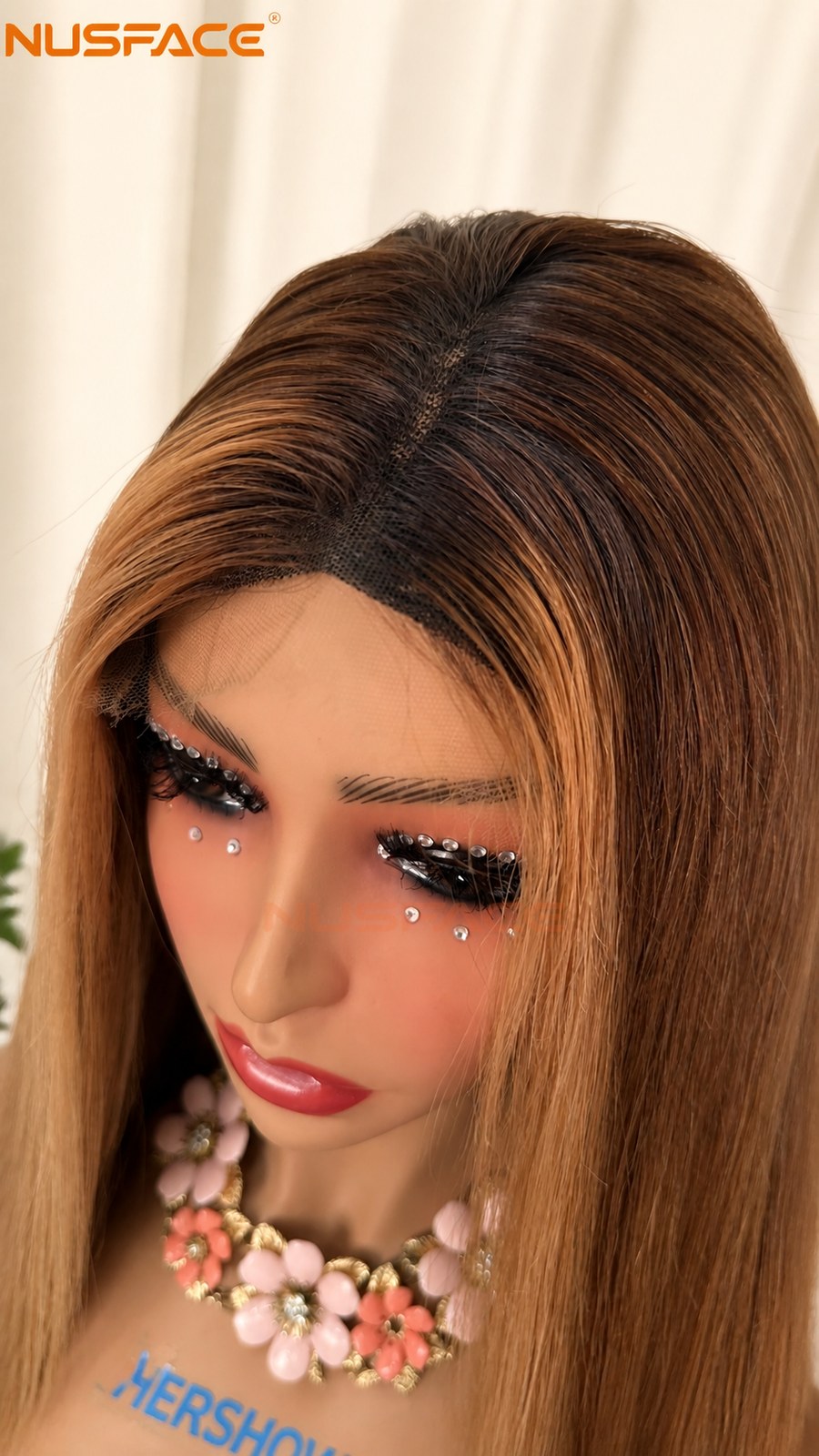
This matters for hand-painted balayage because the sample needs to show the face-framing color where it will actually be worn. Ask for the roots, transition and brighter front sections to be photographed with the intended part in place. If you want to compare a center and a side part, request both views rather than approving one photograph for both styles.
Match the lace area to the hairline the customer will show
For a customer who keeps the front hair falling around the face and wants a part within the central lace area, a 5×5 closure may meet the brief. Review the sample in that arrangement, including a side view. Avoid choosing solely from a photograph where the hair covers every edge you need to assess.
When the brief calls for a swept-back front or more of the side hairline to be visible, start by checking a 13×4 frontal’s actual coverage. Ask the supplier to show the relevant sides as well as the front. Wider nominal coverage is a reason to investigate that option; it does not guarantee every pulled-back style.
If the reference shows a high ponytail, include a back view and ask about the complete construction. A front lace measurement alone cannot confirm what the back or nape will look like in that style.
Keep lace quality, fit and fixing method separate
5×5 and 13×4 describe size configurations. They do not replace a discussion of the lace itself. If the order requires a particular lace material or appearance, state it explicitly and check a close view of the sample. Our HD lace versus regular lace guide covers that separate choice.
Confirm cap measurements and the intended way of securing the wig with your supplier or installer. Do not infer a glueless setup from either size label. Likewise, a larger lace area alone is not a reliable promise of better comfort, longer wear or a more natural finish.
For a fair price comparison, keep the hair length, density, color work and other requested details consistent across the two quotations. Then ask what changes when you select the alternative lace configuration. A cheaper quote for a different overall specification is not a direct comparison.
Request three views of the sample
Cap interior: ask for a clear view of the lace boundary and surrounding construction. Have the supplier identify the relevant dimensions on that specific cap if the shape is not clear from the photograph.
Top view with your parting: check the intended line and the visible root area. The photograph should show enough of the top to locate the part, rather than only a tight close-up of individual strands.
Front and sides in the intended style: compare the exposed hairline and how the face-framing color falls. If a section is covered by hair in the photograph, ask for a view that answers the remaining question before approving the sample.
Keep these images together with the color reference. For notes on root depth, transition and end tone, see how to turn a wig reference photo into a custom color brief.
Send a brief the supplier can quote
NUSFACE’s listed balayage options include 5×5, 13×4 and 13×6 lace, Superior Raw Hair, 180% density, and lengths of 14, 16, 18, 20, 22, 24, 26 and 28 inches. Confirm the complete configuration and any requirements outside those specifications in writing.
You can send the following with your reference photos:
“I am sourcing a hand-painted balayage wig for [salon / wig business]. Please quote [5×5 closure / 13×4 frontal / 13×6 frontal] at [length] and 180% density. Intended parting: [center / left as worn / right as worn]. The customer wants to expose [front / sides / other area shown in the reference]. Please assess the cap fit and fixing method for this use, and show the cap interior, requested parting, and front and sides. My color notes identify the roots, face frame and ends. Sample quantity: [number]. Destination: [country].”
Send the brief to NUSFACE on WhatsApp with the hairstyle reference. The best choice is the configuration that supports the requested look in the sample you inspect.