Ash blonde leans cool, with muted grey or silvery notes. Honey blonde leans warm, with golden or amber notes. For a balayage wig, that difference does not tell you how light the hair is, how dark the roots should be, or how much blonde should frame the face. Those choices need to be compared separately.
For a salon or wig business, the useful question is what the customer wants to change. Less gold in the lighter hair points toward a cooler tone. A front section that looks too bright may instead call for less contrast or narrower light pieces. Changing from honey to ash will not, by itself, change where those pieces sit.
In this article
Compare tone before comparing brightness
Think of tone as the character of the blonde and brightness as how light it looks. Wella’s explanation of hair levels and tones treats these as separate color decisions. An ash result does not have to be pale silver, and a honey result does not have to be a darker brown-blonde.
- Tone: ash blonde has cooler, muted grey or silvery notes; honey blonde has warmer gold or amber notes.
- Brightness: either direction can be lighter or deeper. Confirm how light the lengths should look in the reference.
- Root color: specify the depth and transition separately from the blonde tone.
- Balayage placement: identify where the lighter sections should appear, including the face frame and ends.
Compare the lighter sections first, then compare the root and the amount of blonde. Otherwise, a wig with more dark hair can look like the preferred color simply because it has less visible blonde. Ash and honey are tone descriptions, not universal supplier color codes.
When an ash direction fits the reference
An ash direction is worth discussing when the customer points to a muted blonde and wants less visible gold. Wella describes ash blonde as cool-toned; its examples also show why ash and neutral beige should not be treated as interchangeable names.
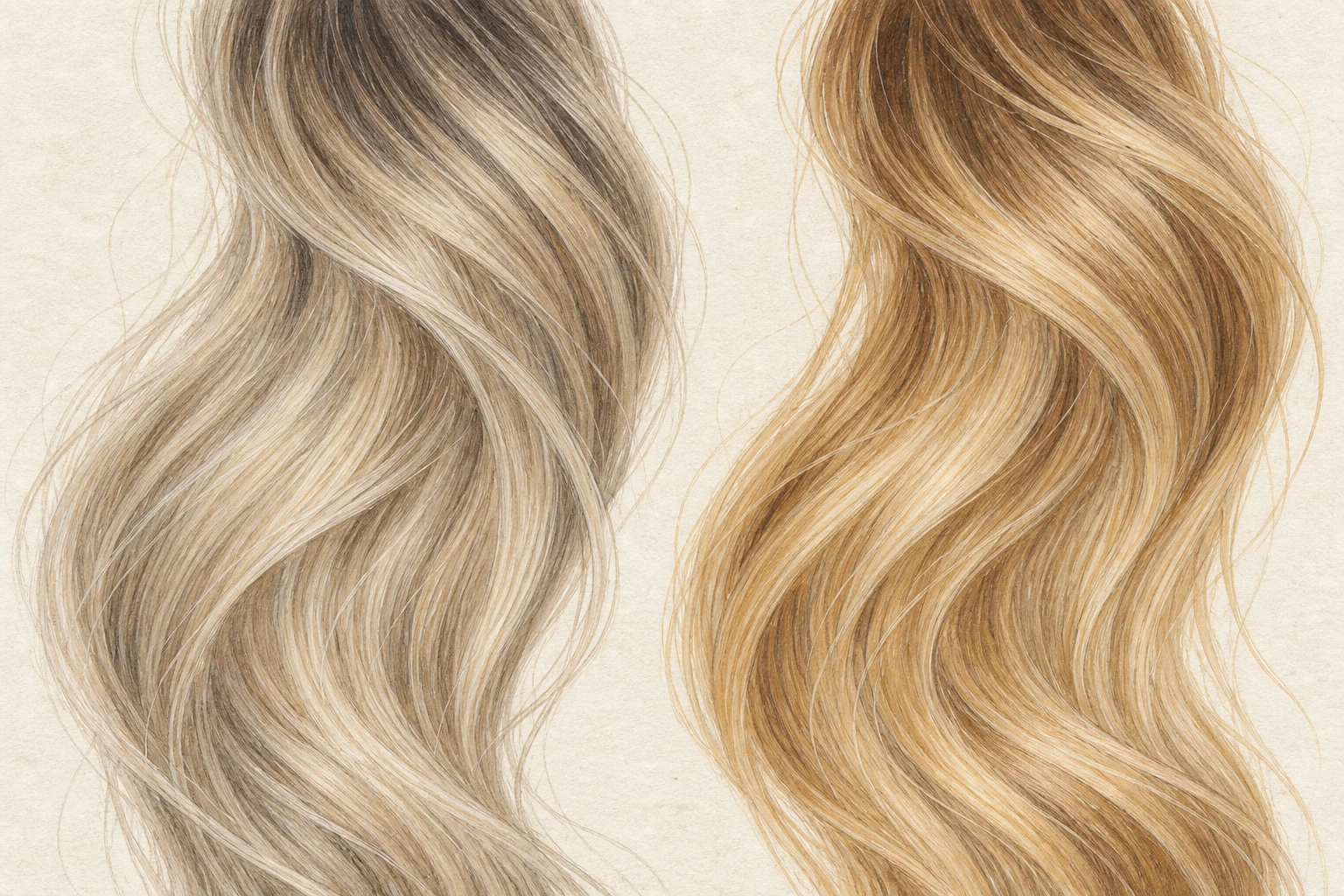
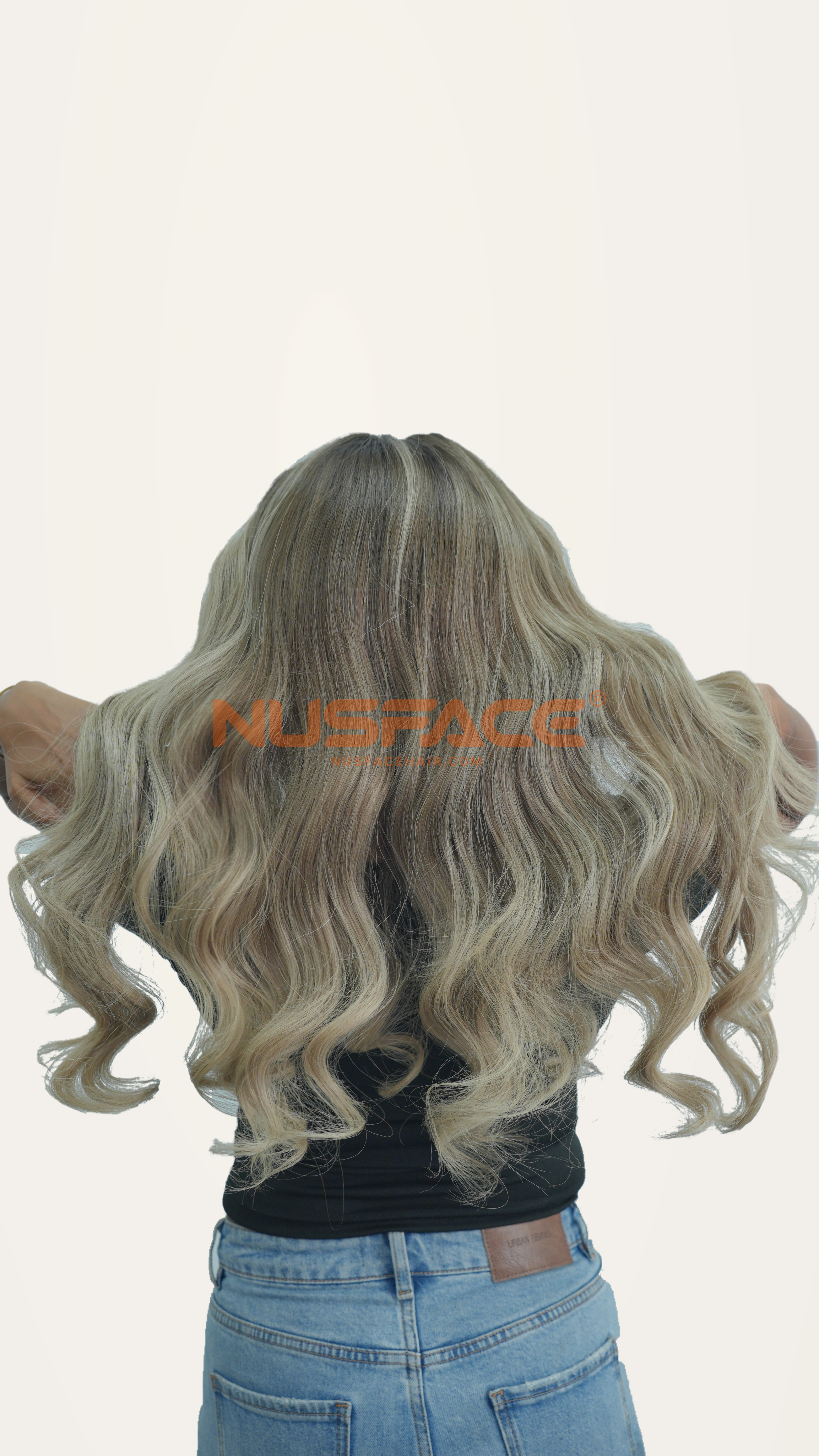
In the NUSFACE back-view photograph, the lengths have a muted appearance with darker areas visible between the lighter waves. Use that photograph to discuss the amount of contrast and the look of the lighter sections. It is one finished reference, not a promise that every ash order will look the same.
For example, a customer may like this darker background but dislike the grey cast in the lighter waves. That points toward keeping the contrast and discussing warmer light sections, rather than approving the whole ash direction. If the muted tone is what they want to keep, use the ash blonde sample briefing article for the detailed confirmation steps.
 View larger image
When a honey direction fits the reference
Honey blonde is a warmer starting point. L’Oréal Paris describes honey blonde through golden tones with amber, caramel and light-brown variation. The name can cover a range of looks, so specify how much warmth should remain in your sample.
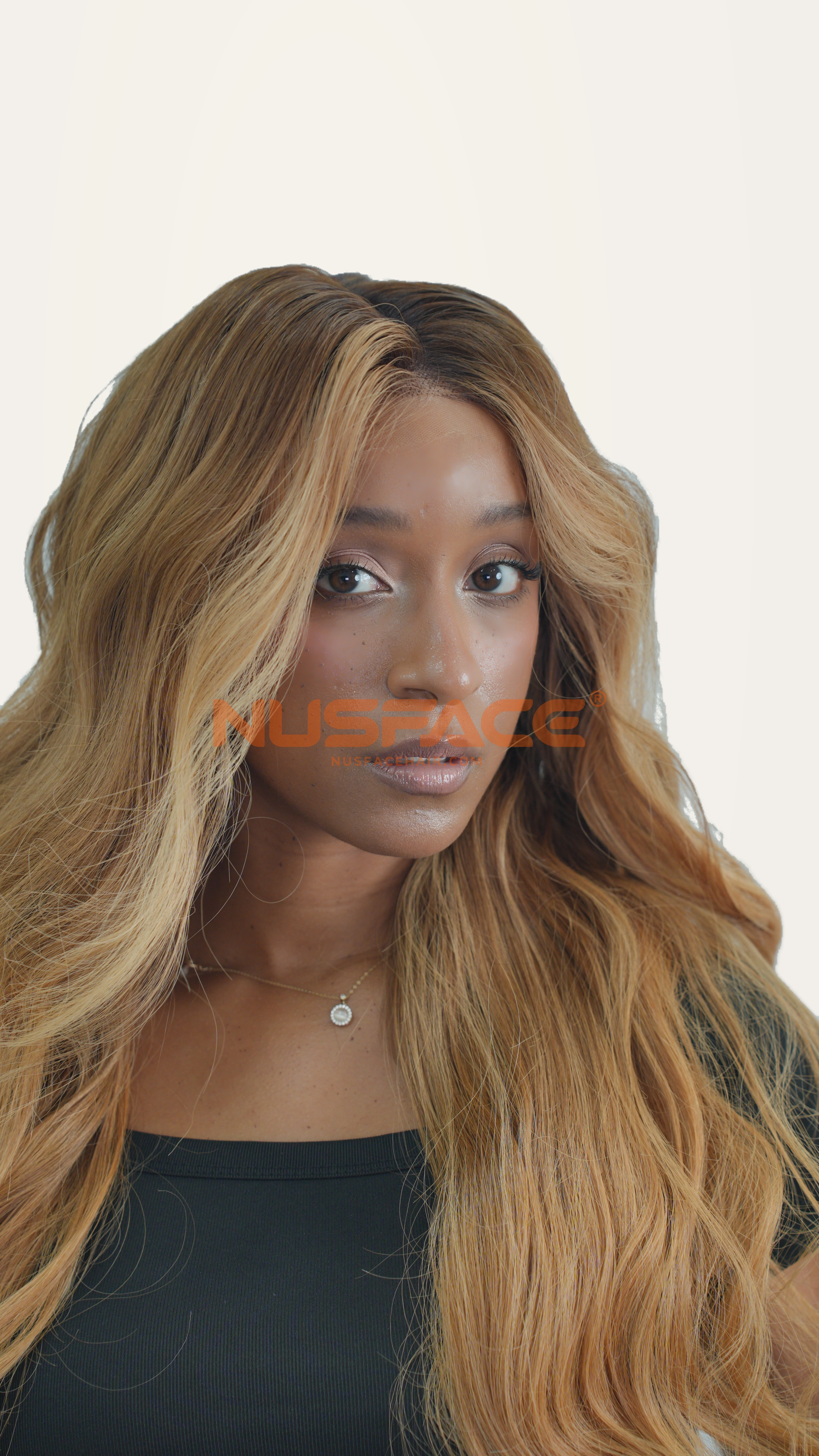
The NUSFACE close view shows warmer golden lengths around the face with a darker root. It can help explain a golden direction, but the lighter face-framing area is a separate placement choice. A customer can ask for a softer face frame while retaining warm lengths elsewhere.
If the customer likes the golden lengths but finds the front too bold, first discuss a softer face frame or less contrast in that area. Asking for ash could remove warmth they actually like without resolving the placement they dislike. Use the close view to mark the front separately from the rest of the lengths.
 View larger image
The two finished references are photographed from different angles and show different styling. They illustrate visible directions; they are not a controlled color-matching test or two versions of the same wig. Open each photograph to inspect the details before selecting a reference.
Keep the root and placement decisions separate
A deep root can appear in either an ash or a honey design. If the customer wants the blonde to start close to the part, show that area clearly in the reference. If they prefer more dark hair through the upper lengths, mark where the transition should begin to become visible. Our rooted blonde wig article explains the root details to include in that discussion.
Also compare the face frame with the back of the wig. A bright front section does not show how much blonde appears throughout the rest of the piece. Request views of the front, back and parting, rather than deciding from a single flattering angle.
Avoid choosing a tone only from a rule about skin undertones. The wearer’s preferred contrast, usual makeup, lighting and reference images all belong in the consultation. Show both directions when the customer is undecided; do not promise that one shade will suit everyone in a particular group.
What to check before changing the color request
Here are three example comments and the different decisions they raise:
- “I like the lightness, but it looks too yellow.” Compare the same lighter area in an agreed neutral-light photo and another ordinary lighting view. If the unwanted warmth remains visible, discuss a cooler tone while keeping the approved brightness and placement.
- “I like the gold, but the front looks too blonde.” Mark the face-framing sections. The change may be their width, starting point or contrast; keep the warm tone as a separate decision.
- “It looks grey indoors but fine in daylight.” Do not choose a warmer sample from that one image. Ask for the same unit, the same angle and the original files with the lighting identified. Establish what changed before requesting a physical color change.
These checks help define a color request; they cannot reveal a dye formula from a photograph. Before a larger order, compare the complete physical sample with the agreed root depth, highlight placement and end tone. A screenshot alone leaves those decisions open to differences in lighting and display.
Send the change, not just the color name
A short note can separate what to keep from what to change. For example:
Cooler-tone request: “Keep the root depth and placement in reference A. I want less visible gold in the lighter lengths. Please confirm whether that cooler direction can be achieved while keeping the approved brightness.”
Softer-front request: “Keep the warm golden lengths in reference B. Reduce the contrast around the face; the front should not look like a separate bright block.”
Adapt either example to the look you want. Attach the marked reference and confirm the length, lace, density and quantity with the quotation. Use the balayage wig sample checklist to check the finished piece before carrying that approval into a larger order.
NUSFACE’s balayage references are starting points for custom work. You can adjust the color direction and placement or bring your own reference. Send the reference and your keep/change note on WhatsApp; our team will confirm the specification and quotation for your request.