When buying a 180% density balayage wig, confirm the length, texture, cap construction and finished ends alongside the percentage. A density label is useful for describing an order, but it does not show how the wig will sit, how full the ends will look or where the lighter color will fall.
For a salon or wig business, that distinction matters before sampling. A customer may point to a photograph and say, “I want this fullness.” Your supplier still needs to know whether the customer means lift at the crown, volume through the lengths or a substantial bottom edge.
Here is how to turn that request into details you can check.
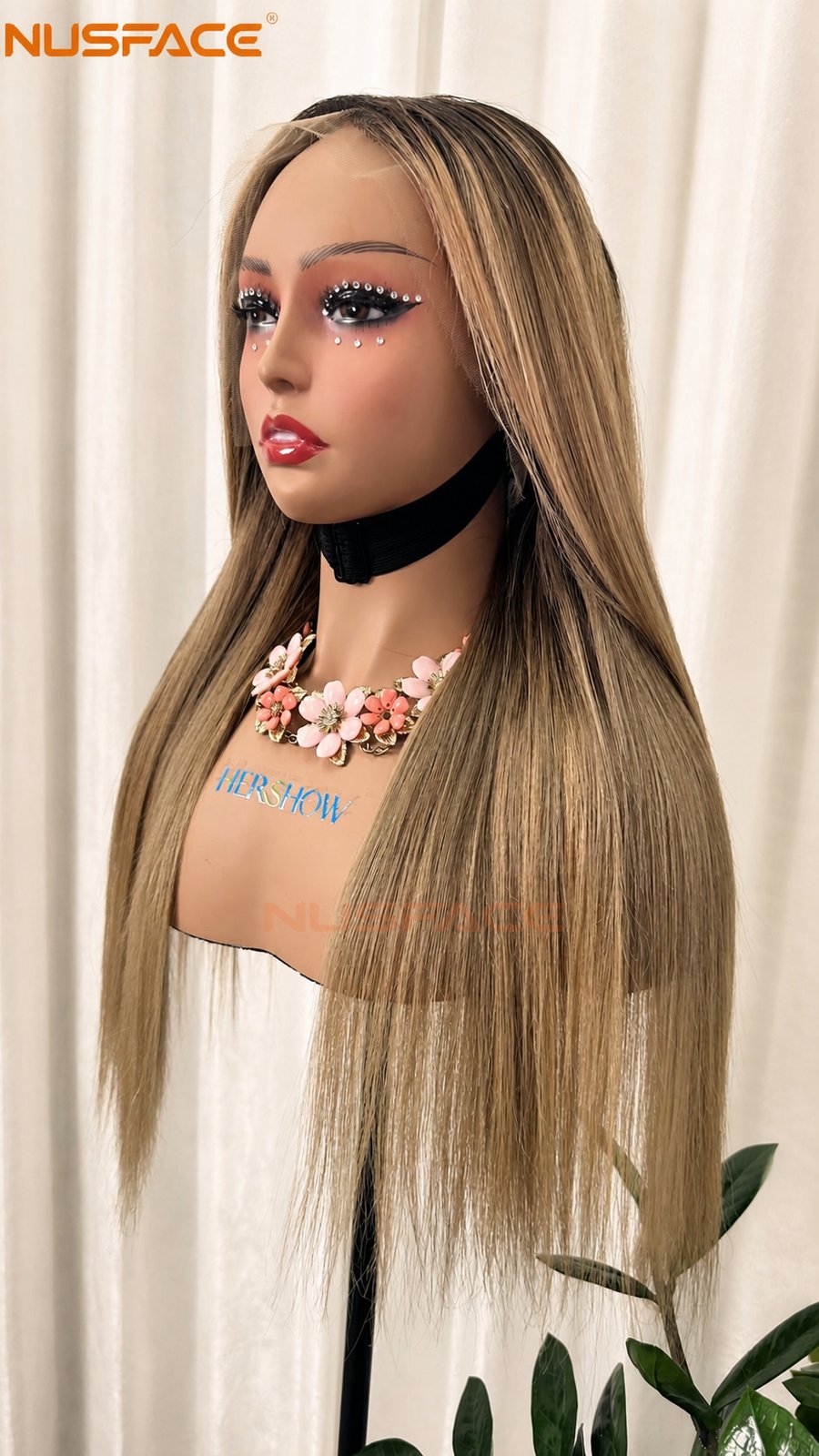
What does 180% density tell you?
Wig density describes the amount of hair used in the wig. Treat 180% as a specification to discuss with the supplier, together with a sample of the exact configuration you plan to buy. It is not a weight in grams, a lace measurement or a guarantee of a particular finished shape.
Do not approve fullness from matching percentages on two quotations. Ask to see the finished references, with similar lengths, styling and camera angles, before deciding whether they provide the amount of hair your customer expects.
Avoid converting 180% into a gram target on your own. If weight is relevant to the order, ask the supplier to state the weight and exactly what is included in that measurement. Keep that answer separate from the density label.
Start with the length and styling state
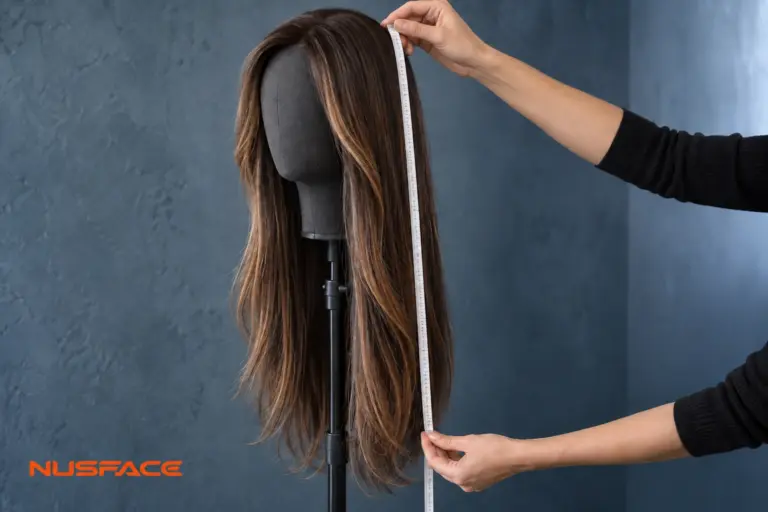
A reference photograph needs a length attached to it. “180%, like this picture” leaves an important part of the order open if the pictured wig and the requested wig are different lengths.
Record the selected length in inches, and ask how that length is measured for the chosen texture. Also identify whether the reference is straight, loosely waved or styled into defined curls. Compare samples in a similar styling state so you can judge the outline without relying on the impression of a finished salon photograph.
For example, if your customer plans to sell the wig straight, request a straight presentation of the sample as well as any styled photographs. A curled promotional image does not answer what the ends will look like hanging freely.
Look at the crown and the ends separately
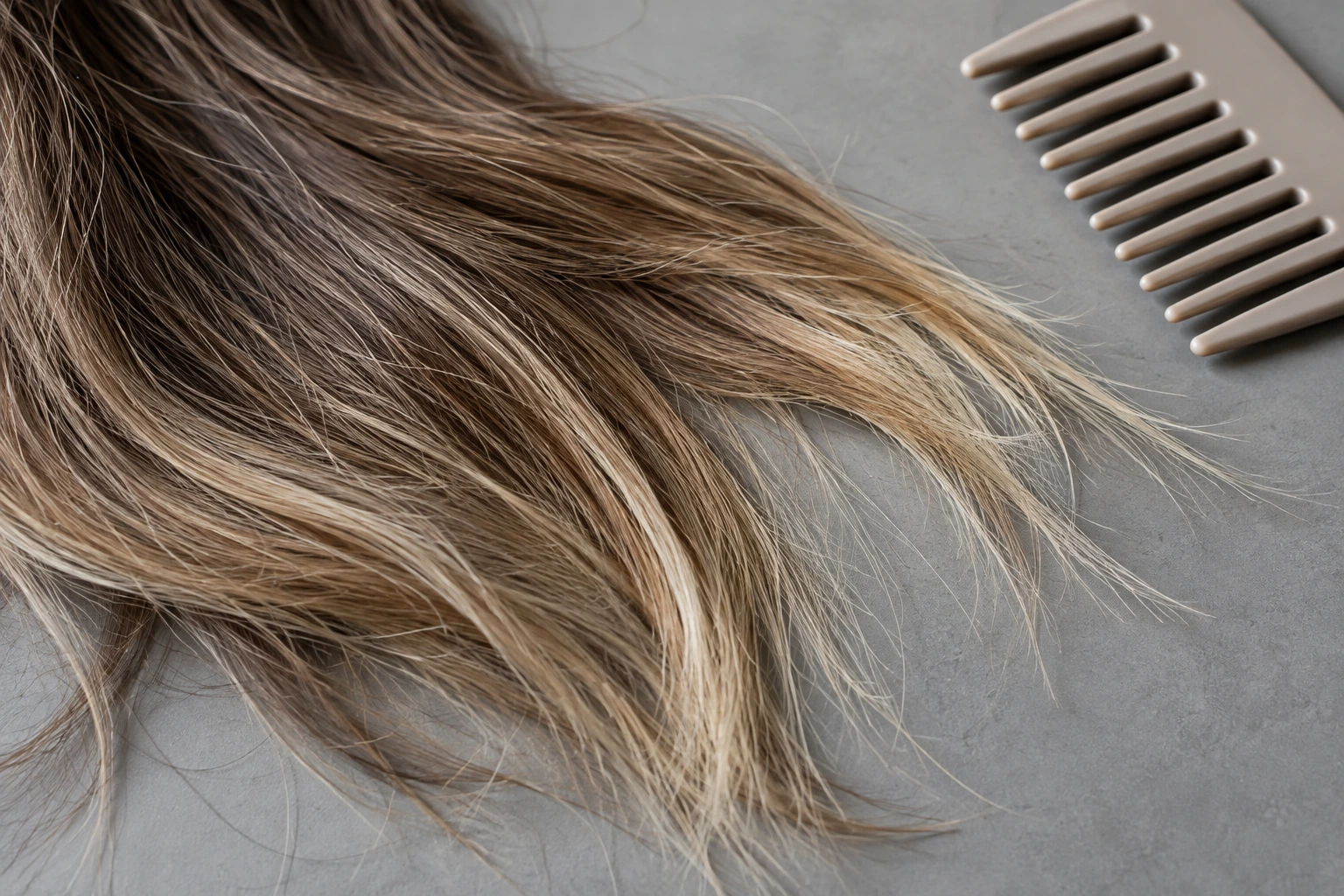
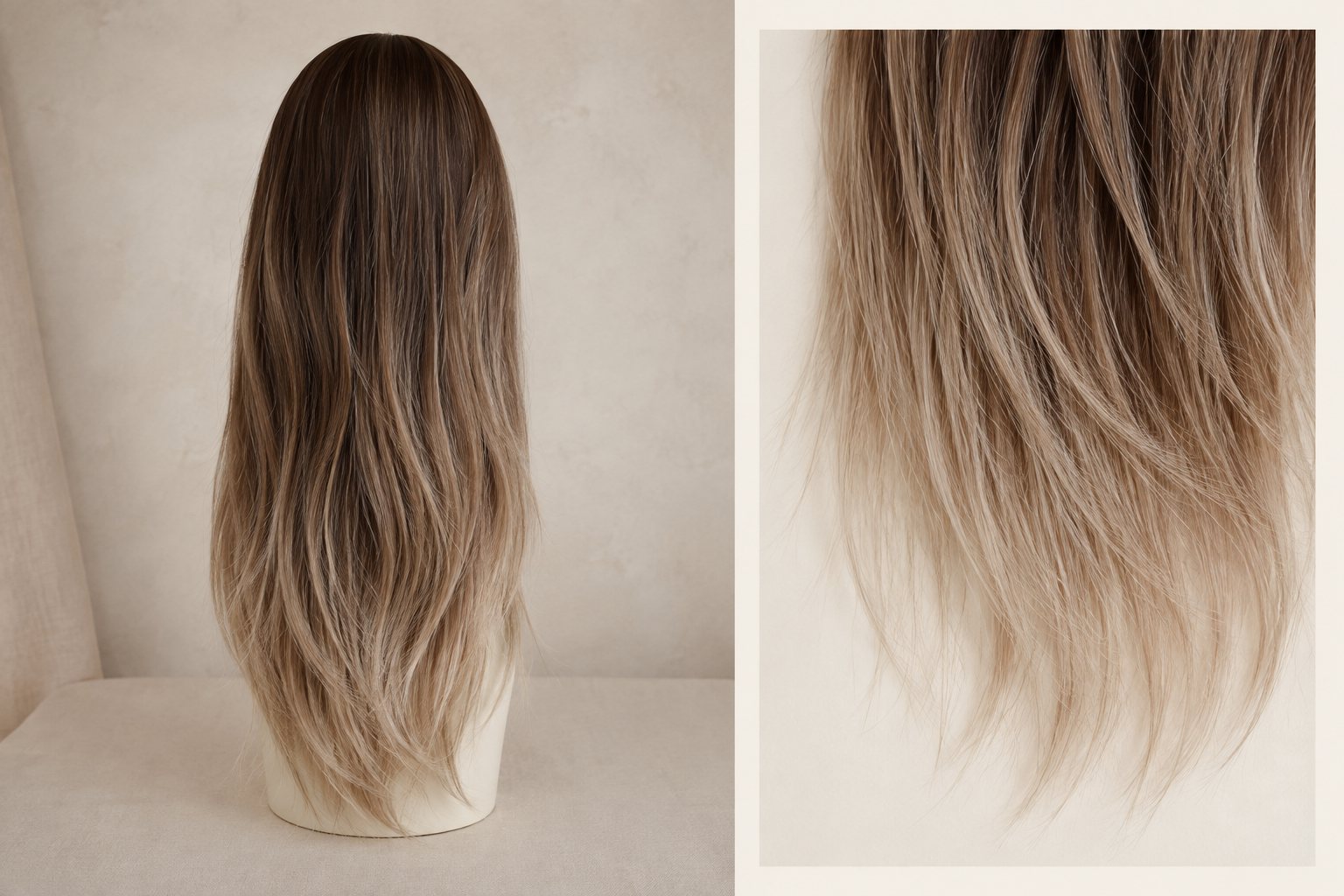
“Full” can describe different parts of a wig. Ask for one photograph showing the whole back with the hair hanging naturally, then a closer view of the last few inches. Keep the ends in frame rather than stopping the photograph at shoulder level.
Decide what your customer wants from the bottom outline. Is a soft, tapered finish acceptable? Do they prefer a more even, substantial edge? Point to that area on the reference and explain the preference. Do not assume the density percentage settles it.
Inspect the crown and cap interior as well as the outer silhouette. Look at the parting, hair distribution and construction, then compare the lengths and ends. An overall photograph cannot show every area that matters to the requested fullness.
For a sample review, request a short video with the wig turned from the front to the side and back. Use it to see how the hair falls and moves. Photographs and video help you decide what to inspect; handling a sample lets you assess the feel before committing to a larger order.
Confirm lace coverage as its own specification
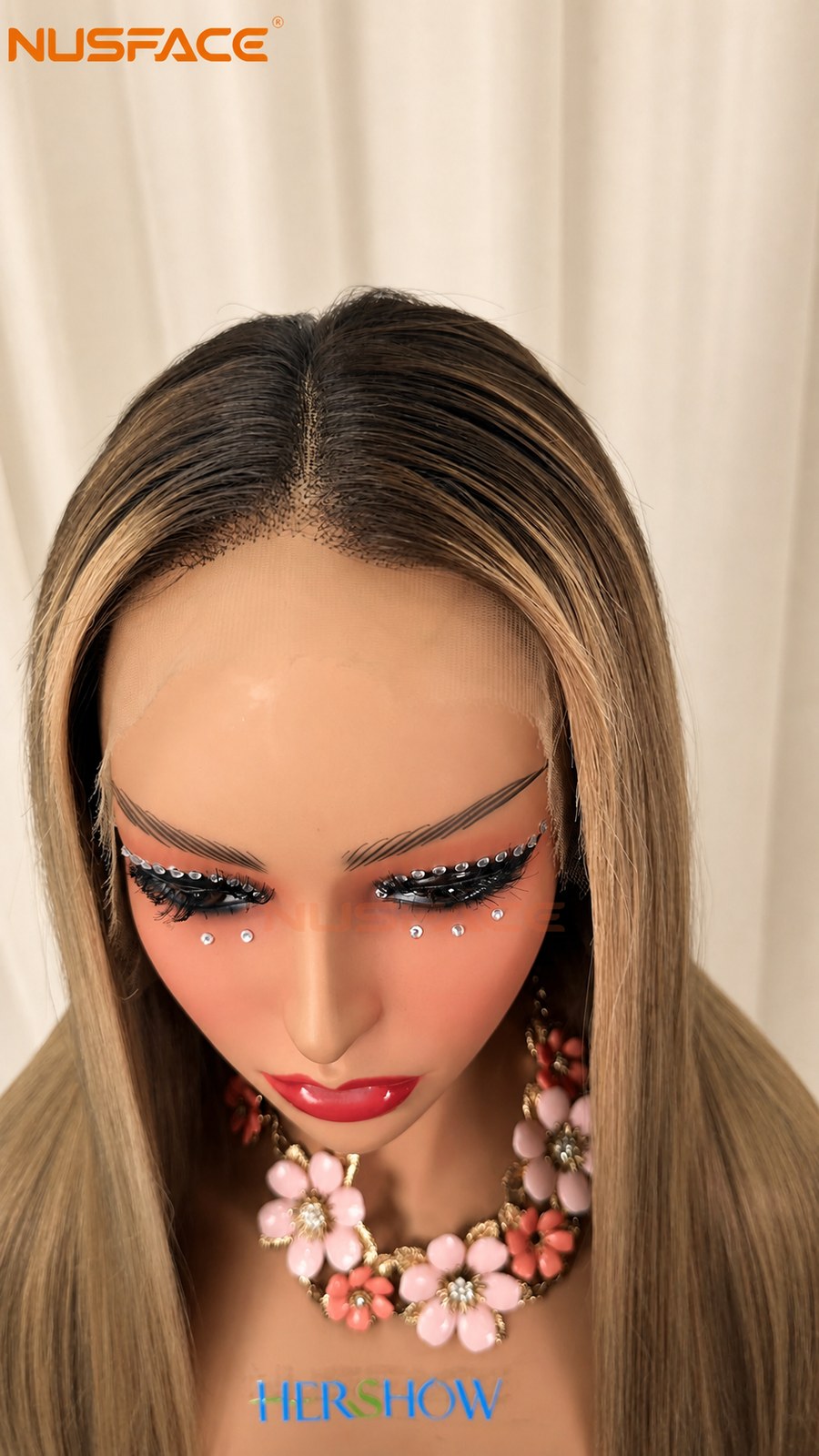
180% does not identify the lace area. Write the chosen lace configuration on the brief and ask for a view of the cap interior, hairline and intended parting.
If your customer has a preferred part, describe it explicitly. A top photograph can show the finished parting, while a cap-interior photograph helps you understand the construction being offered. Neither the density label nor a front-facing beauty shot replaces those views.
Also discuss the cap fit. An attractive color and a familiar density number do not settle sizing. Send the relevant measurements and confirm the fit requirements with the supplier before the sample is made.
Check the balayage placement without using it to judge density
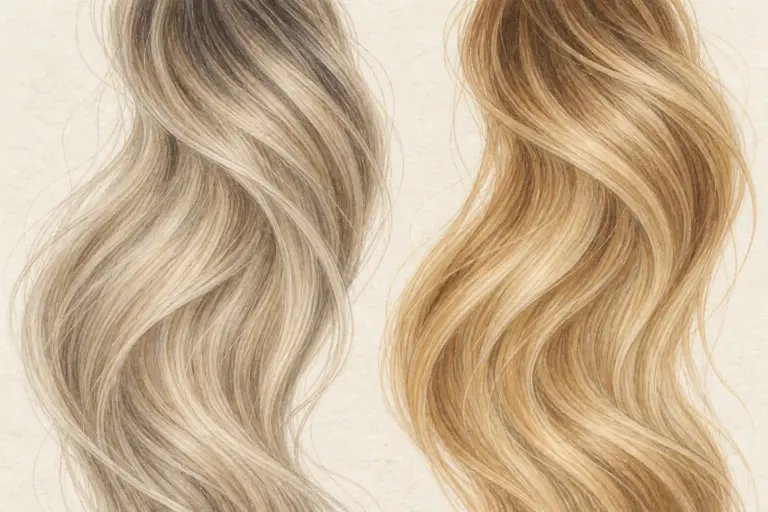
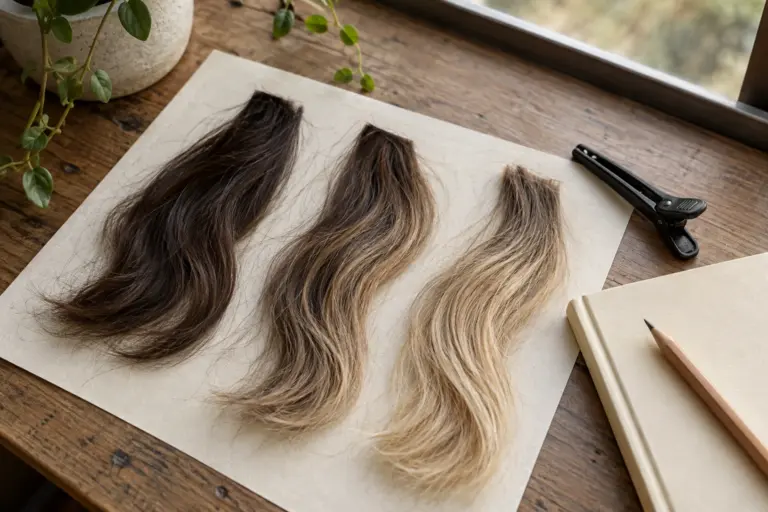
Keep the color review specific: the root depth, start of the transition, face-framing brightness and tone of the ends. Look at those areas under consistent lighting, with the same parting and styling state wherever possible.
A dark-rooted reference and a lighter-rooted reference may draw your attention to different areas. Rather than deciding that one photograph “looks thicker,” ask for comparable views of the actual samples. Record the color preference and fullness preference separately so that a request for brighter ends is not mistaken for a request to change the construction.
For a fuller color specification, use our guide to turning a wig reference photo into a custom color brief.
A quick check before you order a sample
| Detail | What to ask for |
|---|---|
| Density | Written confirmation of the selected density and a relevant finished reference. |
| Length and texture | Exact length, measurement method and the styling state shown in the reference. |
| Crown and parting | Top and hairline views, with the intended part clearly shown. |
| Ends | A full back view and a close-up of the ends hanging freely. |
| Cap and lace | Selected lace configuration, cap-interior view and fit requirements. |
| Balayage | Root, transition, face frame and end-tone notes, separate from fullness preferences. |
If two quotations describe different lengths, lace configurations or finishing requirements, resolve those differences before comparing their prices. Otherwise, the shared “180%” label can make unlike orders appear equivalent.
What to include in your NUSFACE inquiry
NUSFACE’s listed hand-painted balayage wig specifications include Superior Raw Hair, 180% density, lengths of 14, 16, 18, 20, 22, 24, 26 and 28 inches, and 5×5, 13×4 or 13×6 lace options. Select the combination you want to discuss. Requests outside those listed specifications need written confirmation.
You can use this short brief as a starting point:
“I am sourcing a hand-painted balayage wig for [salon / wig business]. Requested length: [inches]. Texture and intended styling: [description]. Lace: [5×5 / 13×4 / 13×6]. Density: 180%. Preferred parting and cap-fit requirements: [details]. I want the ends to look [softly tapered / more even and full]. My color reference is attached, with notes on the roots, face frame and ends. Please confirm the configuration and quote, and share relevant finished views before I order a sample.”
Add your sample quantity and destination so the supplier can address the order as a whole. Before buying a larger quantity, assess the sample against those details rather than relying on the density number alone.
Send your reference photos and specifications to NUSFACE on WhatsApp to discuss a sample for your business. You can also read about the ordering process on our Custom Service page.