In this guide
- Treat ash blonde as a direction, then define the result
- Choose a reference that separates tone from styling
- Write the root and placement as separate fields
- Confirm construction before color approval
- Request a photo sequence you can compare
- Approve observable details, then record corrections
- Copy this ten-line ash blonde sample brief
- What NUSFACE can confirm for an ash blonde request
- Frequently asked buyer questions
- Send a brief the factory can answer
- Professional color references used for this guide
An ash blonde wig sample can miss the target even when everyone agrees on the color name. One reference may look soft and smoky. Another may lean silver. A third may carry a beige cast indoors and appear cooler in daylight. Add a dark root or bright face frame, and the same label now describes several different products.
A salon, wig brand or wholesaler needs to agree which color details must match, how they will be photographed and what will be recorded for a reorder. This guide shows how to build that brief for an ash blonde human hair wig without turning a reference image into an unwritten promise.
Treat ash blonde as a direction, then define the result
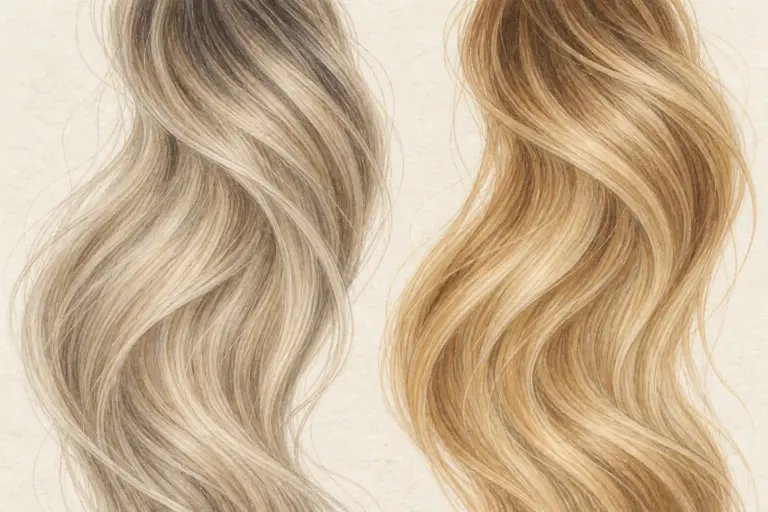
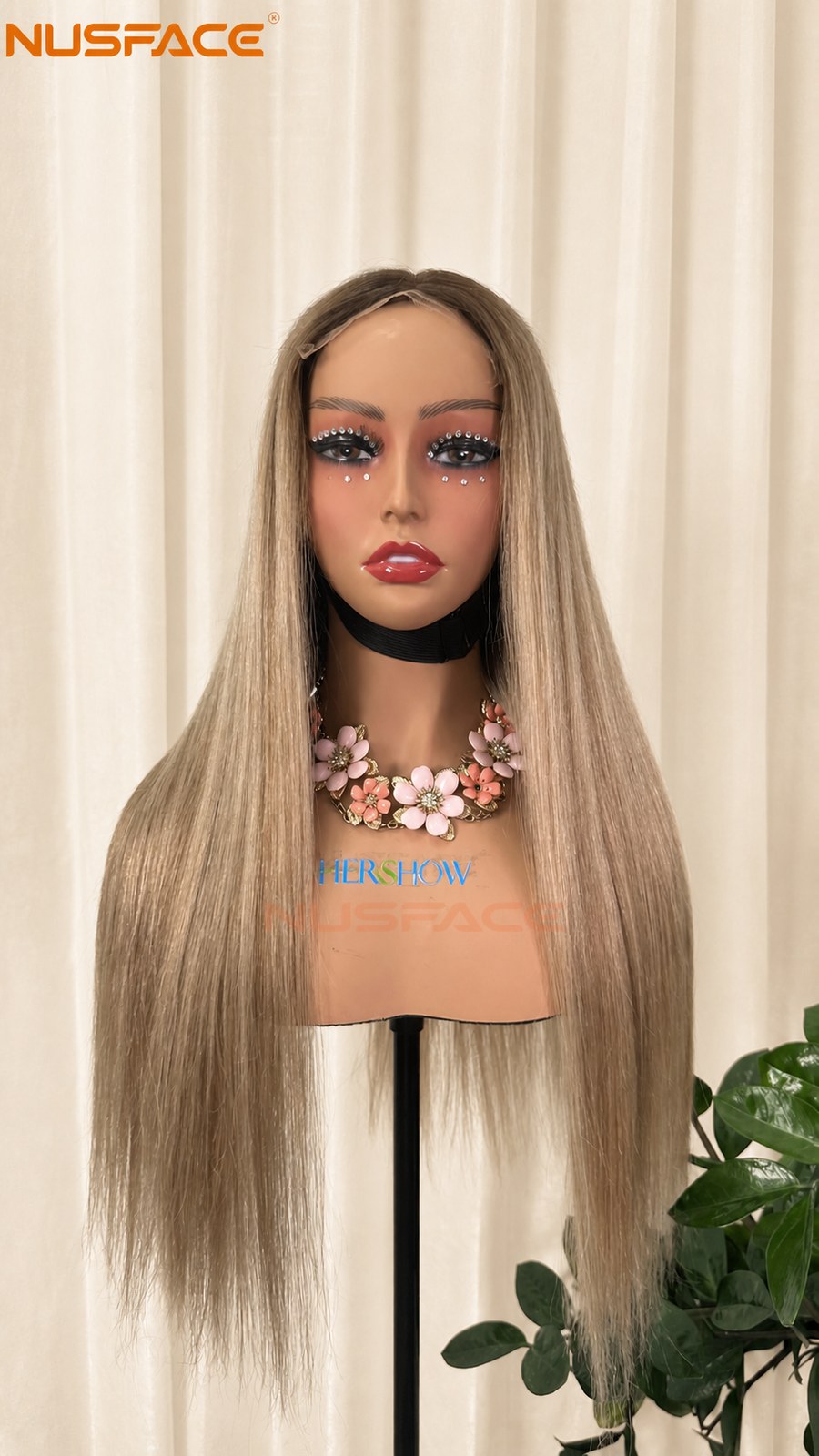
Professional color references usually place ash blonde on the cool side of blonde. L’Oréal Professionnel describes ash shades through grey, green, blue or violet undertones with less visible red or orange warmth. Wella also shows that ash blonde can range from smoky and lived-in to much icier results. Those descriptions explain why the word is useful, and why it is still incomplete.
A factory brief should locate your target within that range. State whether the result should read neutral-cool, smoky, silver-leaning or very icy. Then name the nearby result you want to avoid: too beige, too grey, too bright at the ends, or too dark through the mid-lengths. A marked reference is more useful than adding another adjective.
| Decision | What belongs in the brief | What to check on the paid sample |
|---|---|---|
| Tone family | Neutral-cool, smoky, silver-leaning or icy, with an approved reference | The lengths stay inside the agreed family in each requested light |
| Unwanted warmth | Where yellow, gold or orange should be limited rather than a vague “no brass” note | Front, crown, sides and ends do not show an unexpected warm cast |
| Root | Depth, cool/neutral/warm direction, contrast and visible reach | The root does not look blocky, too long or detached from the blonde |
| Placement | Balayage ribbons, highlights, ombre gradient, face frame or money piece | Parting, both sides and back follow the approved placement map |
| Construction | Hair material, length, lace, density, cap and intended parting | The color still works when the unit is parted and viewed at the hairline |
| Photo evidence | Required angles, lighting conditions and a no-filter request | The same unit is shown in a comparable sequence before approval |
| Order stage | Paid test order, correction round or reorder, plus quantity and destination | The quotation and approval record match the actual stage |
Choose a reference that separates tone from styling
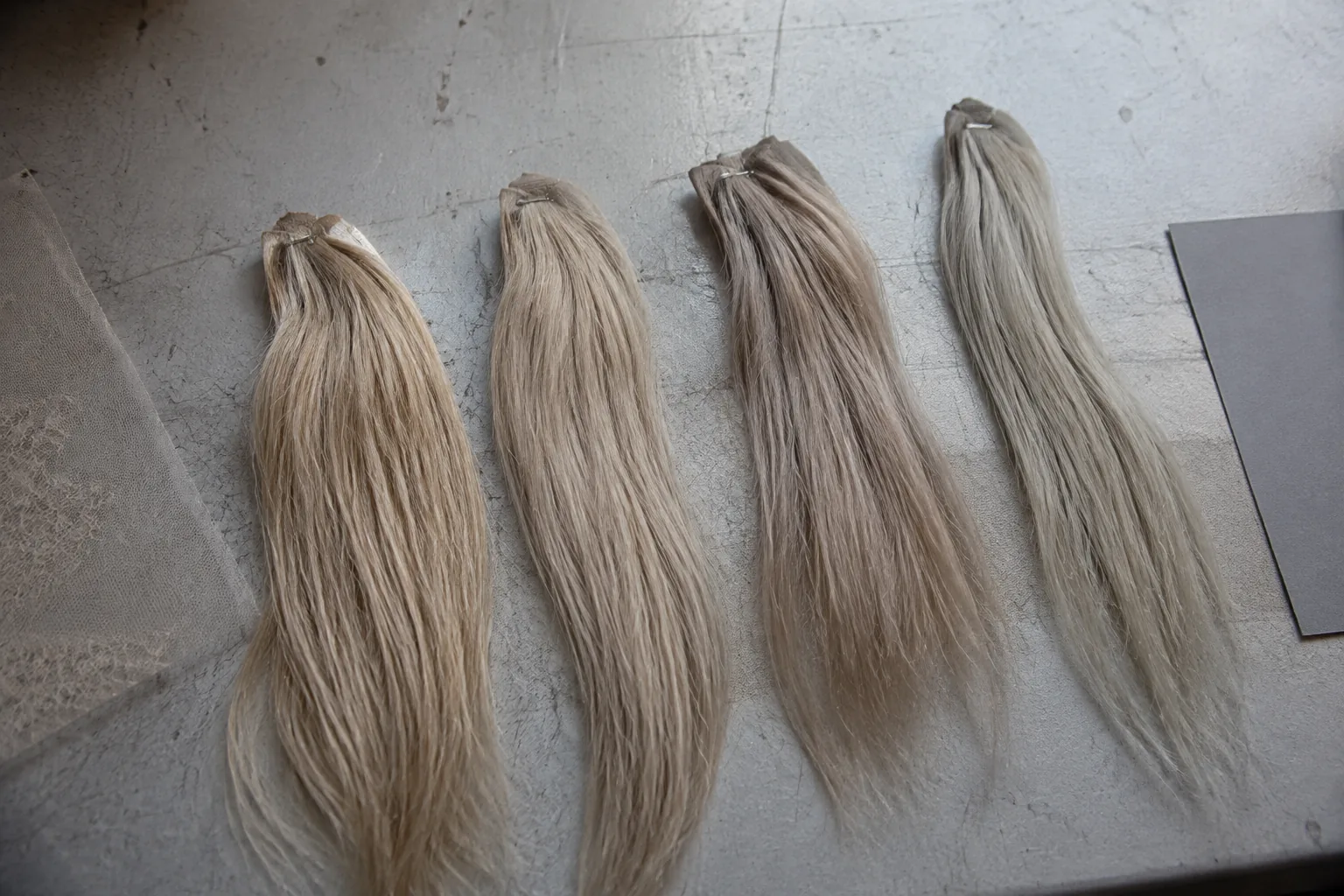
Curls, shine, exposure and a warm room can change how blonde looks on a screen. Send at least one reference where the color is easy to read, then tell the supplier which parts matter. You may be approving the coolness of the ends from one image, the root contrast from another and the placement from a third. Write that relationship beside the files.
If a social-media image has a strong filter, keep it as a mood reference and add a cleaner color reference. Ask the factory to identify any conflict before quoting. A supplier cannot reliably infer whether you prefer the lighting effect or the physical color.
Write the root and placement as separate fields
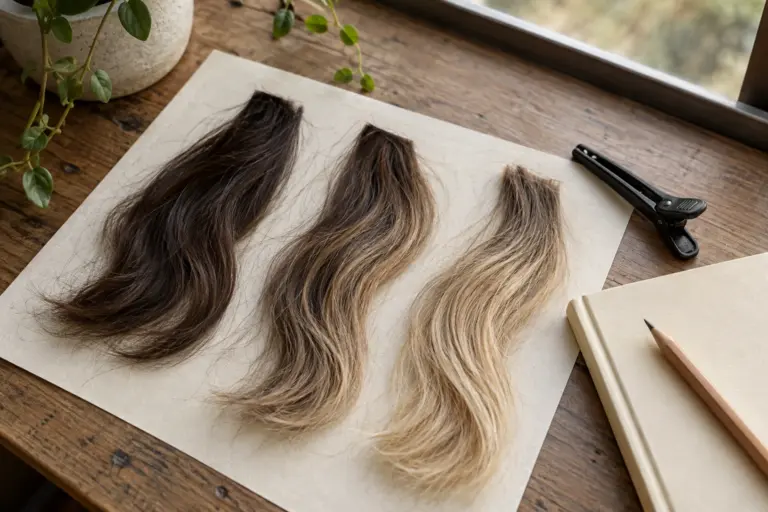
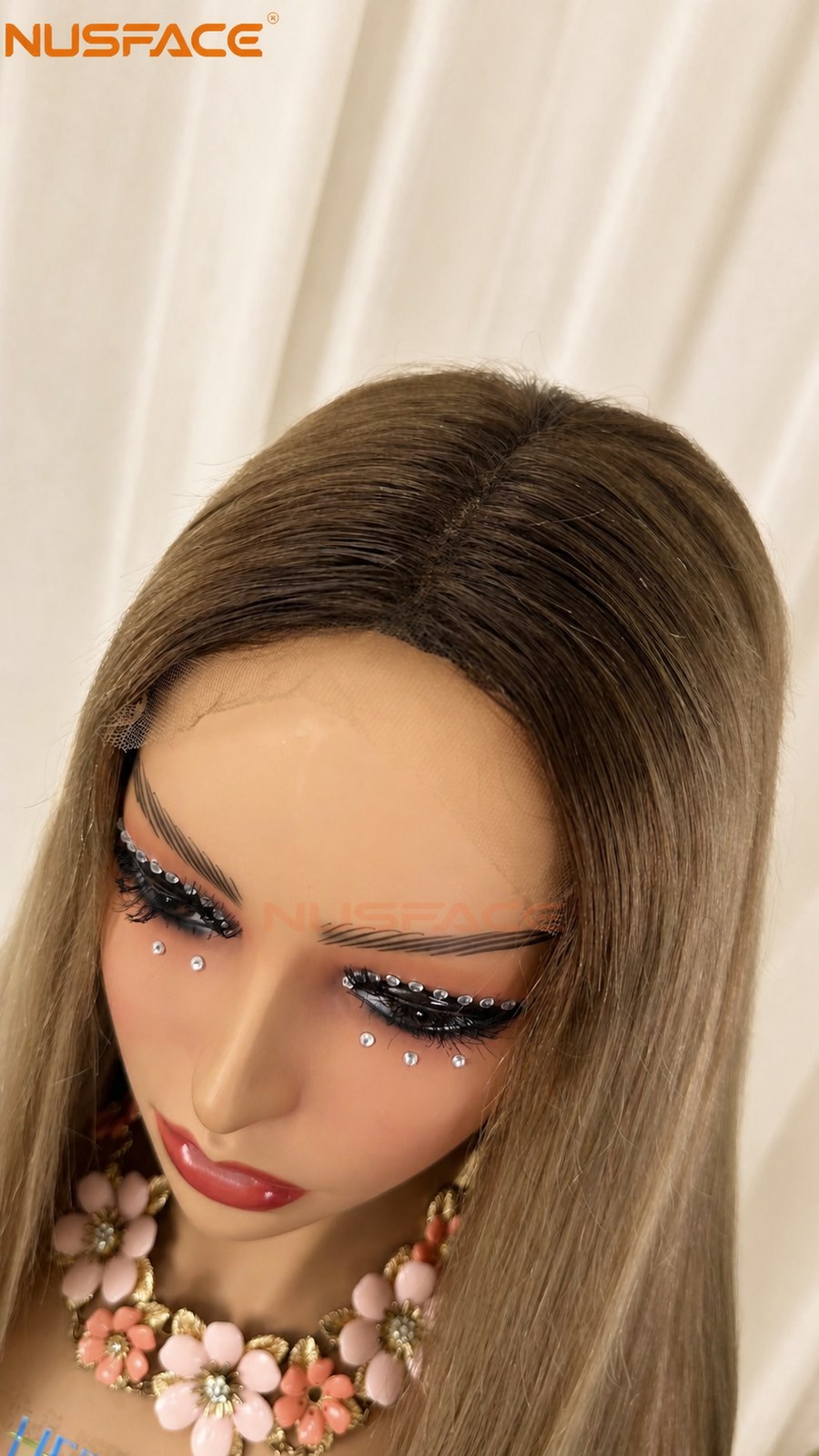
A rooted ash blonde wig has at least two color decisions: the root itself and the way the lighter color travels through the unit. “Dark root” does not settle either one. A cool medium-brown root can produce a softer relationship than a nearly black root. A short shadow at the parting reads differently from a longer melt extending into the sides and back.
Mark the following areas on front, top and back references:
- Parting and crown: where the deeper area should stop and how much variation is acceptable.
- Hairline and temples: whether the ash blonde begins close to the face or sits behind a deeper edge.
- Side panels: the number, width and contrast of lighter sections.
- Back: whether the transition follows the sides or carries more depth.
- Ends: whether they should finish evenly pale or retain darker dimension.
If your reference combines a shadow root with balayage, highlights, ombre or a money piece, name both effects. Our rooted blonde sourcing guide covers root depth and transition in detail, while the balayage, highlights and ombre comparison helps buyers label the placement.
Confirm construction before color approval
The same placement can read differently on a middle part, a wider frontal or a smaller closure. Parting space determines how much root is visible. Hairline density affects contrast around the face. Length changes the distance available for a root-to-end transition.
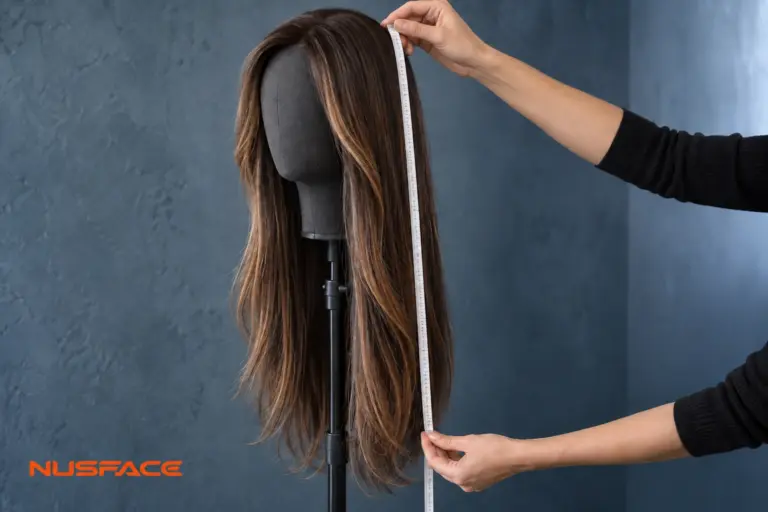
Put material, length, lace, density, cap and intended parting in the same written scope as the color. If you need movement in the part, say so before the sample is made. If your team will cut or restyle the unit after delivery, note where the brightest sections must remain useful.
Do not transfer a specification from a retailer’s product title into a factory order without confirmation. “Ash blonde lace wig” may omit the lace size, cap, density, hair material and parting behavior. The HD lace vs regular lace guide can help separate the lace decision from the color decision.
Request a photo sequence you can compare
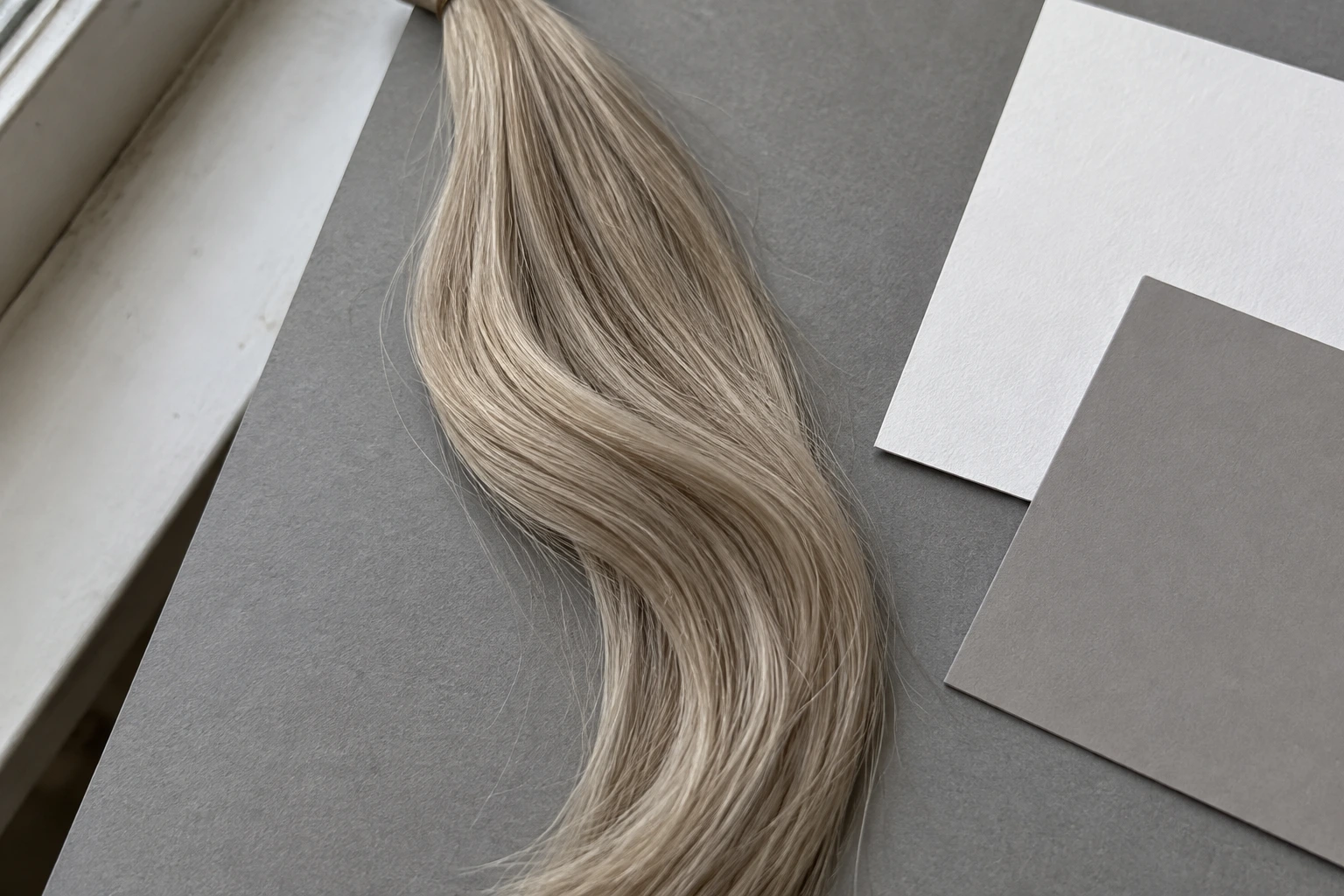
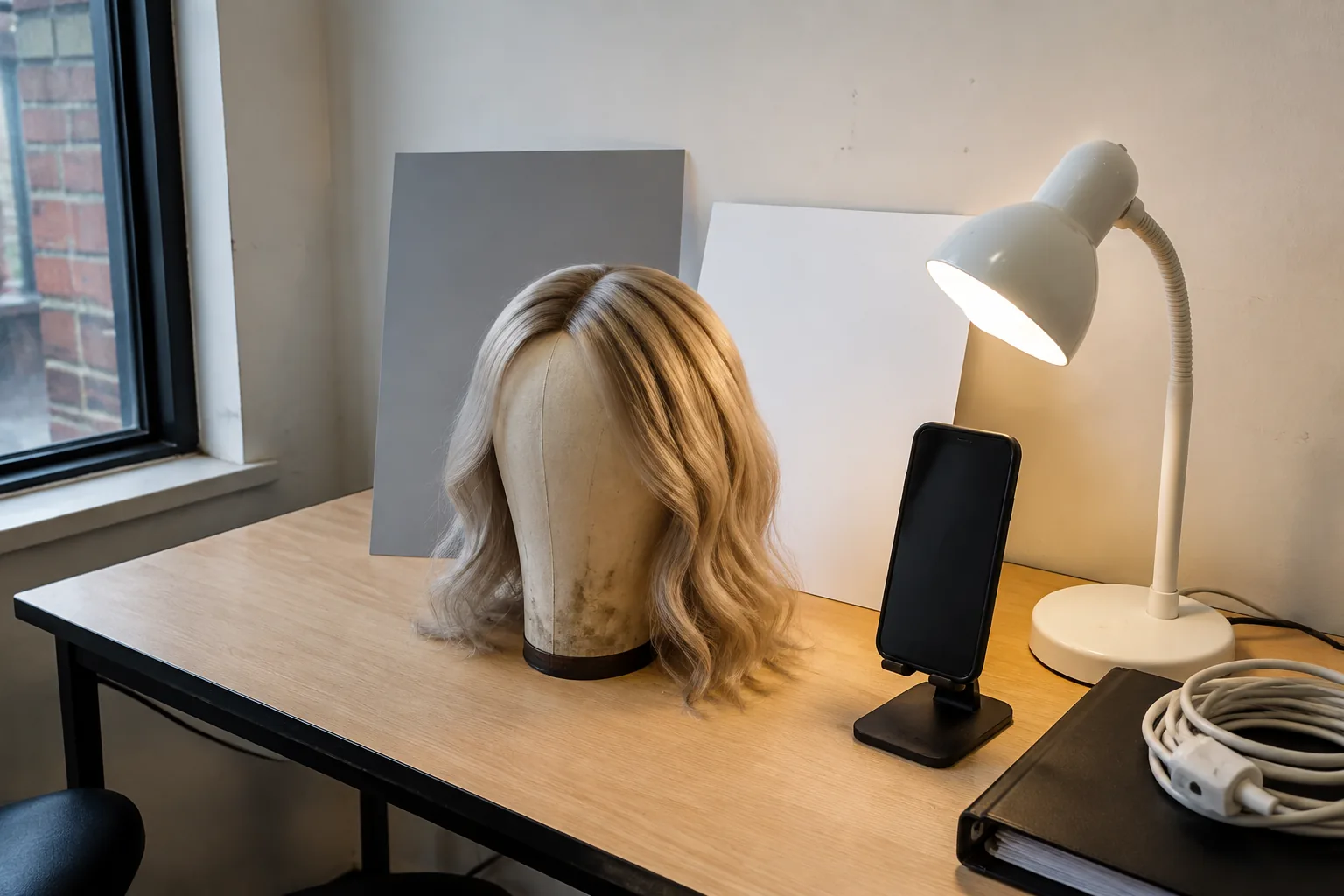
Lighting checks are for reducing ambiguity, not proving a laboratory color match. Ask for the same finished unit in a repeatable sequence. The camera should not add a beauty filter or dramatic warm/cool preset. A white or neutral grey object in the frame can help your team notice exposure shifts, but it does not turn a phone camera into a calibrated instrument.
- Front, top, left side, right side and back in indirect daylight.
- The same main views under ordinary indoor white light.
- A close view of the root-to-blonde transition at the parting and hairline.
- A close view of mid-lengths and ends, including any area that appears warmer.
- A short rotation video when placement continuity is important.
Keep the original files with the written brief. Messaging-app previews and screenshots may compress or alter them. If two lighting sets disagree, ask what changed before accepting or rejecting the sample.
Approve observable details, then record corrections
A useful approval note names what passed and what still needs correction. “Looks good” gives the next order no stable reference. Record the accepted tone family, root depth, placement, construction and photo set. If the ends were too warm or the root stretched too far at the sides, mark the location and attach the corrected image.
Use the sample as a paid test order with a clear acceptance stage. Before moving to a larger quantity, check:
- the unit shown is the unit tied to the approval record;
- tone, root and placement were reviewed separately;
- both side panels and the back were visible;
- lace, parting, hair material, length and density match the quotation;
- accepted changes are written into the reorder scope.
Our balayage wig sample inspection guide provides a broader incoming-QC sequence for the color, construction and condition of a test unit.
Copy this ten-line ash blonde sample brief
- Project: [salon display / private label / paid test order / reorder].
- Ash direction: [neutral-cool / smoky / silver-leaning / icy] and [what to avoid].
- Root: [depth, tone, contrast and reach at parting, hairline, sides and back].
- Placement: [balayage / highlights / ombre / money piece], with marked zones.
- Ends: [even pale finish / retained dimension / other approved direction].
- Construction: [hair material, length, lace, density, cap and parting].
- References: [file names] and what each image is used to approve.
- Evidence: [daylight and indoor views, close-ups and video, no filter].
- Commercial scope: [quantity, packaging, destination and requested timing].
- Approval: [who approves, what may change and what must remain fixed for a reorder].
What NUSFACE can confirm for an ash blonde request
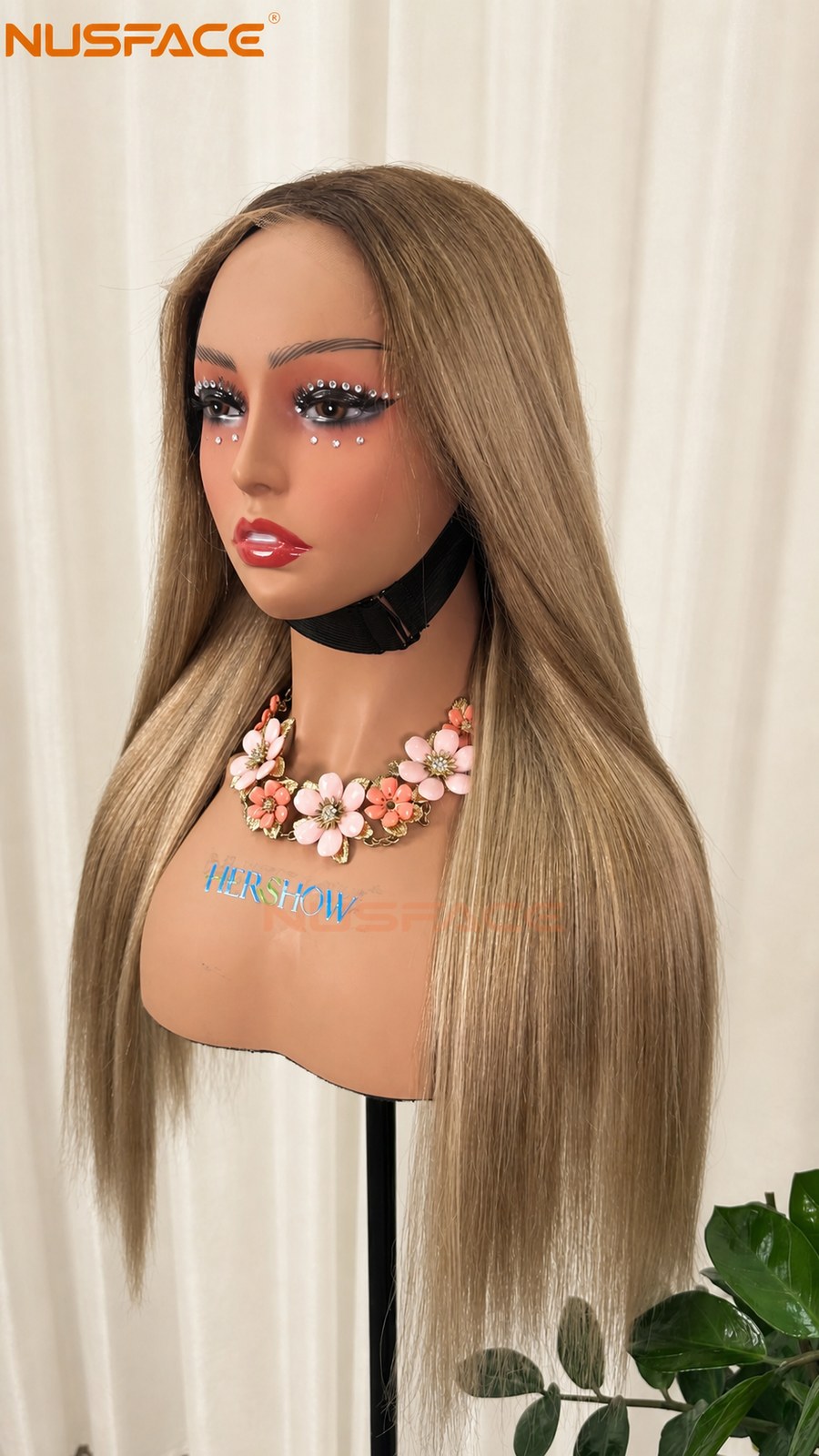
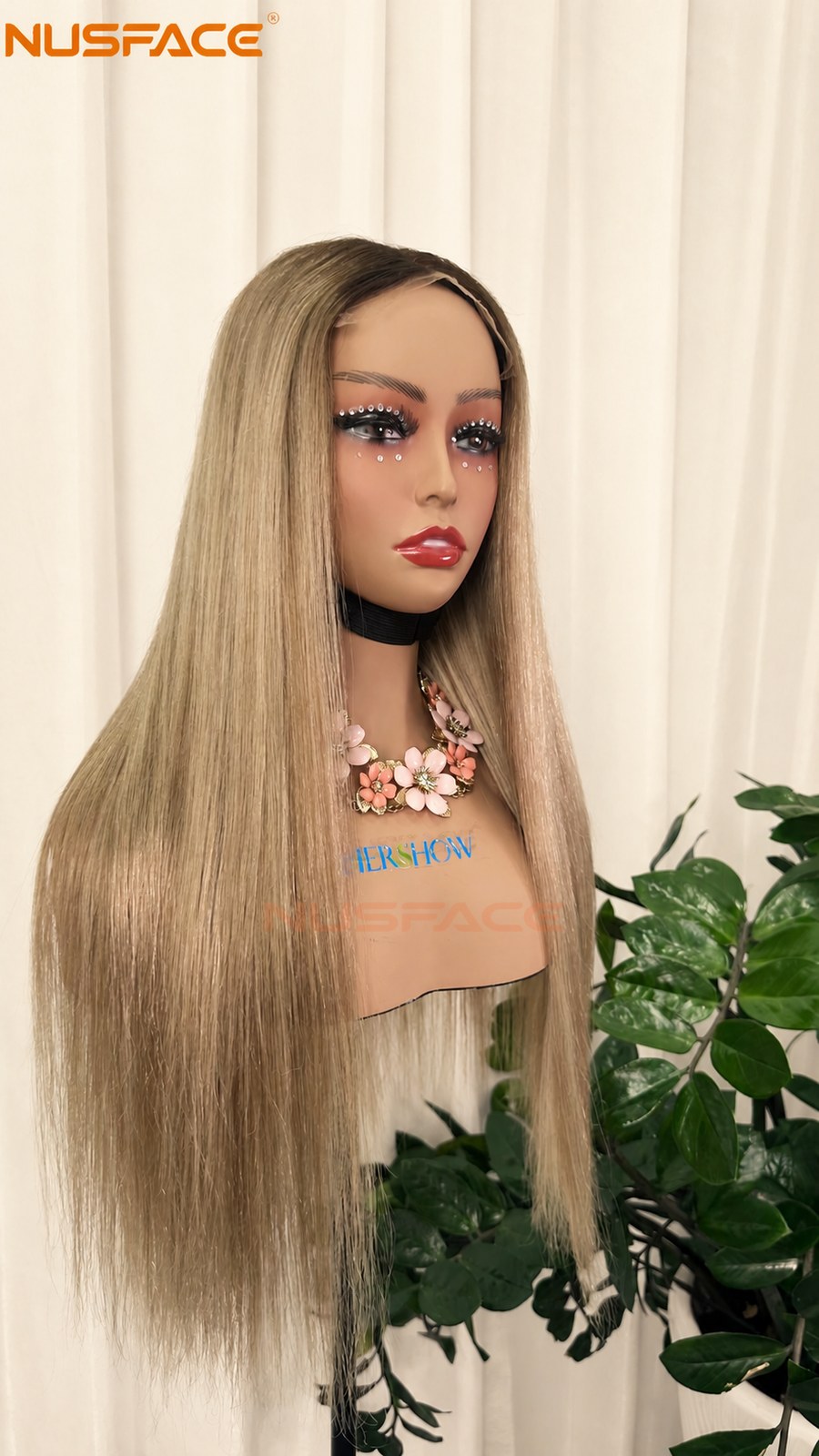
Browse the balayage collection for current color directions, then specify the length, lace and density you need. Customization options are confirmed with the quotation; they are not a specification sheet for the Light Ash Blonde photographs shown here.
These are public reference options, not an automatic configuration for every ash blonde project. The business team confirms the requested tone, root, placement, hair material, lace, cap, price, quantity, packaging and timing in the written brief and quotation. MOQ 1 allows a paid test order within an agreed scope; it does not mean every unlisted option is ready-made.
NUSFACE can review ash blonde directions that use a root melt, highlights, ombre, a money piece or another custom layout. When a request falls outside the public starting point, the answer comes from a written feasibility check rather than an assumed promise.
Frequently asked buyer questions
Is ash blonde the same as platinum blonde?
No. Ash describes a cool undertone direction; platinum generally describes a very light blonde level. A result may be both, but one term does not guarantee the other. Mark the target depth and undertone separately.
Why can an ash blonde wig look beige indoors?
Room lighting, camera exposure, surrounding colors and screen settings can shift the apparent balance. Request the same unit in agreed daylight and indoor views, and compare original files before deciding that the physical tone changed.
Can an ash blonde wig also have balayage or a money piece?
Yes. Ash blonde describes the tone family. Balayage, highlights, ombre and a money piece describe how lighter and darker areas are placed. Include both tone and placement in the brief.
Is one front photo enough to approve the sample?
No. A front image can hide the parting, side balance, back transition and warmer sections underneath. Request top, both sides, back, root and ends views under the agreed lighting sequence.
Does MOQ 1 mean the ash blonde unit is in stock?
No. MOQ 1 is a paid custom test-order starting point. Color, construction, material, price and timing still require written confirmation for the specific request.
Send a brief the factory can answer
Open Custom Service and send the ten-line brief with your labeled references. The business team can separate tone, root, placement, construction and evidence before preparing a quotation.
Or start on WhatsApp. Ask for the approved scope in writing before the paid test order moves forward.
Professional color references used for this guide
- L’Oréal Professionnel: Ash Blonde vs Ash Brown Hair Colours — cool ash undertone context.
- Wella Professionals: Ash Blonde Hair Color Ideas — variation within ash blonde and root/placement examples.
- Wella ProfessionalStore: Choosing Toners for Blonde Hair — cool-direction and undertone language.
- Redken Pro: Naturally Cool Ash Blonde Formula — a professional example that records root and lengths separately.
These sources explain salon color language. They do not state the NUSFACE formula or prove that two suppliers use identical products or processes.
YOUR NEXT STEP
Get a quote for your color brief.
Send the reference, length, lace, density and quantity. Our team will confirm the details for your custom order.