In this guide
- Balayage describes placement, not one fixed color
- Balayage, ombré and conventional highlights are not interchangeable
- What a wig seller should inspect before approving a sample
- Can I adapt a style instead of copying the whole wig?
- Can I see one finished piece before ordering more?
- Questions buyers still ask
- Start with a color direction the factory can quote
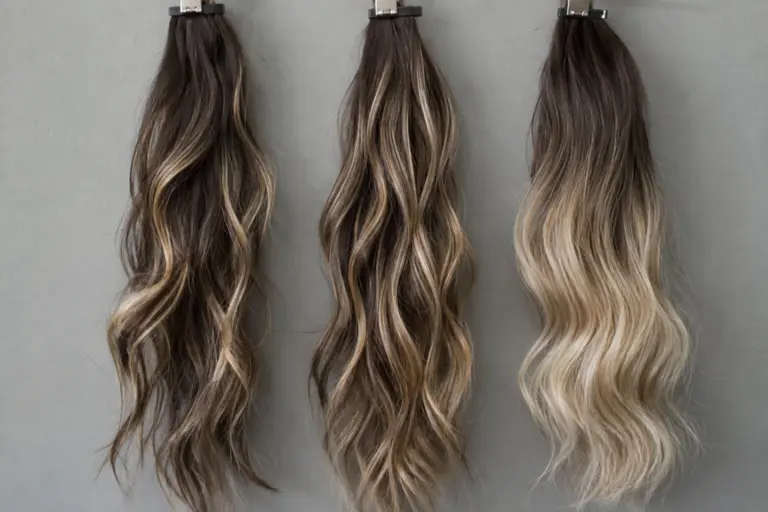
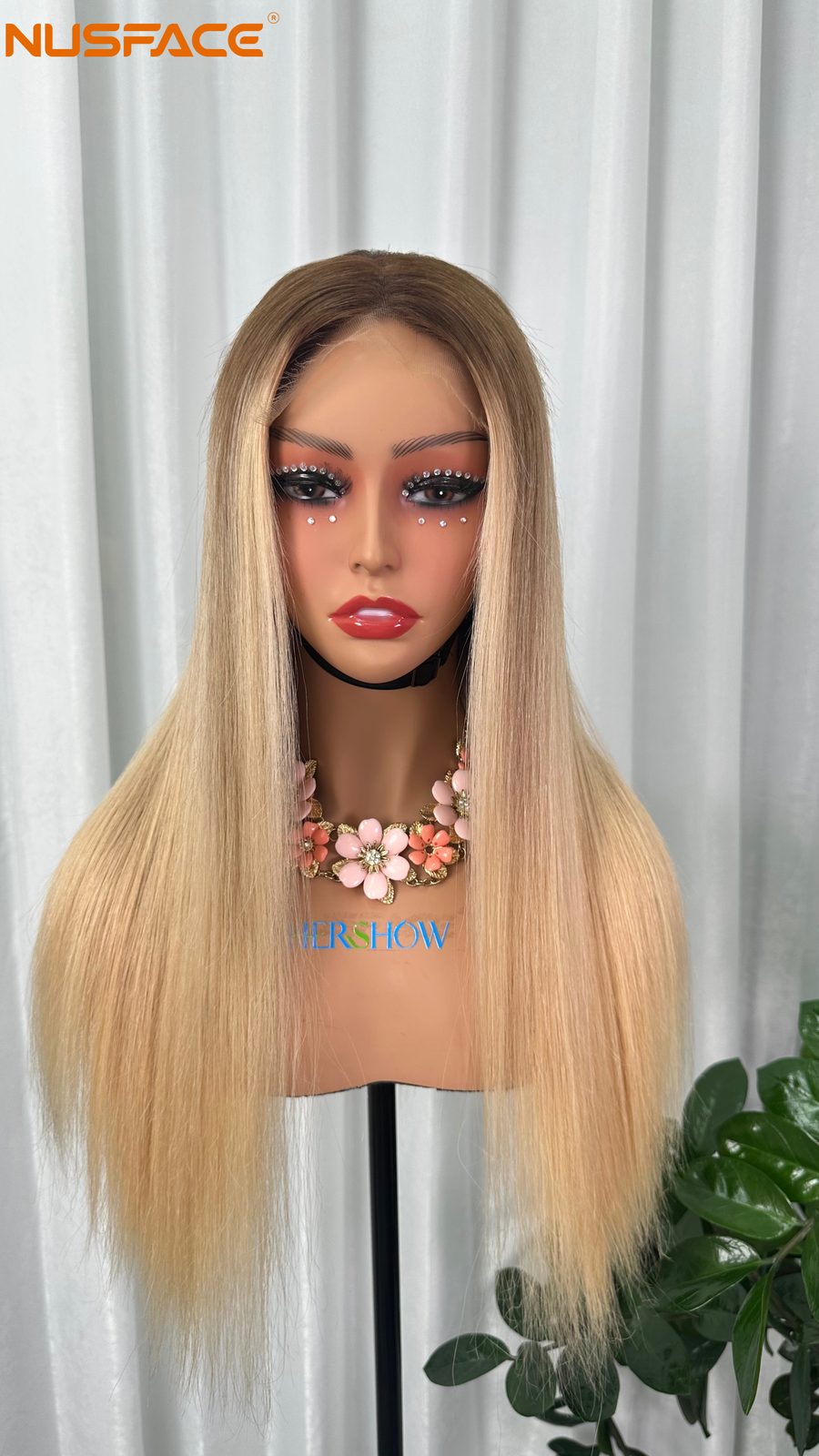
A balayage wig has selected lighter sections painted through the hair, with darker areas left visible between them. The result can be soft and closely blended or deliberately high-contrast. Balayage describes how the color is placed; it does not mean the wig must be blonde, have dark roots or use one fixed shade.
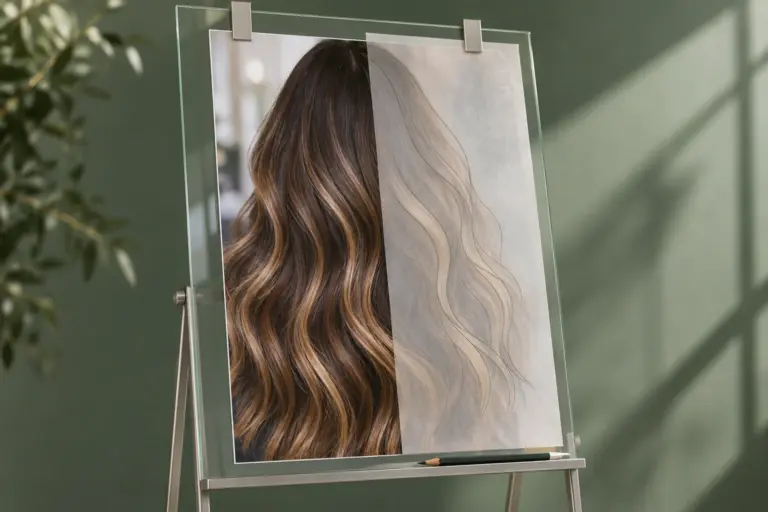
If you like the blonde in a photograph but would prefer a darker overall look, you may need fewer or narrower light sections rather than a different blonde. This is one of the useful choices in custom balayage: the shade, the amount of light hair and its position can be discussed separately.
Balayage describes placement, not one fixed color
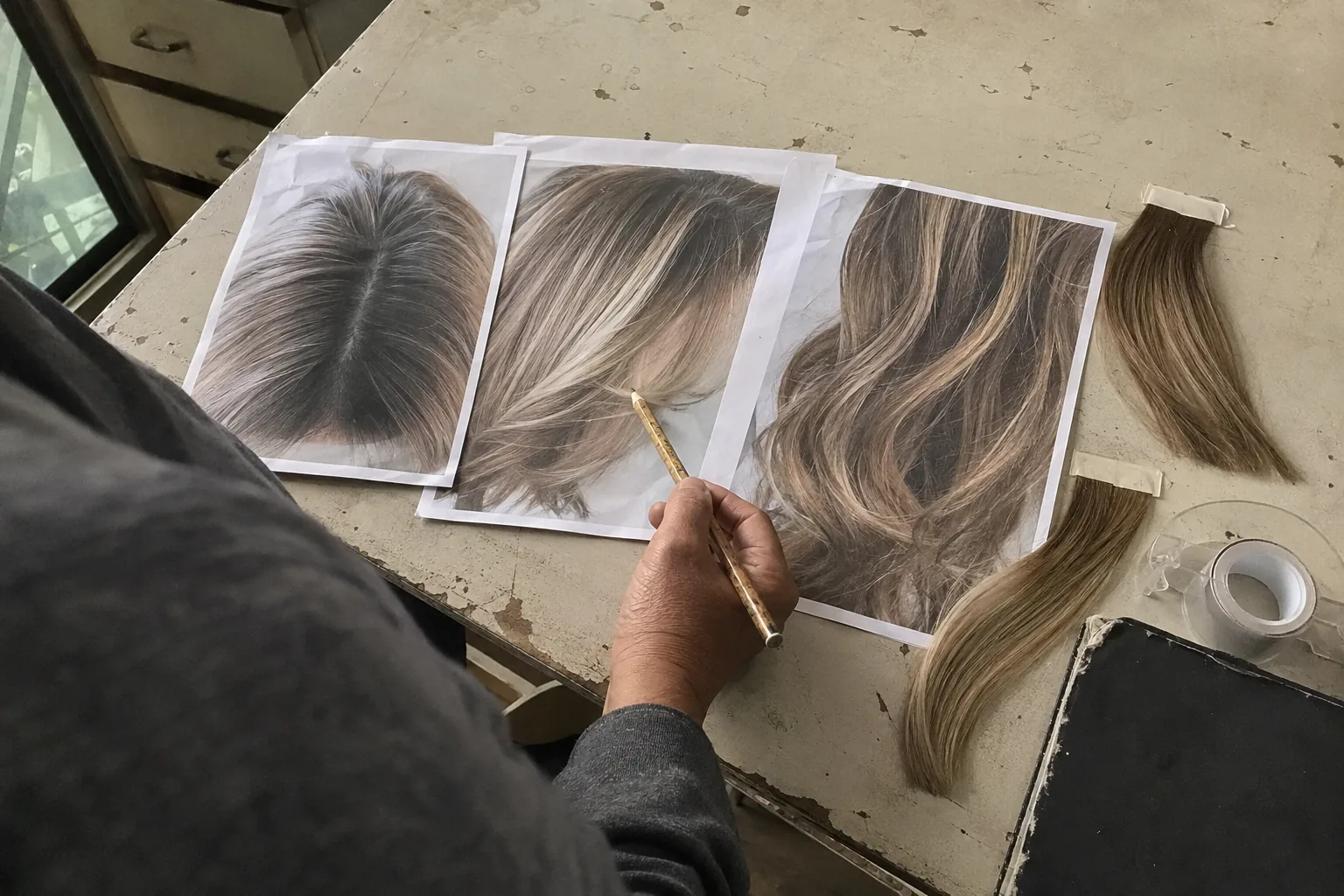
In salon language, balayage refers to lightness placed through selected sections while darker depth remains visible between them. Ombré is usually read more broadly as an overall dark-to-light change. On a wig, the useful question is not the trend label by itself. It is what the finished placement looks like from the root through the ends.
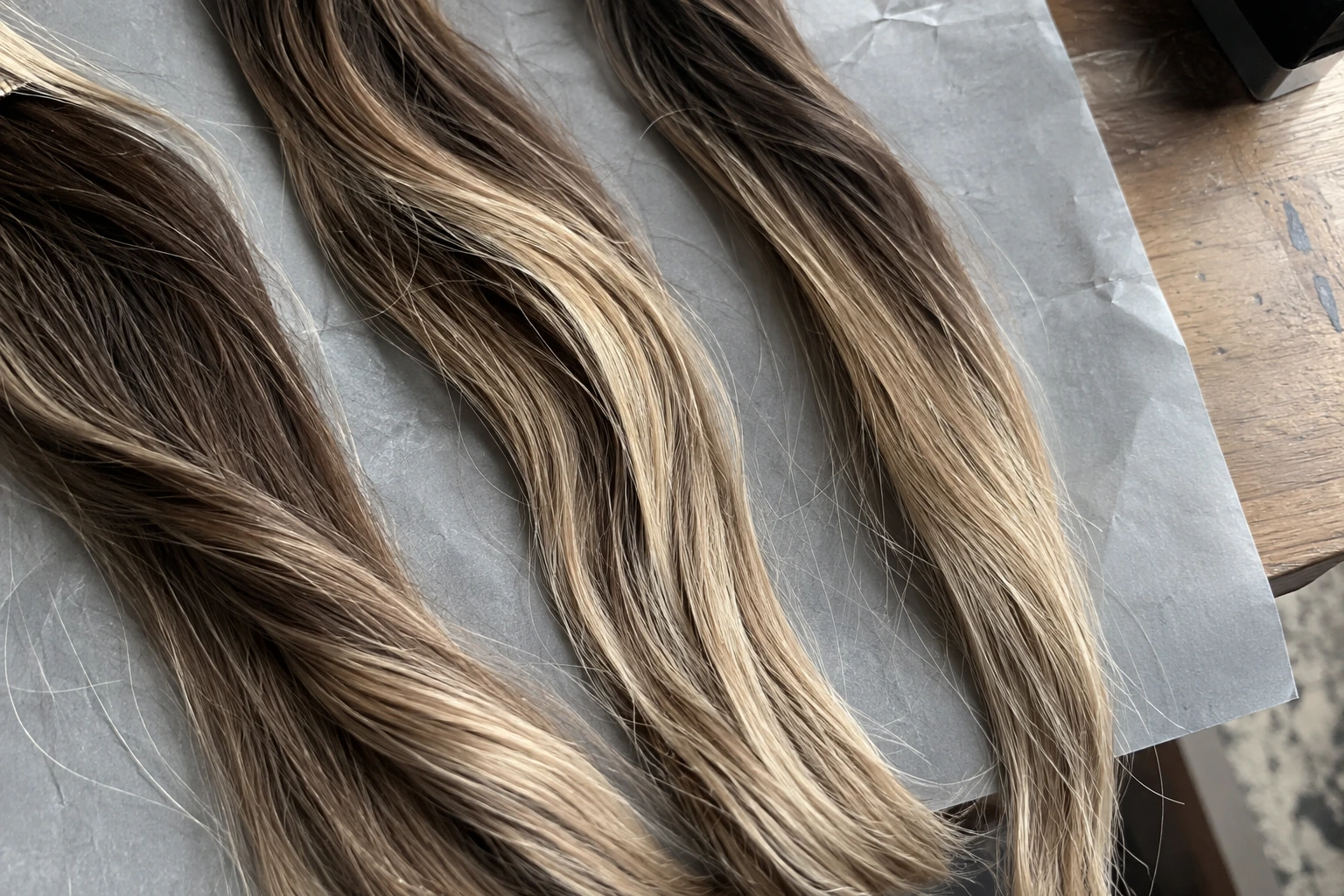
Four visible details help distinguish one balayage result from another:
- Root depth: how dark the base remains and how far that depth extends from the parting.
- Ribbon placement: where the lighter pieces appear, how wide they are and whether the distribution suits the requested look.
- Transition: how the root, mid-lengths and ends connect without forming an abrupt horizontal band.
- Final tone: whether the result reads warm gold, caramel, beige, cool ash or another agreed direction under normal viewing light.
These parts can be combined in many ways. A dark-rooted ash blend and a warm honey blend can both be balayage wigs, even though they do not share a single color number.
Balayage, ombré and conventional highlights are not interchangeable
The terms overlap in everyday sales language, but they guide the eye differently.
| Term | What a buyer usually sees in the finished color | What to specify in a brief |
|---|---|---|
| Balayage | Selected lighter ribbons with varied starting points and visible dimension through the lengths | Root depth, ribbon position and width, face-framing direction, transition and tone |
| Ombré | A broader dark-to-light change, usually read across the overall length | Where the transition begins, how gradual it should be and the target tone at the ends |
| Conventional highlights | Repeated lighter sections that may follow a more regular pattern from the root area | Highlight size, spacing, contrast and whether the front should be brighter |
This is a visual buying guide, not a claim that one finish is always better. The right choice depends on what your customers request and how you plan to position the finished unit.
What a wig seller should inspect before approving a sample
Product photos are useful, but they are not enough on their own. Lighting, camera settings, screens and the starting hair color can change how the same tone appears. Use the photos to define direction, then inspect the physical sample as a product.
1. Read the parting and root together
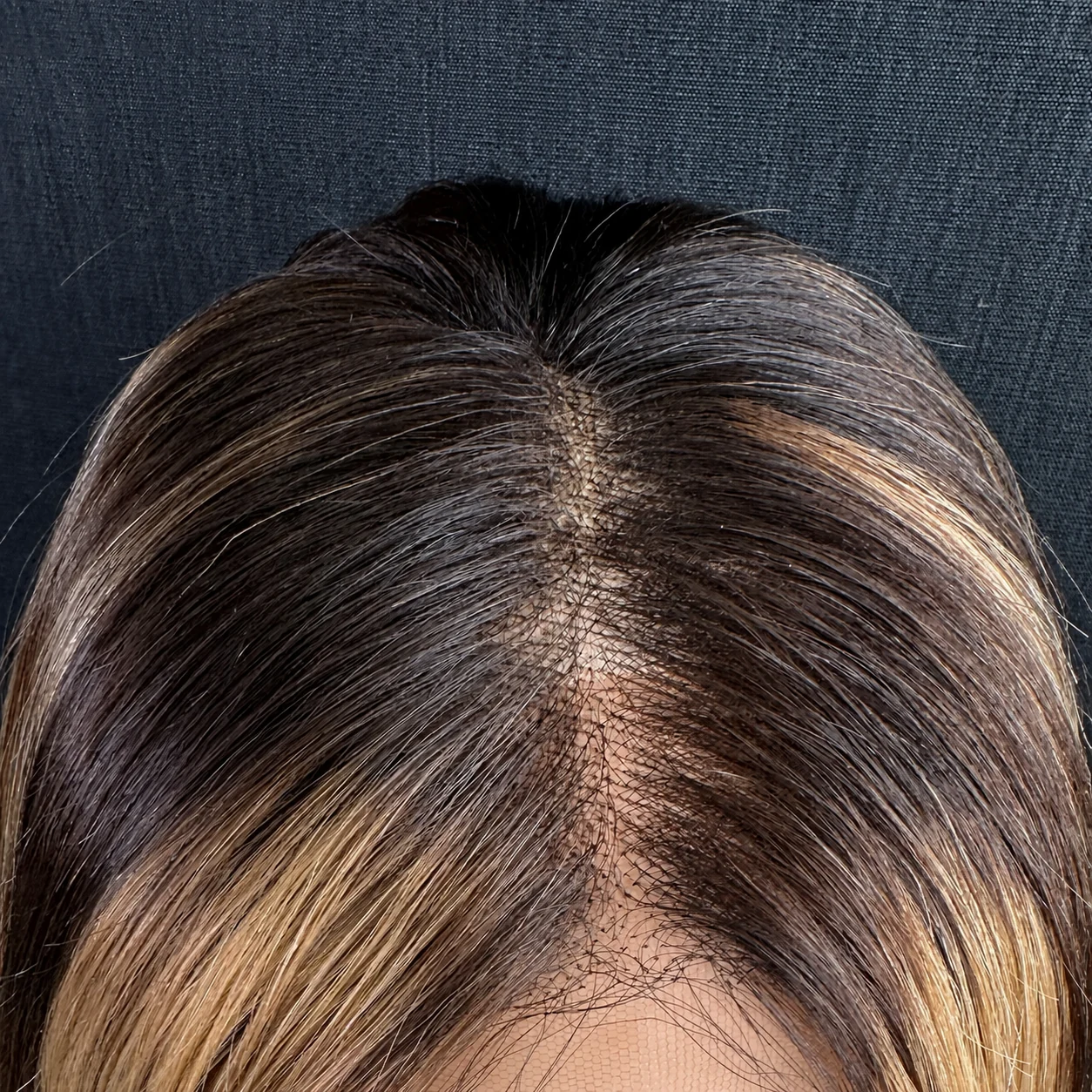
Look at the parting close-up and the full front view. The root depth should make sense across both views. If the front appears softly rooted but the parting shows a noticeably different transition, ask the supplier which view represents the approved brief.
2. Follow the lighter pieces from front to back
Do not judge the money piece in isolation. Check whether the brighter front direction connects with the side and back. The placement does not have to be symmetrical, but it should look intentional and match the reference you approved.
3. Check the transition at normal viewing distance
Close-ups reveal detail; a full-length view reveals whether the color reads as one finished design. Look for where the lighter areas begin, whether one zone becomes visually heavy, and whether the ends match the agreed warm or cool direction.
4. Separate color approval from construction approval
A strong color result does not answer construction questions. Record the length, lace option, density and parting request separately. NUSFACE’s current custom starting specifications are 14, 16, 18, 20, 22, 24, 26 or 28 inches; 5×5, 13×4 or 13×6 lace; 180% density; and Superior Raw Hair. MOQ is one piece.
Those are starting specifications, not a substitute for a quote. The final price still depends on the full custom brief.
Can I adapt a style instead of copying the whole wig?
Yes. You can keep the color you like while changing the face frame, root depth or distribution of the lighter sections. For example, keeping honey blonde through the lengths but narrowing the bright front pieces produces a different look from making the whole wig less golden.
Start with the feature you want to keep and the feature you want to change. You do not need to arrive with a dye formula. NUSFACE’s displayed wigs are references for custom work; the reference-photo guide shows how to explain a combined idea clearly.
Can I see one finished piece before ordering more?
NUSFACE accepts a one-piece paid sample order. This lets you see the color around the face, inspect the back and assess the construction before committing to a larger quantity. Keep the approved piece and its photographs as the reference for a repeat order.
The sample should answer your actual uncertainty. If you are choosing between a softer face frame and a bold one, compare that feature first; a long specification sheet will not make the aesthetic choice for you.
Questions buyers still ask
Can you copy the exact color in my phone screenshot?
The screenshot can define the direction, but it cannot guarantee an exact physical match. Screen settings, lighting and the starting hair color affect appearance. Send several useful angles and state which root, ribbon and tone details matter most; the factory will confirm the workable brief.
Does the $300 reference describe a fixed configuration?
No. Around $300 is a reference price for a finished hand-painted straight wig. Your chosen color, length, lace, density, quantity, packaging and destination determine the final quote.
Can I test one piece before a larger order?
Yes. MOQ is one piece, so a buyer can pay for one finished unit and inspect the color and construction before planning the next order. This is a paid test order, not a free sample.
Start with a color direction the factory can quote
Browse the finished balayage color references if you need a starting point. If you already have a client image or market direction, open the Custom Service brief and send the reference, length, lace, density, quantity and destination.
You can also contact the sales team on WhatsApp to discuss the brief or request an available live video factory viewing time.
YOUR NEXT STEP
Get a quote for your color brief.
Send the reference, length, lace, density and quantity. Our team will confirm the details for your custom order.