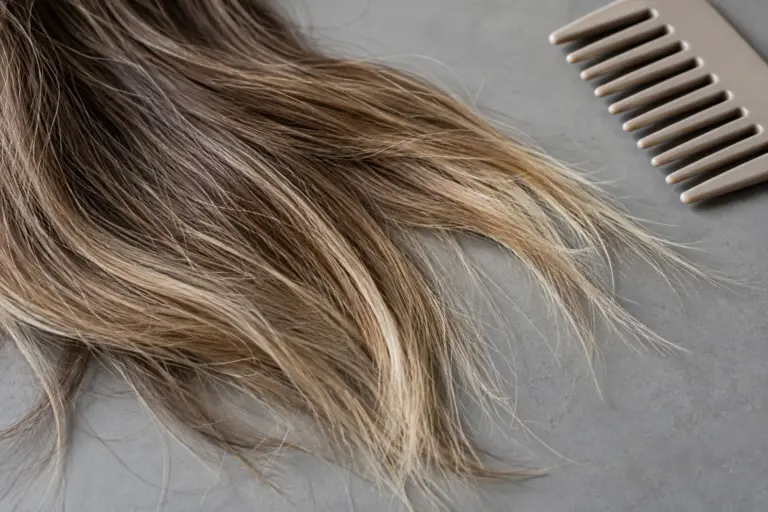
Single drawn and double drawn describe the mix of strand lengths in the hair used to make a wig. Single-drawn hair contains a broader mixture of long and short strands, so the bundle usually tapers toward the ends. Double-drawn hair has more of the shorter strands removed or sorted out, allowing more of the hair to continue toward the stated length. It does not mean twice the wig density, and the label alone does not promise that every strand in a finished wig ends at the same point.
For a salon or seller comparing quotations, that distinction matters. A customer may want a substantial bottom edge without extra volume around the crown. Choosing a label that sounds fuller is less useful than understanding which part of the wig the supplier is describing.
The word describes length distribution
Picture two loose hair bundles held at their attachment ends. In one, many strands stop before the longest tips. In the other, more strands continue farther down. Even when both bundles have the same longest-point measurement, the second can retain more fullness through the lower lengths.
The key question is how much of the hair reaches the length being quoted. “Double drawn” is useful shorthand for sorting toward a more consistent length distribution. It is not a numerical specification by itself. Published supplier descriptions differ in the share of hair they say reaches the stated length, so do not copy a percentage from one brand’s guide into another supplier’s order.
If a quotation includes a percentage, find out what it counts: strands, weight or something else; which length or range qualifies; and whether it describes the loose hair or the completed wig. Without that definition, the number is difficult to use as an acceptance condition.
Sorting the hair and cutting the wig are different decisions
A finished wig is not an untouched bundle. The hair is attached to a cap, distributed through different areas and may be cut into layers or face-framing sections. The final outline depends on those choices as well as the hair selected for the build.
That means a double-drawn description does not rule out a layered hairstyle. Nor does a blunt-looking edge prove which drawing process was used. A trim can make the edge look more even while changing the finished length. If a customer wants to keep long ends and also wants a substantial bottom line, resolve both requirements before approving a cut; trimming away the longest tips is a different result.
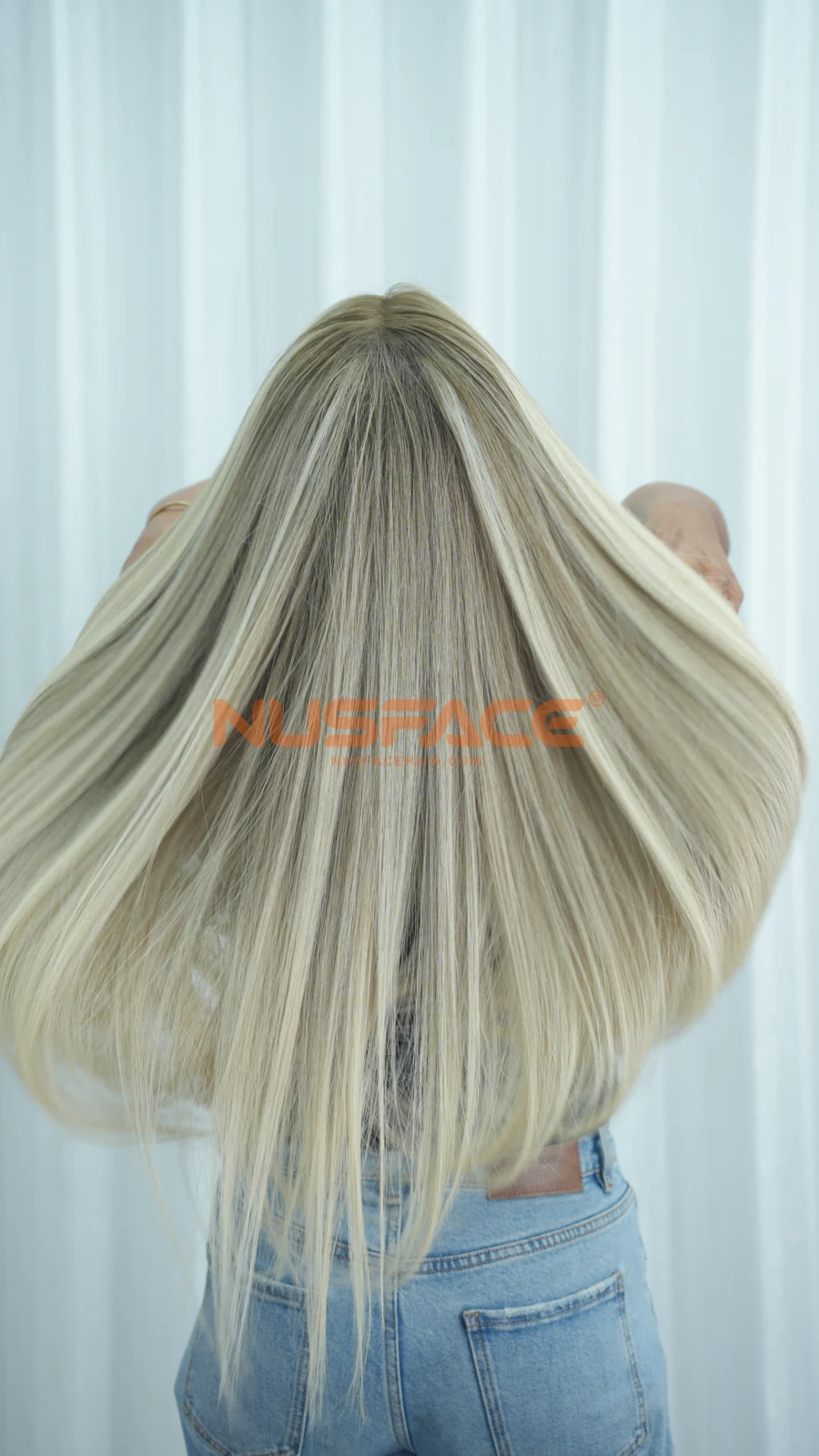
A back photograph helps you see the outline, but the way the hair is held matters. Spreading it across the shoulders changes how much background shows through. Hair draped over one shoulder gives another impression. Use the visible shape to discuss the finish, rather than treating one pose as proof of a drawing grade.
Keep density and material claims separate
A wig’s density label concerns the amount of hair in the build. Drawing concerns the distribution of strand lengths. They interact in the finished appearance, but one cannot substitute for the other. A request for fuller ends should not automatically become a request to add hair everywhere. Our wig density guide explains how to compare the crown, lengths and ends separately.
The drawing label also does not establish donor origin, cuticle alignment, previous chemical processing or color performance. Those are separate material questions. “Double” is not a general quality score, and “single” does not by itself mean damaged or unsuitable hair. Keep the raw, virgin and Remy distinctions separate from the finished outline you want.
Compare the offer your customer will receive
Start with the intended hairstyle. A soft taper and a more even bottom edge are different preferences; neither needs to be presented as a universal upgrade. Then establish whether the supplier’s drawing description applies to the input hair or the finished wig you are approving. A bundle photograph cannot settle the cut and distribution of a completed piece.
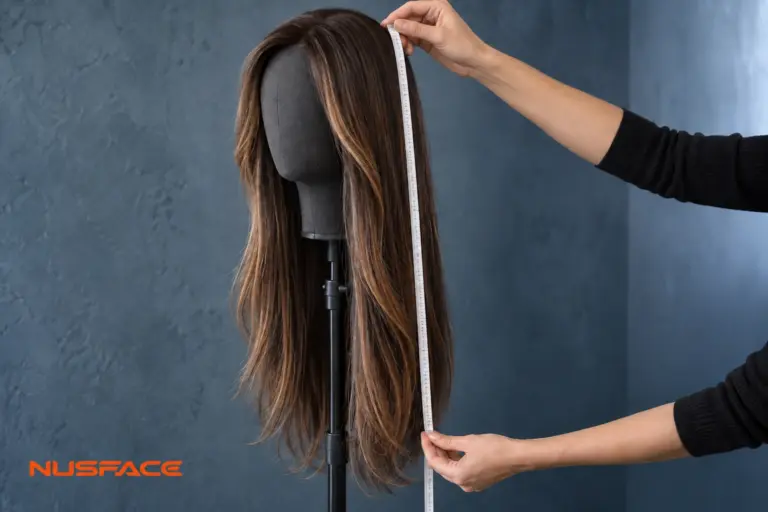
For a meaningful comparison, retain a full back view with the ends visible and identify the length and styling state shown. If the measurement is unclear, use the wig length guide before comparing two offers. Review the physical sample and the agreed finished shape together, rather than accepting a drawing label as the complete brief.
For a NUSFACE custom inquiry, describe the result you want: for example, keep the selected finished length, retain the planned face framing and make the lower outline more substantial. The team can review that request and confirm the material description, feasible finish and quotation. Start through Custom Service or contact the business team. Approve what the finished wig should look like alongside the terminology used to describe its hair.