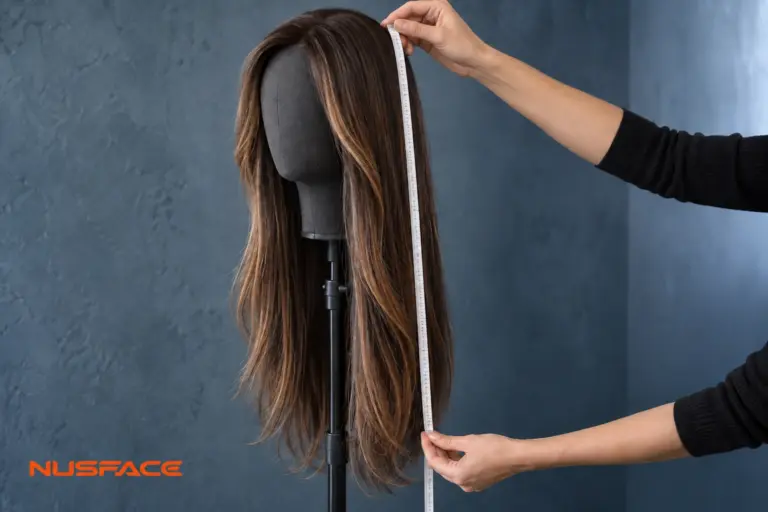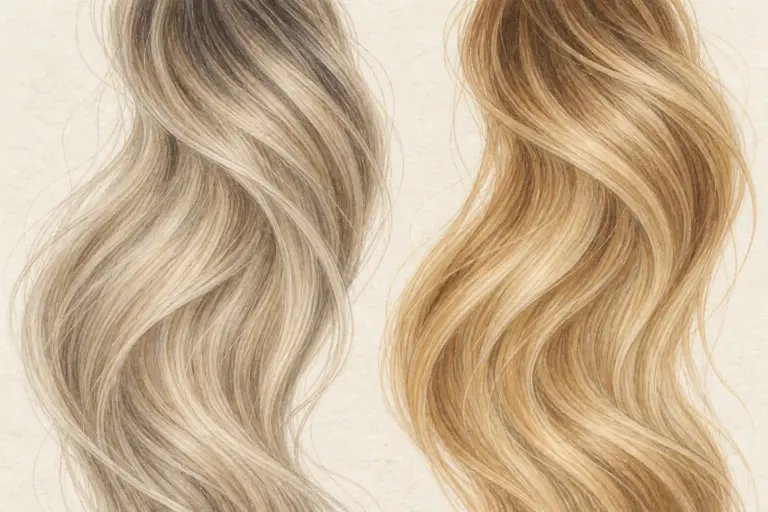
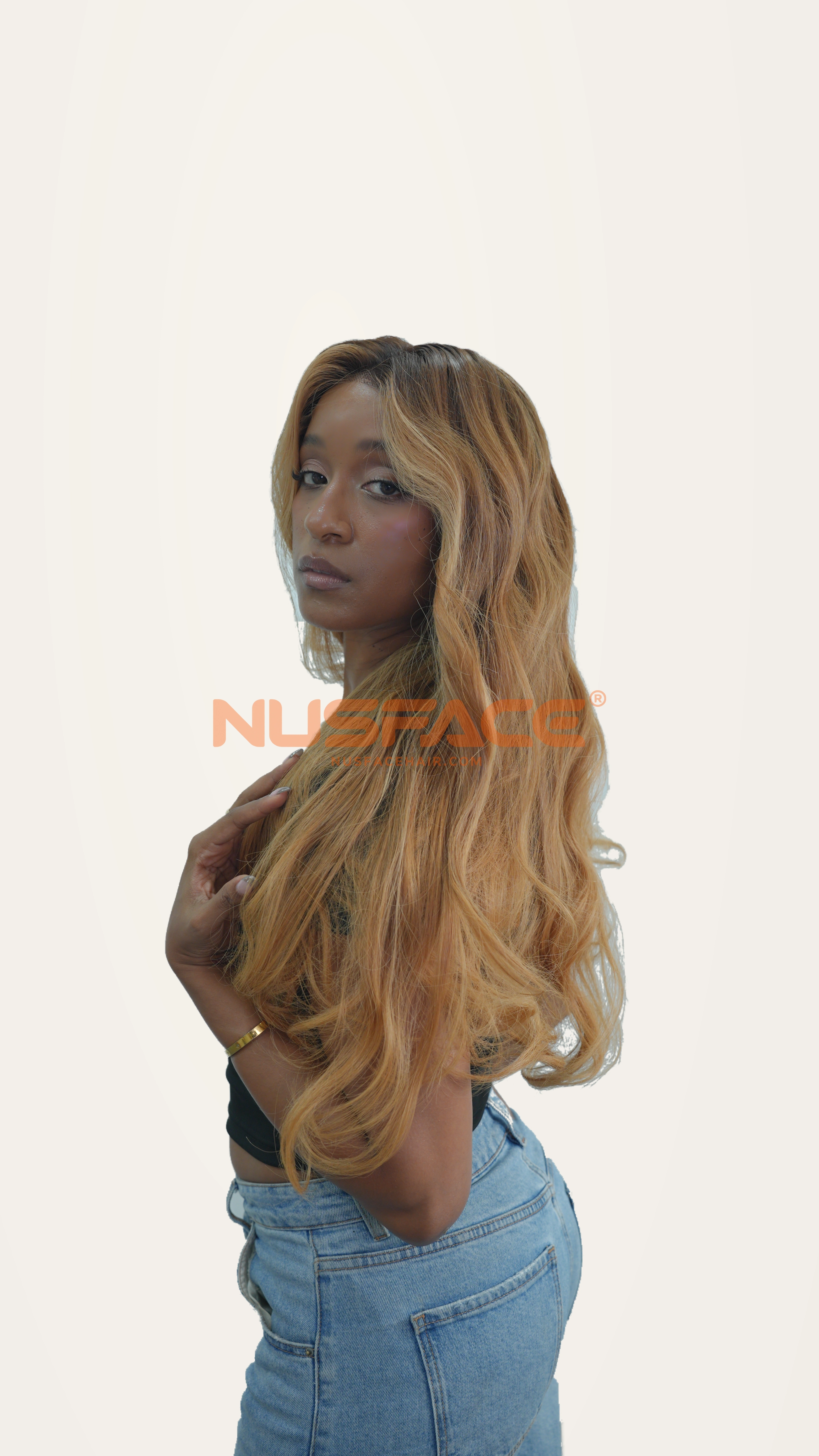
Care for a balayage human hair wig with gentle washing, light conditioning through the lengths, careful detangling and thorough drying before storage. Protect the lighter sections from unnecessary heat and further chemical processing. Follow the instructions for the particular wig: its color treatment, texture and cap construction affect how it should be handled.
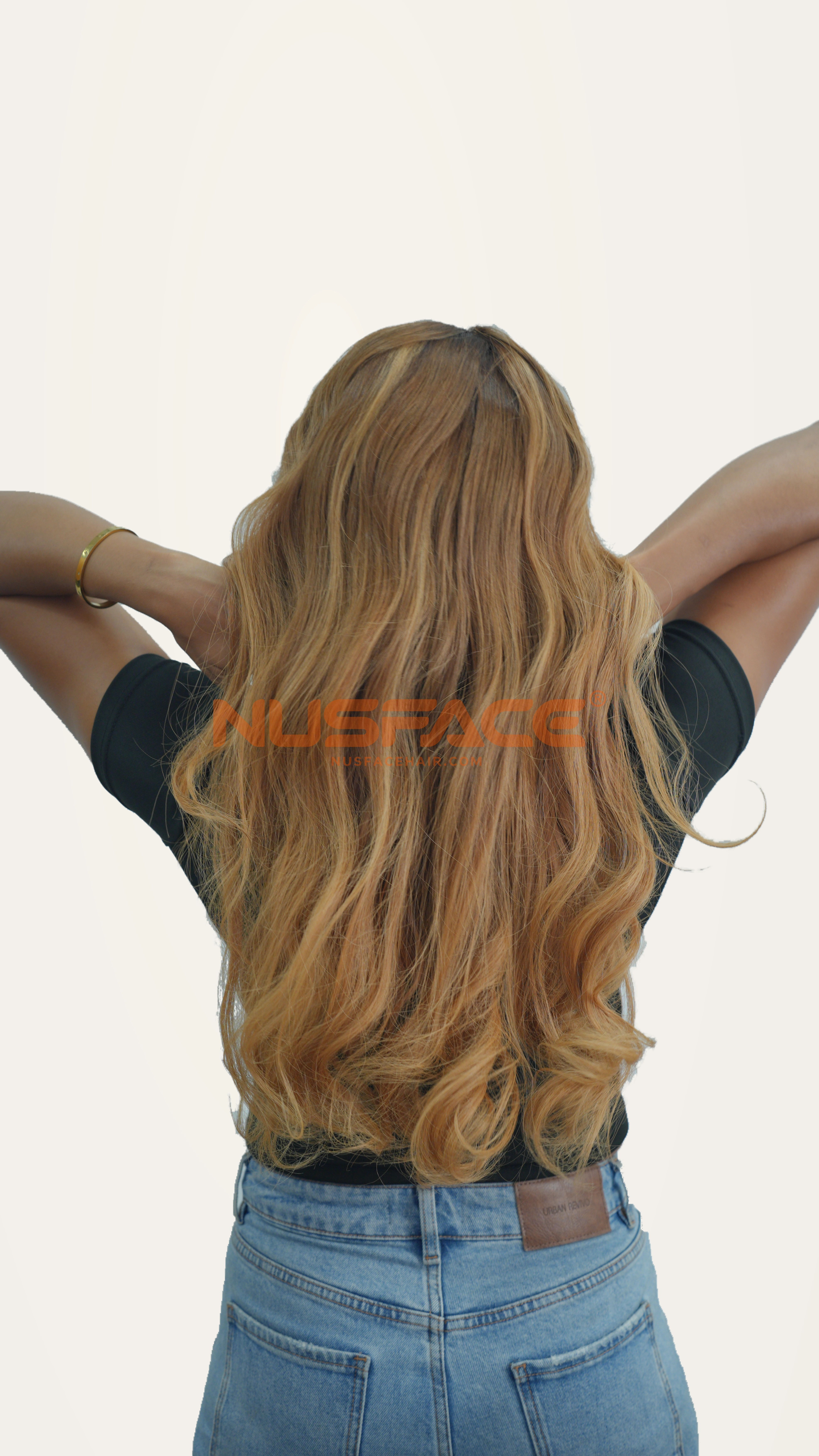
For salons and wig sellers, the handover matters. Show the customer how to support the hair while detangling and explain which wash and styling products suit the piece. A photo of the finished style and a short care note give them something specific to refer to at home.
 View larger image
In this article
- Check the hair, style and cap before the first wash
- Detangle in small sections, beginning at the ends
- Wash gently and keep the hair flowing in one direction
- Condition the lengths without coating the attachment points
- Dry carefully before styling or putting the wig away
- Store the piece without crushing it or trapping moisture
- When should a customer contact the seller?
- A short care note to give your customer
Check the hair, style and cap before the first wash
Confirm that the instructions are for human hair rather than synthetic fiber. Also identify whether the waves are a temporary styled finish or a texture that requires its own routine. Do not assume a curl will return to exactly the same shape after washing.
Ask the supplier to identify suitable shampoo, conditioner and styling products for the color and construction. Keep those recommendations with the order details. If a wig is bonded or installed with adhesive, have the installer explain removal and adhesive cleanup; a general wash routine is not a removal tutorial.
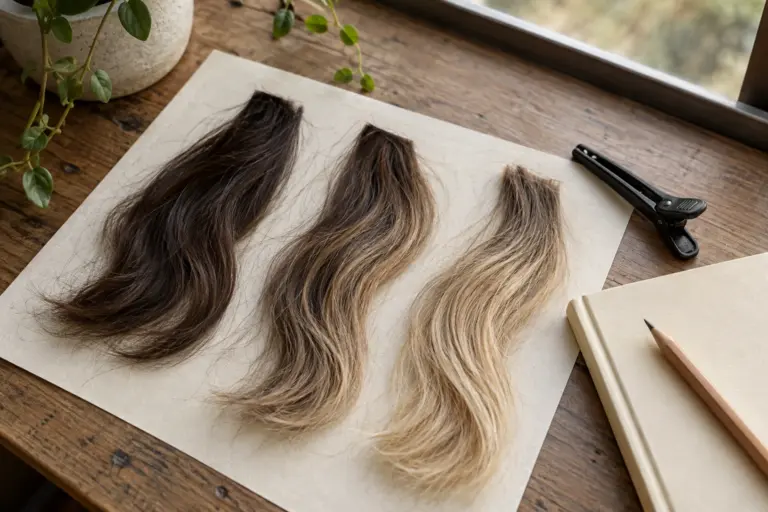
For a new sample, take photographs before washing or restyling. Include the hairline, part, lengths and ends. These give the salon and supplier a useful starting point if the customer later reports a change in appearance. Our balayage sample checklist covers the initial visual review.
Detangle in small sections, beginning at the ends
Support the section above the tangle so that the comb does not pull directly on the cap. If the knot resists, follow the steps for handling a tangled balayage wig before brushing further. First clear the ends, then work through small sections progressively closer to the roots. The strokes still travel toward the ends; working upward through sections does not mean backcombing toward the scalp.
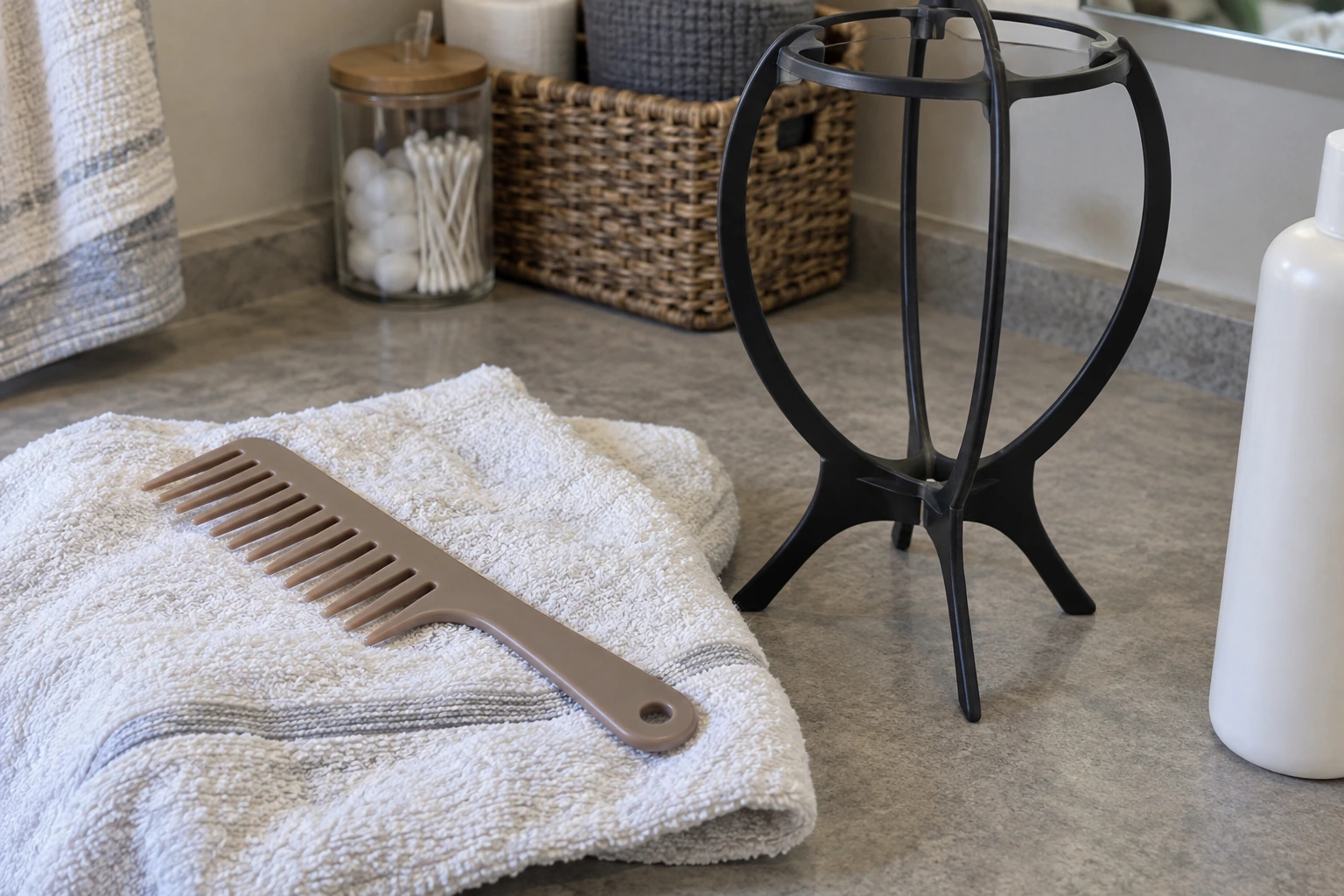
Use fingers or a suitable wide-tooth comb as appropriate for the texture. Keep tools clean and stop if a section will not release with gentle handling. Pulling harder or cutting a knot out can change the piece before the cause has been assessed.
Confirm whether the wig should be detangled before washing or as part of its recommended wet-care routine, and which tool to use. Follow the instructions for the specific texture and construction. A method that suits another piece may not be suitable for this one.
Wash gently and keep the hair flowing in one direction
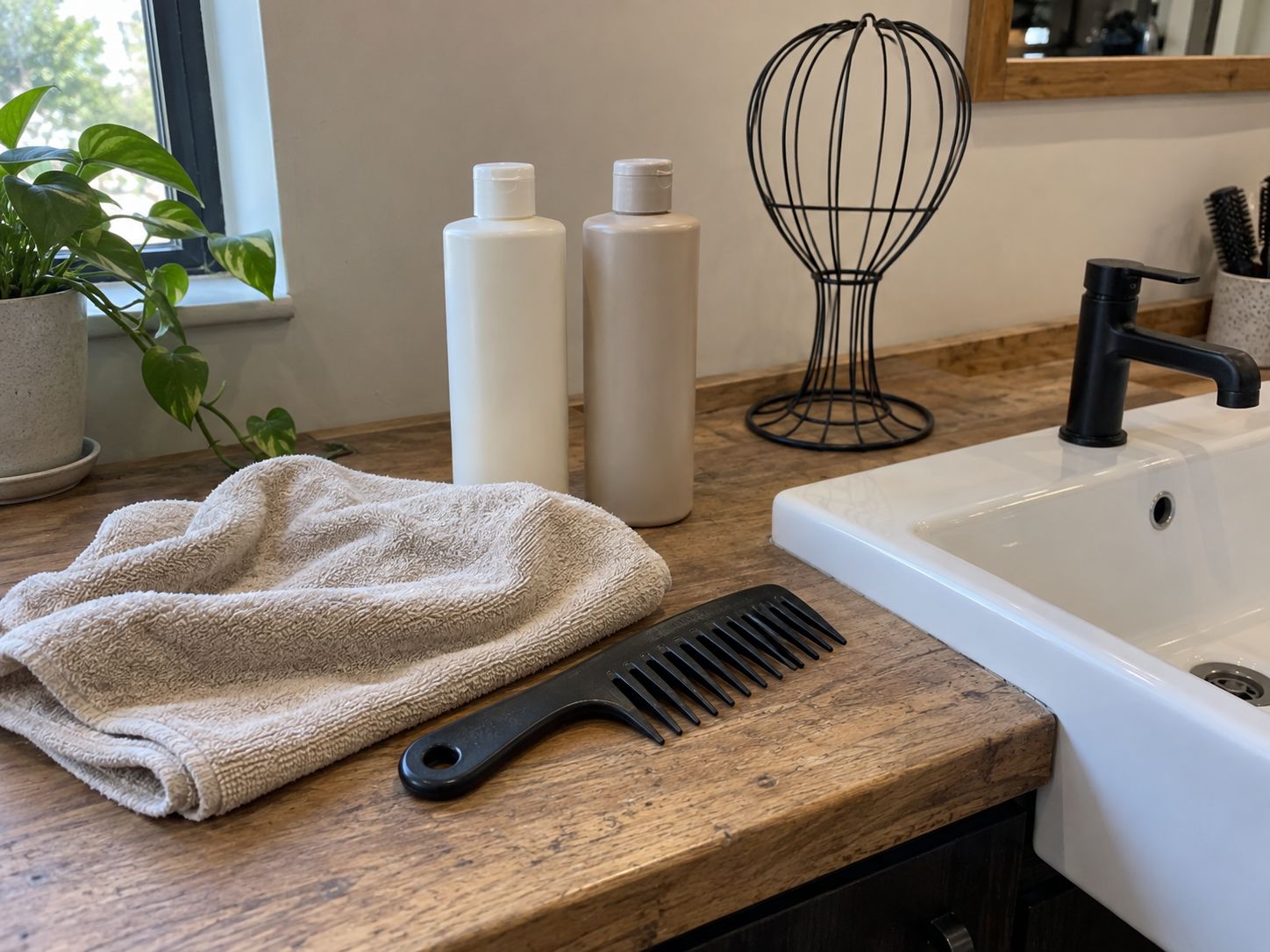
Use a shampoo suitable for color-treated human-hair wigs, following the product and supplier instructions. Avoid household detergents as a routine wash product. Washing needs depend on wear and product buildup; the same fixed calendar will not suit every customer.
Follow the water-temperature and washing directions supplied for the piece. Handle the lengths gently without rubbing, twisting or scrubbing them together, and keep the hair aligned while rinsing. Do not machine-wash the wig.
A salon can make this easier by showing the customer the wash products at collection and writing down their names. Avoid a vague instruction such as “use any good shampoo,” especially when the customer is considering a clarifying wash or a color-depositing product.
Condition the lengths without coating the attachment points
Apply a suitable conditioner mainly to the middle lengths and ends, following its directions. Keep conditioner and oily styling products away from the places where individual hairs are tied into the lace or hand-tied cap. These attachment knots are different from tangles in the hair.
Concentrate conditioning on the lengths that need it rather than adding more product at the roots. Follow the product directions for application and rinsing, and keep rinse-out and leave-in products separate: they are not interchangeable steps.
When the lighter sections feel different from the darker root area, tell the supplier which section has changed. Photograph the area and list the products used rather than repeatedly adding different treatments.
Dry carefully before styling or putting the wig away
Gently press out water with a clean towel. Do not twist the wig or rub the hair between towel surfaces. Support the piece while it dries and allow air to circulate, using the drying method recommended for its construction and finish.
Before using a flat iron or curling iron, ensure the hair is fully dry. Avoid repeated heat passes just to tidy an area that needs detangling. Check the recommended heat setting for the piece before restyling it.
Use only the heat setting and protective product recommended for your specific wig. If blow-drying is part of the recommended routine, follow that routine rather than treating all human-hair wigs alike.
Store the piece without crushing it or trapping moisture
Make sure both the hair and cap are completely dry. Keep the wig in a clean, dry place away from direct sunlight and heat. Use a suitable stand or protective storage arrangement that supports the style and keeps long sections from being crushed or tangled.
For a removable wig, take it off before sleeping unless the installer has given instructions for a particular wear system. Customers with an installed piece should ask their stylist how to manage overnight friction and when to return for maintenance.
 View larger image
When should a customer contact the seller?
Stop experimenting if there is a tight mat, a damaged lace area, an unexpected color change or a noticeable change in shedding. Send clear photographs, the order reference and a short account of washing, products, heat or chemical treatment. A comb full of hair alone does not establish why a problem occurred.
Avoid deciding in advance that every tangle is a care mistake. The seller needs to review the piece and its history before recommending a remedy. Do not bleach, recolor or cut the affected area as a first response. Read what to confirm before recoloring a balayage wig before considering another chemical treatment.
A short care note to give your customer
- Use the wash and styling products recommended for this human-hair wig.
- Support the hair and gently clear small sections, starting with the ends.
- Wash without rubbing or twisting; keep conditioner away from the lace attachment knots.
- Follow the drying instructions. Hair must be dry before flat-ironing or curling; hair and cap must be dry before storage.
- Check with your seller before bleaching, recoloring or changing the care routine.
- If a problem persists, stop and send photographs with the products and steps used.
For a salon or wholesale order, include care requirements alongside your color reference and specifications. Ask which routine suits the finished sample before passing instructions to your customer. NUSFACE accepts sample inquiries from MOQ 1.
Discuss a balayage wig sample, or send your product and care questions on WhatsApp.