A useful custom wig lead-time answer should identify the order it covers, what starts the preparation period, the expected dispatch date and the separate delivery estimate. If you are planning a store launch or salon appointment, work from the date you need to receive the wigs. A general number of days cannot settle the schedule until the supplier knows what you are ordering and where it will go.
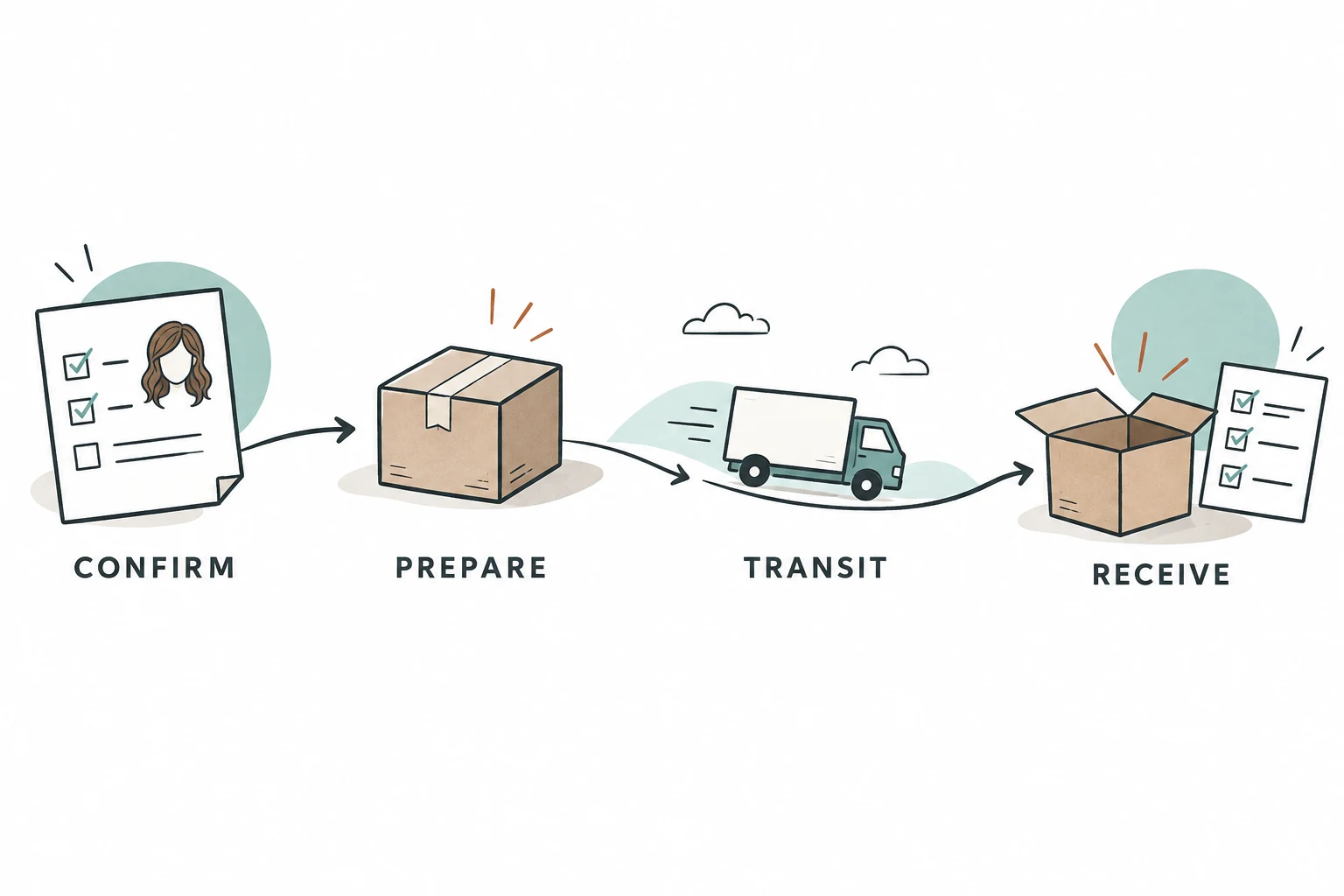
For NUSFACE custom orders, the usual preparation period is 3–7 days after the color brief and payment are confirmed, before dispatch. Carrier transit follows. Use that reference to understand the stages; have the business team check the actual configuration, quantity and destination against your required receiving date.
Put the receiving date before the launch date
A launch date tells a supplier why timing matters. The receiving date tells it when the shipment needs to reach you. Leave room for whatever your business actually plans to do after receipt: inspect the units, compare them with the agreed brief, take listing photos, or carry out any local service you have arranged. The time those tasks require depends on your plan; there is no universal buffer to add.
If cutting, styling, fitting or packaging work should be included in the supply order, put it in the request. NUSFACE can discuss these requirements, with the scope and cost confirmed in the quote. Do not build a schedule around receiving a finished service that was never agreed.
Write both dates if they serve different purposes. “Store launch on November 6, 2026; wigs needed at our receiving address by October 30, 2026” is clearer than “needed next month.” Those dates are an illustrative planning example, not a NUSFACE delivery commitment. Include the year in a real request.
Give each order line its own specification and quantity
For a mixed order, “ten blonde wigs” hides the work the supplier needs to assess. Split the request by the configuration you intend to buy. A length change, another lace construction or a different color brief may make it a different order line, even when your storefront groups the units under one collection.
Use the following as a way to organize an inquiry, not as a requirement to know every specification before contacting NUSFACE.
| Information | What makes the timing answer useful |
|---|---|
| Product or reference | Identify the color direction and construction for each line. Mark anything still undecided. |
| Quantity per line | State how many units you need of that exact configuration. |
| Approval status | Say whether you are discussing a first sample, an approved reorder or a changed version. |
| Included work | Specify any cutting, styling, fitting or packaging request that must be in the order. |
| Destination | Give the country and postal code; confirm the full delivery address before dispatch. |
| Latest receiving date | State a full date and whether part of the order arriving later would be useful. |
If you have only a reference photo, send it and identify what remains open. You can get the discussion started without guessing the lace or cap on the supplier’s behalf. The answer becomes suitable for purchasing decisions as those open points are settled.
For a reorder, send the accepted specification and sample record. Our reorder guide explains what to retain. A previous order helps identify the product; a new quantity, destination or revision still needs a current timing answer.
Ask which stage the estimate covers
The first inquiry, final brief approval, payment confirmation, dispatch and receipt are different events. When a supplier gives you a lead time, ask which event starts it and which event ends it. This avoids putting an unconfirmed design discussion inside a preparation period that starts only after approval.
For NUSFACE’s usual custom-order reference, both the brief and payment need to be confirmed before the 3–7 day preparation period starts. If you are still deciding the root depth or awaiting a revised quote, do not count down from the day you first sent a photograph. Ask for the expected dispatch date once the order conditions are clear.
The shipping page separates preparation and carrier transit. A US small-order transit reference begins after dispatch; another destination or parcel needs its own shipping confirmation. Adding two published ranges together does not turn them into a guaranteed receiving date for your particular order.
Check whether one late line changes the whole shipment
For a collection launch, the important question may be whether all units must arrive together. Tell the supplier which lines are essential for opening and which could arrive later. Then ask whether a separate dispatch is possible for the proposed order, what it would cost and how the remaining lines would be scheduled. Separate dispatch is a request to assess, not a standard entitlement.
There are two purchasing decisions here. A single shipment may suit a buyer who needs to inspect the whole collection together. Separate shipments may be useful if a confirmed subset can support the first appointment or opening date. Neither helps when the missing line is the one your campaign or customer actually requires.
If an available configuration is suggested, compare it with the requirements for that line before accepting it. Our available-style versus custom-build guide covers that product decision. Keep this timing discussion focused on the exact quantity, dispatch arrangement and date; a general stock description does not settle them.
Compare replies on the same basis
Before choosing a supplier or approving an order, compare the actual milestones rather than the shortest headline number. One reply may quote preparation after confirmation; another may refer to carrier transit; a third may still be waiting for the color brief. Those replies cannot be ranked as if they describe the same interval.
A reply you can plan around records the agreed configuration and quantity, any outstanding approval or payment condition, the expected dispatch date, and the destination-specific delivery estimate. It should also make clear whether the full order ships together. If your receiving deadline is essential, ask directly whether the proposed arrangement can meet it and what remains uncertain.
Keep that reply with the quote. If you change a line’s quantity, color, construction, included work or destination, ask for the timing to be reconfirmed before using the earlier date in your sales plan.
To check a current request, contact the NUSFACE business team with the references you have, quantities, destination and receiving date. You can review the custom-service options first, or send reference images on WhatsApp. You do not need to complete every product choice before starting the discussion.