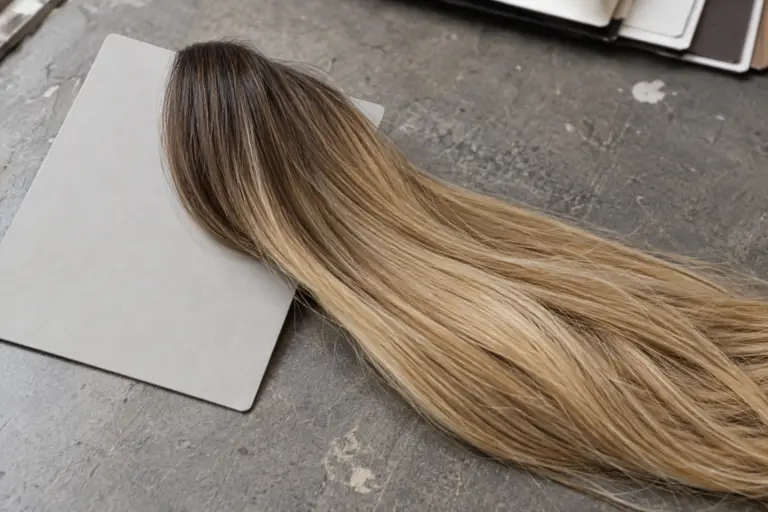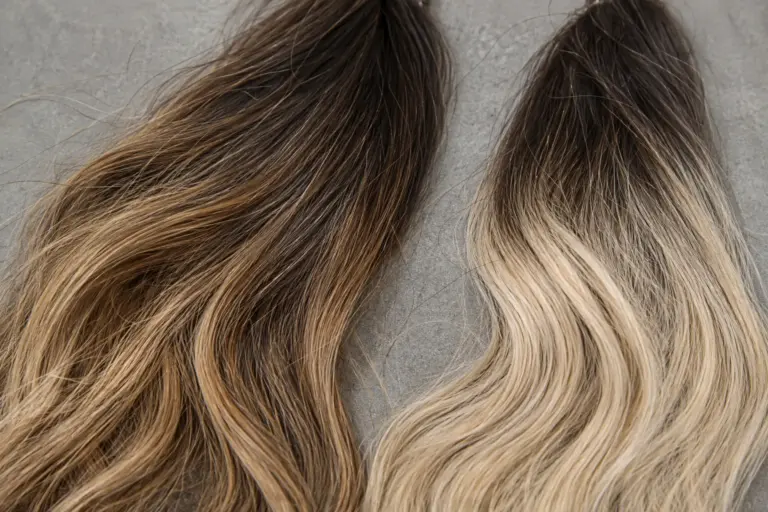
A wig called “rooted blonde” has a deeper-looking root area and lighter color beyond it. A solid color keeps the intended shade comparatively consistent from the top through the lengths. Neither name tells you the exact tone, construction or price. For a wig buyer, the useful question is which color relationship the customer expects to see at the parting, around the face and at the ends.
If the reference has a dark crown and pale lengths, a solid blonde will miss the most visible part of it. If the brief calls for an even 1B or blonde result, adding a shadow at the top changes the item you are selling. Start with the appearance promised in the listing or salon consultation, then decide how to make it repeatable.
What “rooted” changes—and what it does not
Rooted describes a color arrangement: the root area reads darker than some or all of the hair below it. The darker area may be narrow and softly blended or more visible through the crown. The lengths might be fairly even, or they might carry highlights, balayage ribbons or another blend. “Rooted” alone does not specify any of those choices.
Solid color is the simpler visual instruction: the chosen color should read relatively even from root to end. That does not mean every hair will look identical under every light, and it does not make lace, hair material or texture irrelevant. A solid 1B and a solid 613 are two very different products; each still needs its own approved color reference.
Neither label gives NUSFACE a root-depth measurement or a complete color brief. If a reference uses another brand’s shade code, include photos of the look you mean and confirm the result in writing rather than assuming the code works the same across suppliers.
Choose by the first image the customer will recognize
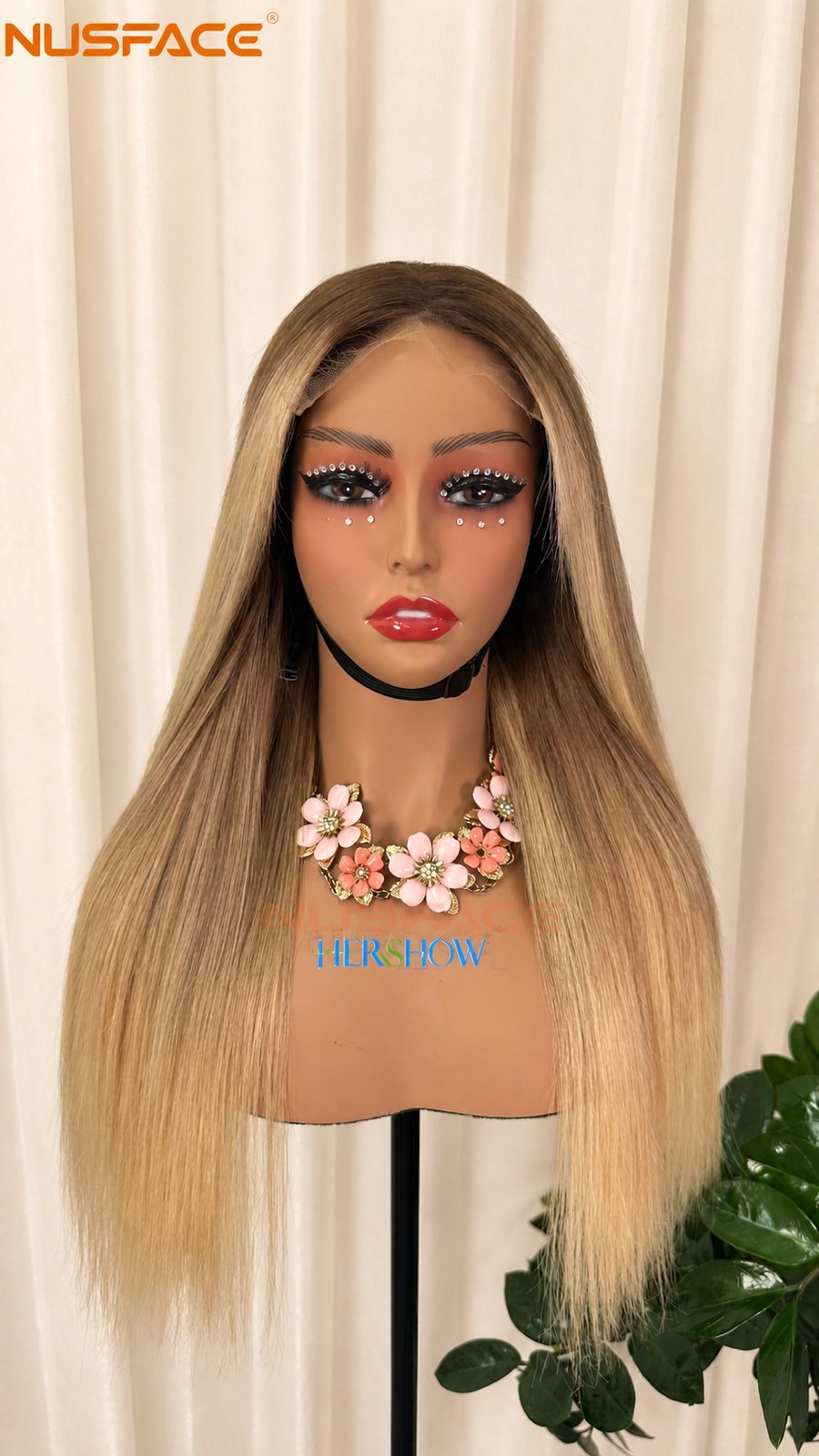
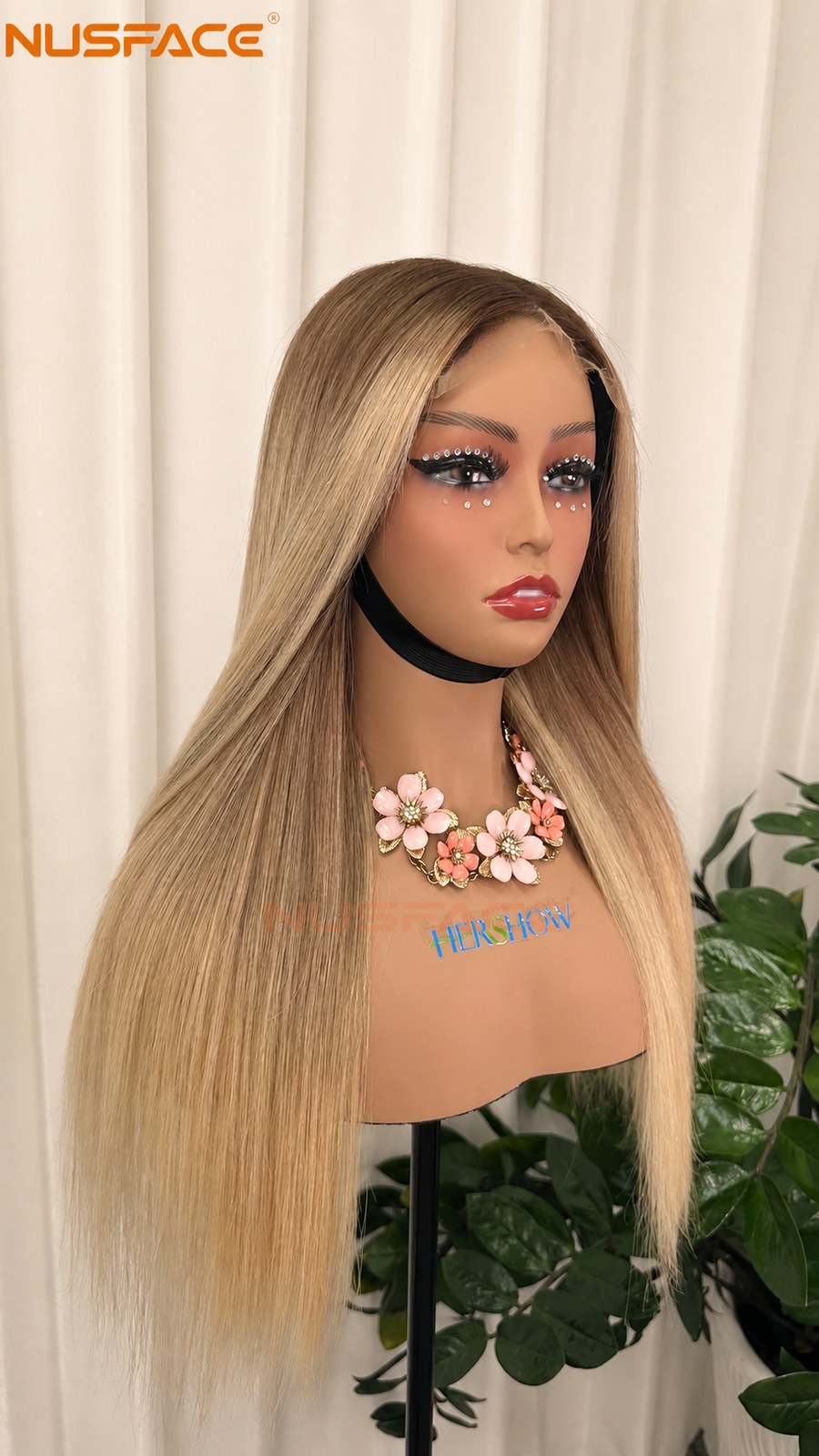
For a salon bringing in a client’s reference, compare the top of the picture before comparing the ends. If the client points to a pale blonde with a visibly brown parting, keep that root-to-length contrast in the brief. If they point to an even blonde from the crown down, do not substitute a rooted version because it happens to be available in a similar end shade.
For an online seller, the product photograph has to make the distinction visible. A front beauty shot may show the light lengths while hiding the crown. Pair it with a top or parting view and at least one side view. Label the actual color arrangement in the title and description. “Honey blonde” is not enough if the delivered unit has a dark root; “rooted” is not enough if the listing never shows how deep that root is.
For a wholesaler planning a small range, this is an assortment choice rather than a rule that one effect sells better. A solid direction gives customers a clear root-to-end color option. A rooted direction adds a different look even when the end tone is similar. Decide whether both answer distinct requests you already receive; do not infer demand or margin from the color label alone.
Compare the same build, then change the color brief
If you want to evaluate the two directions side by side, hold the other major choices steady where practical: hair material, length, texture, density and lace construction. Then ask for two color briefs. This makes the difference easier to judge without assuming the two quotations or preparation times will be identical.
For a solid-color brief, identify the target shade and whether any deliberate highlights or darker areas are allowed. Ask to see the parting, side panels and ends in ordinary daylight and indoor light. A product photo with heavy styling or warm filters is a poor color reference on its own.
For a rooted brief, identify the root tone and contrast against the lengths. Mark where the darker area should stop at the parting, hairline, sides and back. State whether the transition should be soft or clearly visible. Keep the approved front and top views with the written brief so a reorder is checked against the same result.
The difference matters at the lace and parting. A dark root that looks balanced from the front can appear too long when the part moves, while an even-color brief can be spoiled by an unrequested dark band at the top. Review the wig in the way it will actually be parted and photographed.
What to ask NUSFACE for
NUSFACE offers hand-painted balayage wigs as a featured custom color direction and also offers human hair wigs in other colors, including 1B, 613 and brown. These are examples of its supply scope, not a promise that a particular length, lace and color combination is ready to ship. The Honey Blonde Root Melt finished reference shows one rooted direction; it is not a universal root pattern.
Send one or two images that show the top as well as the lengths, plus the required hair material, length, texture, lace, density and quantity. Say whether you want a comparatively even color or a darker root, and ask the business team to confirm the written color brief, quotation and preparation time for that exact configuration. If the first unit is for evaluation, record what was approved before reordering.
If you have already chosen rooted blonde, our rooted blonde sourcing guide goes deeper into root tone, placement and sample views. For a closer look at two ways to soften the root transition, see root melt vs shadow root. To discuss a specific color direction, send a brief through Custom Service.