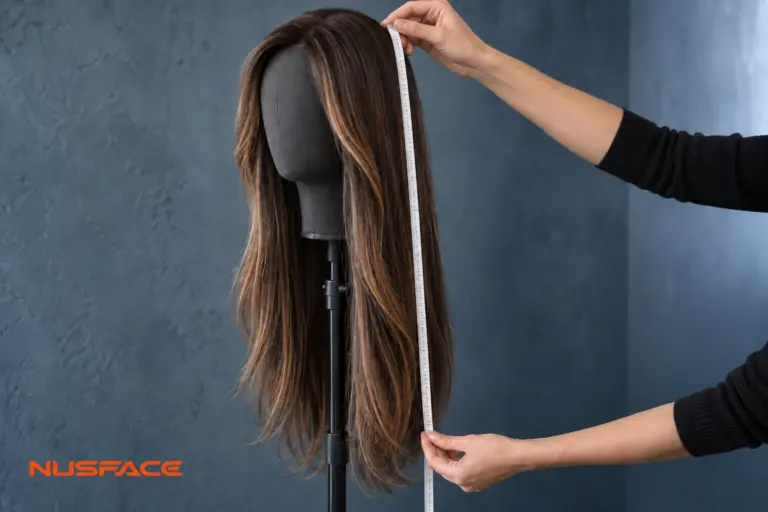
A wig cap size starts with measurements taken on the wearer’s prepared head. Use a soft measuring tape, record the route and unit, then compare the readings with the chart for the cap you are ordering. A label such as “medium” is only useful after that comparison.
For a salon or seller arranging a custom order, three commonly used readings are head circumference, front to nape, and ear to ear over the top. They describe different parts of the head. A comfortable circumference does not tell you whether the cap is deep enough from the front hairline to the nape.
Prepare the hair as it will sit under the wig
If the wearer has hair, arrange it as flat as it will be when wearing the wig. A bulky bun during measurement and a flat wrap during wear create different conditions. Note the preparation with the readings so another person can repeat the measurement meaningfully.
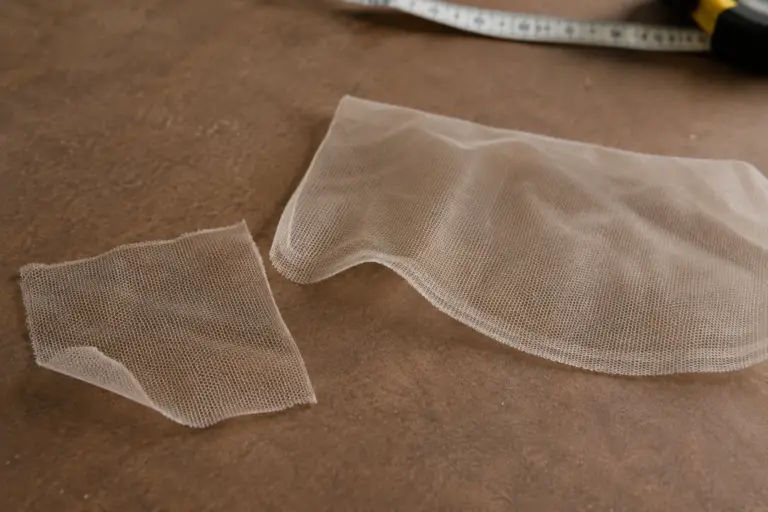
Use a flexible fabric tape that follows the head’s curve. Let it rest against the prepared hair without pulling it tight. Keep the same unit throughout, write down each reading, and repeat the route to check that the tape has not slipped. If the second reading differs, check the positioning before choosing a size.
Follow three distinct measurement routes
Head circumference: begin at the natural front hairline, follow around the head above the ears and along the hairline at the nape, then return to the starting point. Keep the tape following the intended cap perimeter. Record the full distance, not the width across the head.
Front to nape: start at the centre of the front hairline. Run the tape over the top of the head along the centre line to the hairline at the nape. Starting at the eyebrows or stopping high on the back of the head changes the measurement.
Ear to ear over the top: measure from the hairline at the top of one ear, across the top of the head, to the corresponding point at the other ear. Follow the supplier’s diagram for the crossing point and endpoints. An ear-to-ear route across the forehead is a separate measurement; it cannot be substituted for the route over the top.
These are common routes, rather than a universal manufacturing specification. Some custom caps need additional readings, and a supplier may define its landmarks more precisely. Use the instructions belonging to the cap in the quote.
Compare the readings with the chart for that cap
Keep the chart beside the measurements. A small, medium or large label from another supplier does not establish the same dimensions. If a seller only gives a size name, ask for the measurements behind it before approving a custom cap.
When the readings fall into different size categories, send the full set and explain the mismatch. Do not average a circumference and a front-to-nape reading: they measure different routes. Nor should you silently use a larger label and assume every other part will fit. The maker needs to explain how the proposed cap handles the combination.
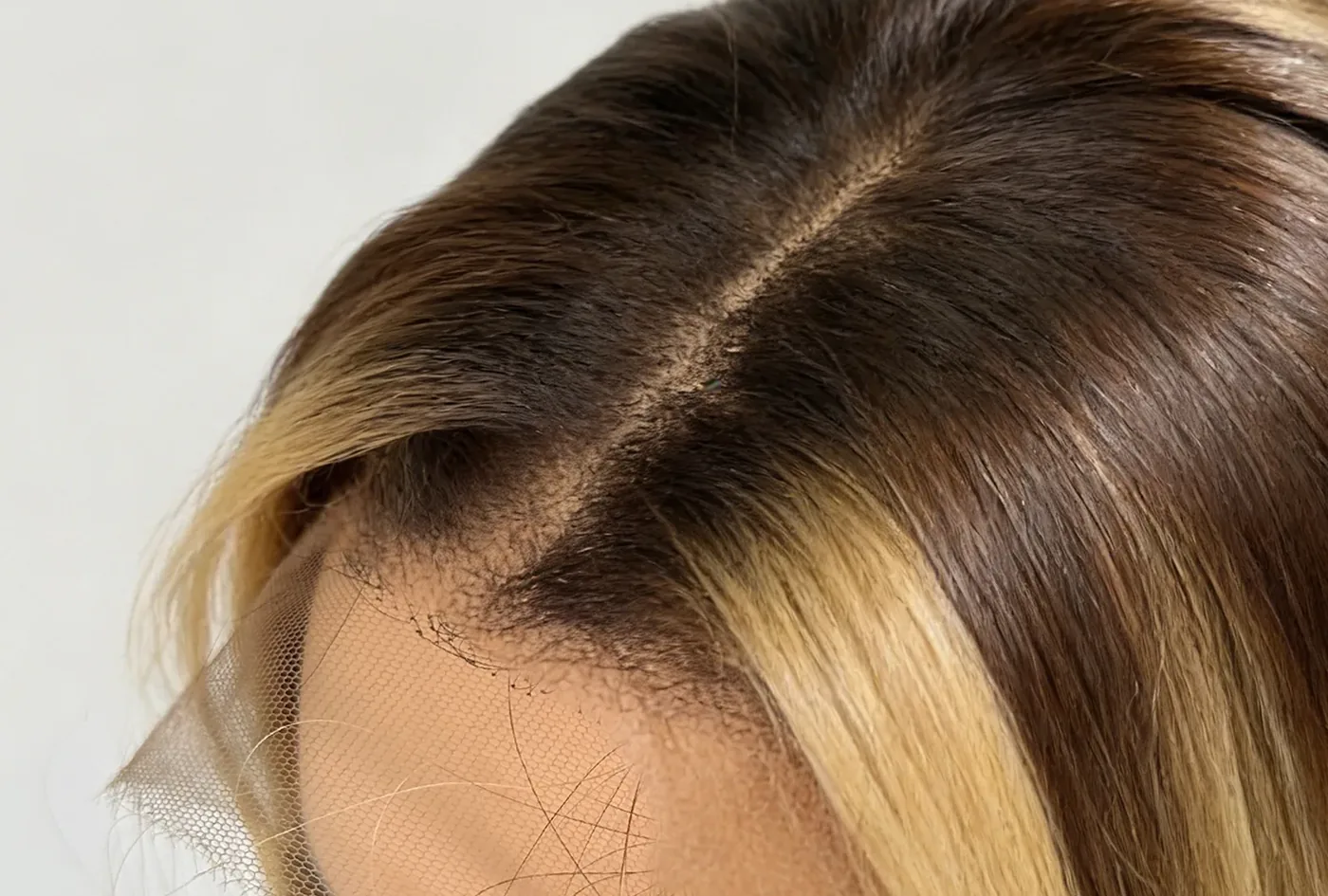
Cap size and lace size are separate choices. A 5×5 closure or 13×4 frontal describes the lace area, not the head circumference or cap depth. Our closure versus frontal guide explains that distinction.
Keep a short measurement record with the order
The useful record is the cap being quoted, the chart source, the readings with units, and how the hair was prepared. If the supplier asks for additional dimensions, keep those routes with the same record. Flag any unresolved endpoint or mismatch before approving the specification.
For a salon, tie that record to the individual client. For a wholesaler or online seller ordering a standard range, one person’s measurements do not establish a fit promise for every customer.
For a NUSFACE custom request, include the measurements and chart source when discussing the cap configuration. The custom service page is the place to start. Have the supported configuration and final quotation confirmed in writing, using the measured dimensions rather than a size label alone.