Accept a substitute wig only when its differences still suit the purchase you intend to make. If you have already agreed on a configuration with your customer, get their agreement to the change before approving it for their order. A similar photograph, the same color name or an earlier dispatch estimate does not establish that the replacement meets the original requirement.
A faster option is useful only if it still works for the customer or stock purchase you have in mind.
Would you buy this version for the same purpose?
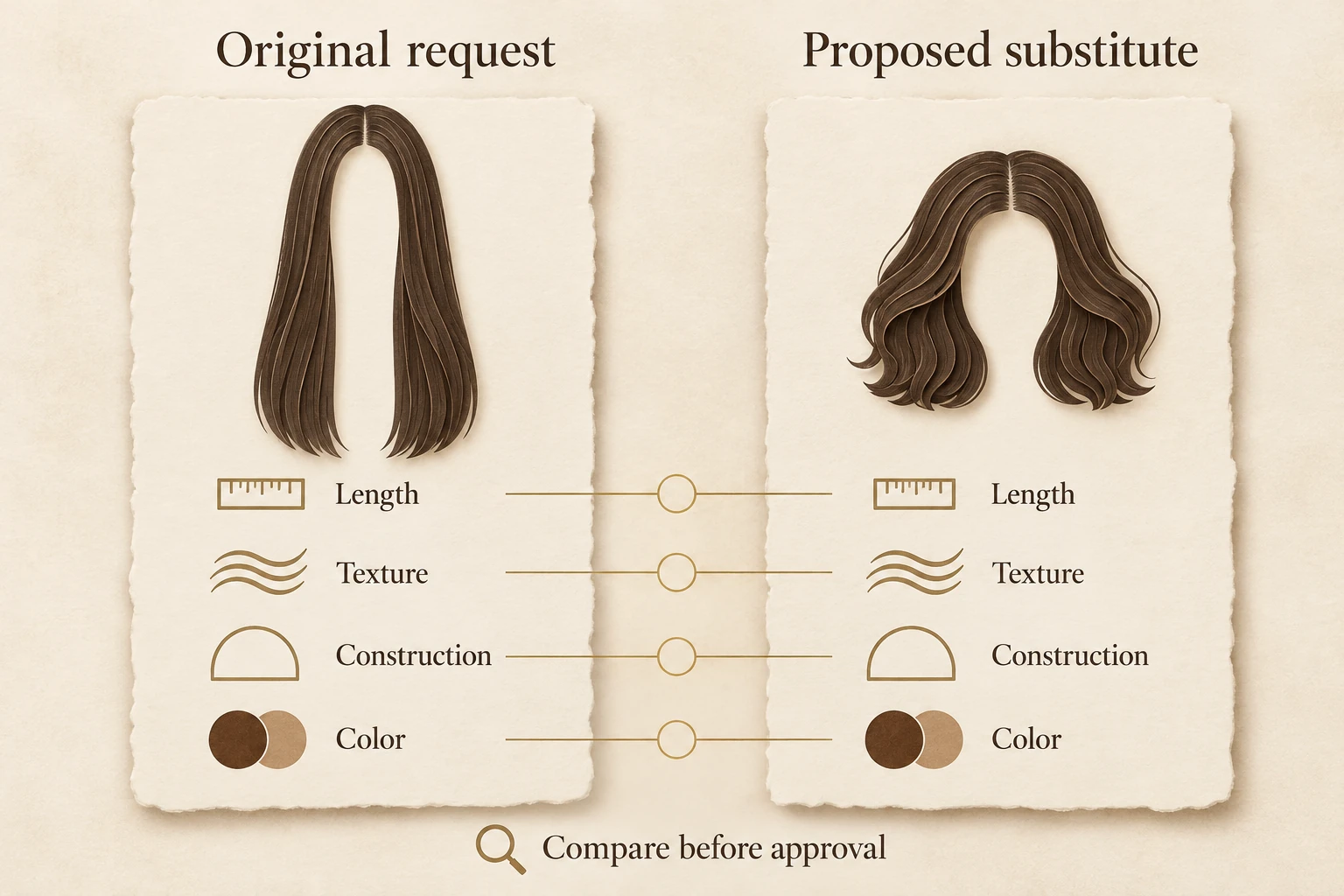
Consider an illustrative request for a straight wig with 13×4 lace. The supplier proposes a 5×5 version in a similar color. If your customer selected the original construction, matching the color cannot settle the decision. Show the proposed construction and explain the difference before asking whether they want it. Until that choice is made, it remains a proposal.
For stock you have not yet offered to a particular buyer, you have more room to reconsider. Ask whether you would deliberately buy the proposed version for your range. If the answer is yes, describe and sell it as that version. Buying it under the original description would leave the difference unresolved for the next customer.
Length and texture deserve the same attention. A longer unit may appeal to another buyer without fulfilling a shorter-length request. A wavy unit may look attractive in a photograph without being what a customer chose from a straight-wig listing. Avoid accepting several changed details as one vague “similar enough” product. Identify which difference you can accept and which still matters.
The available-style versus custom-build guide helps with the earlier choice of buying route. Here, you already have a requirement and a specific alternative to judge against it.
Compare the revised offer with keeping your request
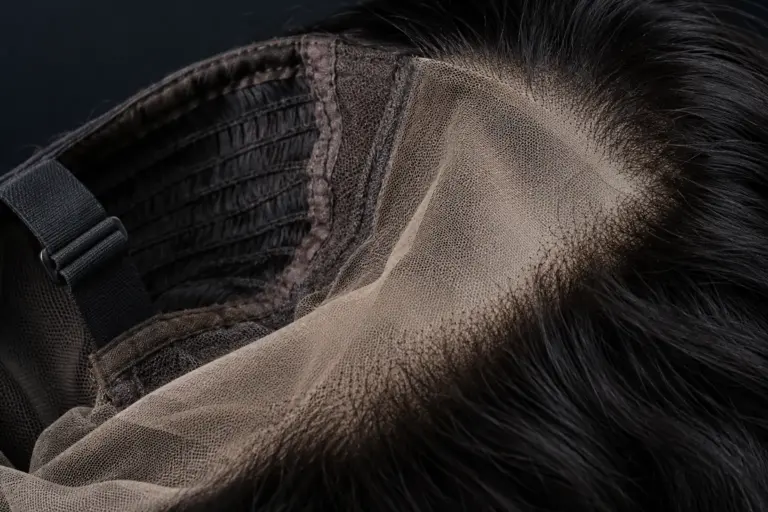
Get a clear description and current views of the proposed unit. Keep the original request beside them so a matching color does not hide a different lace, length or texture. For a hand-painted look, compare the root, face frame and color through the back as well. If the evidence leaves a detail unresolved, identify that detail rather than approving the whole substitute from a front photograph.
Then ask what the change actually buys you. Does the revised offer have a confirmed dispatch estimate that helps your plan? What happens to the quoted price, shipping arrangement and any included work? Extra cutting or styling you intend to arrange belongs in your comparison; it should not be assumed to fix every difference or be included without agreement.
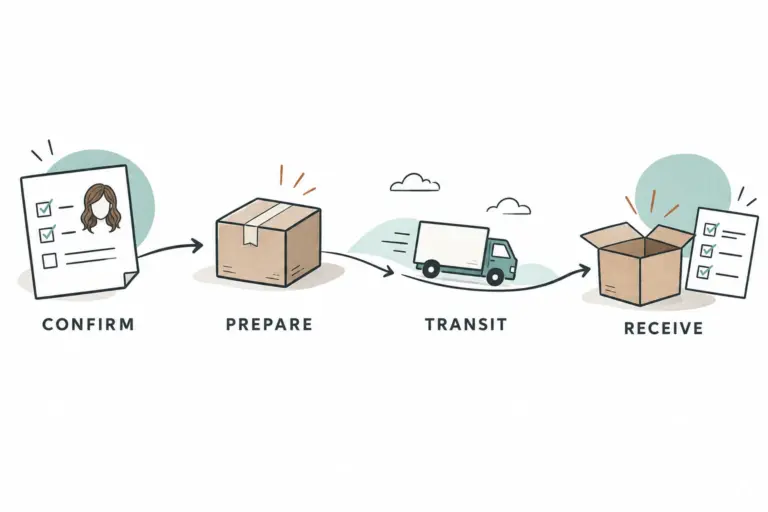
If keeping the original configuration would mean waiting, get an updated answer for that option too. Our lead-time planning guide separates dispatch preparation from delivery. An alternative described as available still needs an order-specific timing answer.
If only one line in a mixed order needs changing, ask whether the other units could ship separately and at what cost. That helps only if those units can serve the customers waiting for them.
Make the approval specific enough to use later
An earlier sample approval applies to the result you accepted. It does not approve an unreviewed substitute. If you choose a revised version, keep its specifications and acceptance evidence with the new order, using the approved-sample record where relevant. Agree what further photos or sample review are needed for the differences; a fresh physical sample is not automatically required for every change.
State which order line and quantity your decision covers. If only part of the quantity changes, record the original and revised units separately so neither description is lost. Accepting a different lace for this purchase should not silently replace the reference for every future reorder. Keep the original approval identifiable, and mark the revised version clearly if you want to use it again.
For example: “Approve the proposed 5×5 version for two units on line B, using the revised quote. Keep the original 13×4 specification for the other three units. This approval applies to this order only.” Use your actual quantities and order references.
NUSFACE offers mainstream human hair wig styles and custom work, with the exact configuration, quantity, quote and timing confirmed for each request. To discuss an alternative, contact the business team with both versions, the affected quantity, destination and required receiving date. Identify the requirement you need to preserve. Approve the version you can actually use, or keep the original request open while another arrangement is assessed.