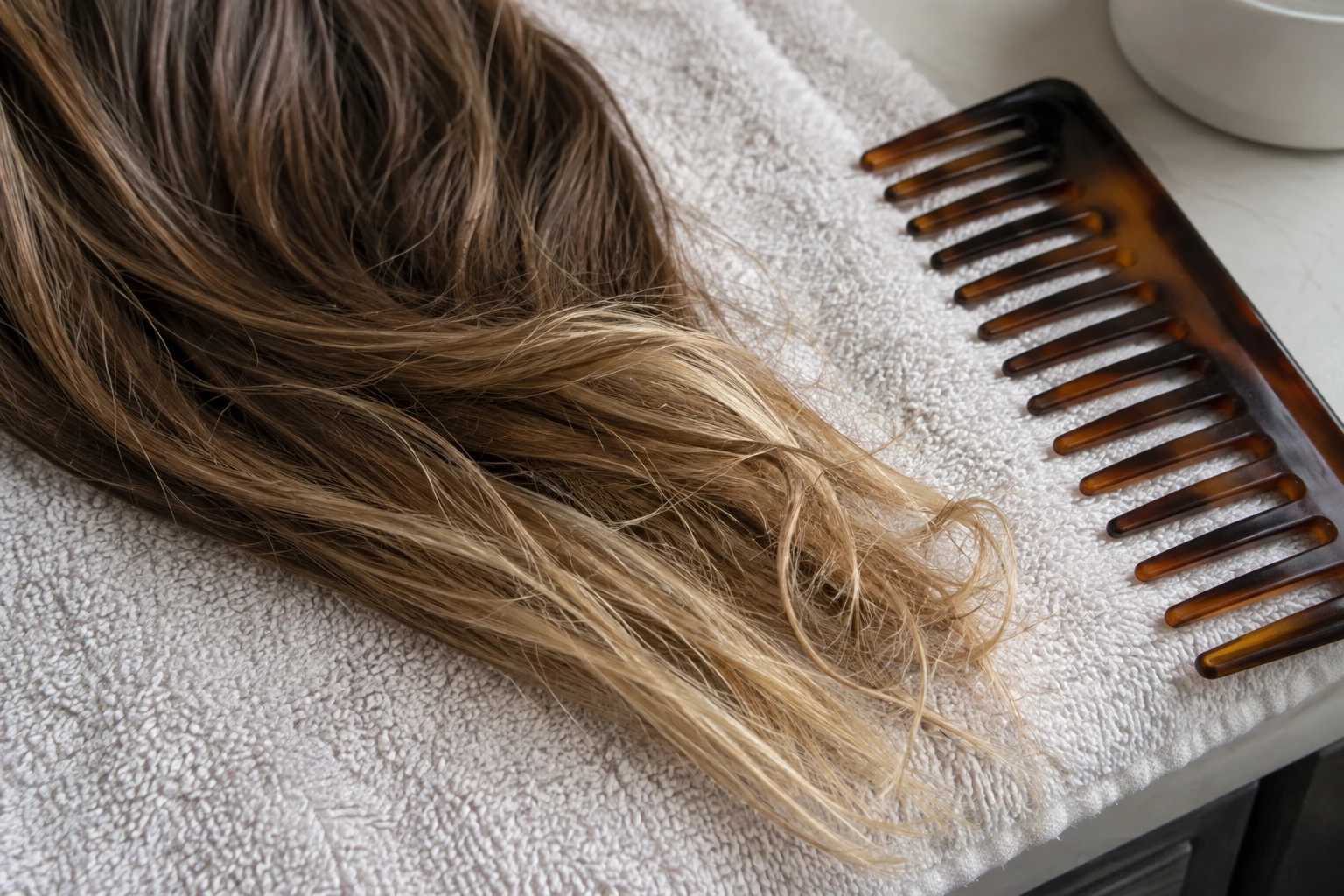
If a balayage human hair wig starts catching on the comb, pause before brushing through the whole length again. Find the affected section, support the hair and check whether a few strands are loosely crossed or have formed a tight mat. A section that resists gentle handling needs a closer review before more brushing, washing or styling.
For salons and wig sellers, this is also the moment to collect useful information. Ask where the tangling started and what happened before it appeared. Keep photographs of the hair in its current condition so that your supplier can review the same problem you are seeing.
In this article
 View larger image
Locate the tangle before choosing a treatment
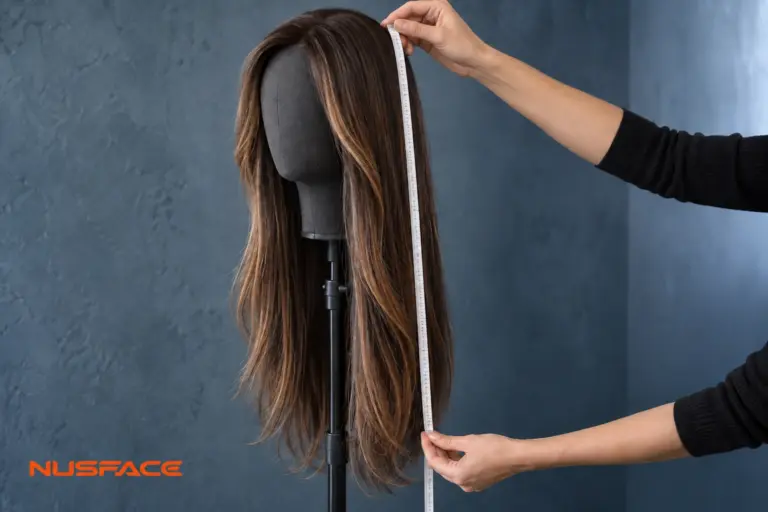
Lay out or support the wig without stretching the lace. Look at the ends, the middle lengths and the underside near the nape separately. Note whether the problem is confined to one area or extends across the piece.
Check whether the tangled area rests against a collar or shoulder, and ask when the knot first appeared. Compare that account with photographs of the affected section. Contact with clothing is something to investigate, not proof that friction caused the problem.
Also note when it first happened: on unpacking, during the first wash, after drying, after wear or following a color service. Describe what you can observe. “The underside catches after drying” tells the supplier more than a general claim that the hair is bad.
Try only a small section that releases gently
Follow the detangling instructions supplied for this wig’s texture and construction. If you have not been given a suitable tool or wet-versus-dry routine, ask before starting. Instructions for a different curl pattern or synthetic fiber may not apply.
For a loose tangle, support the hair above the affected area. Begin with the ends and gently separate a small section using the recommended tool or your fingers, as appropriate. Once the ends are clear, work progressively closer to the roots. Each comb stroke still moves toward the ends; do not comb backward toward the cap.
Keep the surrounding hair separate so that it does not get drawn into the same knot. Work on one small section at a time, supporting the hair above it. Stop if the section does not release with gentle handling; do not add a treatment product simply because it appears in an unrelated care routine.
If the section starts pulling on the cap or will not separate without force, stop. Repeating the same stroke with more pressure is not a useful test.
When to stop and contact the seller
A compact mat, tangling close to the lace or hair that seems to break during a gentle attempt calls for advice before further handling. The same applies if the lace is visibly damaged or several areas have become difficult to separate.
Do not cut into the mat, bleach the hair or use a hot tool to try to smooth it out. Those changes can remove hair or alter its condition before the supplier has assessed it. Photograph it first and explain any steps already taken.
New tangling during the first wash should also be reported promptly. Keep the wash products and their names available. Avoid deciding that the problem must be a manufacturing fault or a care mistake before the piece and its history have been reviewed.
More conditioner is not always the next step
Before adding a detangling spray, oil or another conditioner, check what is already on the hair and what the supplier recommends. Layering unfamiliar products makes it harder to describe the routine accurately.
If a rinse-out conditioner is recommended, follow its directions and keep it away from the points where hair is tied into the lace or hand-tied cap. These attachment knots are different from tangles in the lengths. Do not work product into the base to reach a nearby tangle.
A tight mat needs advice before washing. If the hair can be handled gently and is ready for its recommended wash, follow the instructions for that piece and keep the lengths aligned rather than rubbing them together. Our balayage wig care guide covers the wider wash, dry and storage routine.
 View larger image
Send photographs that show where the problem is
Start with one photograph of the whole wig, then take a closer view of the affected section in clear light. Include enough surrounding hair to show its position. If the problem is underneath, add a view of that area without pulling the hair apart for the camera.
A short video can help show where a comb begins to catch, but do not force it through to demonstrate the problem. If even gentle handling pulls on the base, send still photographs instead.
Keep the original photographs. Heavy filters or smoothing can hide the detail the supplier needs to see. A picture of hair collected in a brush may be useful alongside other information, but it cannot establish the cause by itself.
Include the order and care history in one message
For a salon or wholesale buyer handling a customer’s report, these details make the first conversation easier:
- The order reference and which wig is affected, especially if the order contained several pieces.
- Where the tangling appears and when it was first noticed.
- Whether it appeared before or after washing, drying, wearing or restyling.
- Product names and the wash, drying and detangling steps used.
- Any heat styling, recoloring, bleaching or other chemical service since delivery.
- The whole-wig photograph, close-up and any useful short video.
If you do not know a detail, say so. Ask the customer for the product label rather than guessing what “hair treatment” means. Keep their description separate from anything the salon has tried afterward.
For NUSFACE orders, send the details to our business team on WhatsApp. Explain the current condition before attempting another treatment so the team can discuss the next step for that piece.